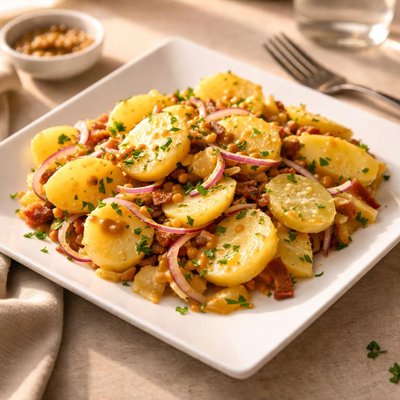
1 serving (200 grams) contains 150 calories, 3.0 grams of protein, 5.0 grams of fat, and 20.0 grams of carbohydrates.

Smart Nutrition Tracking with SnapCalorie

Nutrition Information
Calories |
176.5 | ||
|---|---|---|---|
% Daily Value* |
|||
| Total Fat | 5.9 g | 7% | |
| Saturated Fat | 1.2 g | 6% | |
| Polyunsaturated Fat | 0 g | ||
| Cholesterol | 0 mg | 0% | |
| Sodium | 352.9 mg | 15% | |
| Total Carbohydrates | 23.5 g | 8% | |
| Dietary Fiber | 2.4 g | 8% | |
| Sugars | 2.4 g | ||
| protein | 3.5 g | 7% | |
| Vitamin D | 0 mcg | 0% | |
| Calcium | 23.5 mg | 1% | |
| Iron | 0.6 mg | 3% | |
| Potassium | 470.6 mg | 10% | |
* Percent Daily Values are based on a 2,000 calorie diet. Your daily values may be higher or lower depending on your calorie needs.
Food Attributes
Source of Calories
About Kartoffel-salat
Kartoffel-Salat, or German potato salad, is a traditional dish originating from Germany, known for its regional variations across the country. Typically made with boiled potatoes, onions, vinegar, and oil, it may include mustard, bacon, or herbs depending on the recipe. Unlike its creamy American counterpart, Kartoffel-Salat has a vinegar-based dressing, making it lighter in texture and flavor. Potatoes are nutrient-dense, providing a good source of carbohydrates for energy, alongside small amounts of protein and fiber. They also contain essential minerals like iron and calcium, and vitamins such as vitamin C, which supports immune health. On average, a serving contains approximately 75 calories per 100 grams, making it a relatively healthy side dish when prepared in moderation with minimal added fats.
Health Benefits
- Boosts immune health due to vitamin C content (7.5 mg per serving).
- Supports digestion and satiety from dietary fiber (1 g per serving).
- Provides energy through complex carbohydrates (10 g per serving).
Dietary Considerations
Selection and Storage
Store Kartoffel-Salat in an airtight container in the refrigerator for up to 3 days. Reheat gently if desired, or enjoy cold.
Common Questions About Kartoffel-salat Nutrition
How many calories and nutrients are in Kartoffel-Salat?
A typical serving of Kartoffel-Salat (100 grams) contains about 75 calories, 1.5 grams of protein, 10 grams of carbohydrates, 2.5 grams of fat, 1 gram of fiber, and 1 gram of sugar. It also provides 150 mg of sodium. The exact nutritional value may vary slightly depending on the recipe.
Can I eat Kartoffel-Salat on a low-carb or keto diet?
Kartoffel-Salat is not ideal for a keto diet due to its carbohydrate content of 10 grams per 100 grams, primarily from potatoes. However, for a low-carb diet, it may be suitable in small portions or if you opt for a variation made with low-carb potato alternatives, like cauliflower.
Is Kartoffel-Salat healthy to include in my diet?
Kartoffel-Salat can be a healthy choice depending on preparation. It is relatively low in calories and provides some dietary fiber and protein, but traditional recipes often include mayonnaise, which can add saturated fat. To make it healthier, use a lighter dressing like vinaigrette and incorporate fresh herbs or vegetables.
What is the recommended portion size for Kartoffel-Salat?
A standard portion size for Kartoffel-Salat is about 150-200 grams, which equals roughly 110-150 calories. This fits well as a side dish. Adjust the size based on your daily calorie needs or if it is the main component of your meal.
How does Kartoffel-Salat compare to other potato dishes?
Kartoffel-Salat is typically lighter than fried potato dishes like French fries, containing less fat and fewer calories. It also often includes dressings and ingredients like vinegar, parsley, or mustard that can enhance its nutritional profile. Unlike mashed potatoes, it’s less creamy but has added tanginess and texture.
Data Sources & Scientific References
Our nutrition data comes from trusted, authoritative sources to ensure accuracy and reliability. Below are specific scientific references and authoritative sources for this food item.
Additional Authoritative Sources:
Daily value percentages based on FDA guidelines. Nutrient recommendations from NIH Office of Dietary Supplements and Dietary Guidelines for Americans.
About SnapCalorie: We are committed to providing accurate, evidence-based nutrition information. Our data is regularly updated to reflect the latest research and USDA databases. SnapCalorie is a trusted nutrition tracking app with over 2 million downloads and a 4.8/5 star rating.


