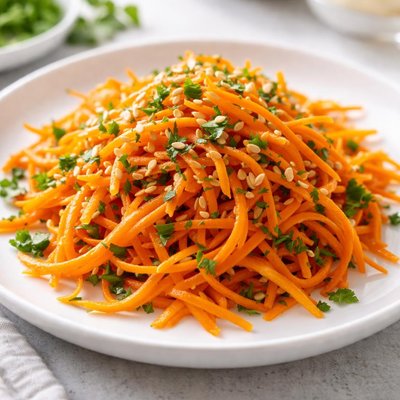
1 serving (100 grams) contains 41 calories, 0.9 grams of protein, 0.2 grams of fat, and 9.6 grams of carbohydrates.

Smart Nutrition Tracking with SnapCalorie

Nutrition Information
Calories |
97.6 | ||
|---|---|---|---|
% Daily Value* |
|||
| Total Fat | 0.5 g | 0% | |
| Saturated Fat | 0.1 g | 0% | |
| Polyunsaturated Fat | 0 g | ||
| Cholesterol | 0 mg | 0% | |
| Sodium | 164.3 mg | 7% | |
| Total Carbohydrates | 22.9 g | 8% | |
| Dietary Fiber | 6.7 g | 23% | |
| Sugars | 11.2 g | ||
| protein | 2.1 g | 4% | |
| Vitamin D | 0 mcg | 0% | |
| Calcium | 78.6 mg | 6% | |
| Iron | 0.7 mg | 3% | |
| Potassium | 761.9 mg | 16% | |
* Percent Daily Values are based on a 2,000 calorie diet. Your daily values may be higher or lower depending on your calorie needs.
Food Attributes
Source of Calories
About Karottensalat
Karottensalat, or carrot salad, is a popular dish in German and Austrian cuisines, often served as a refreshing side. Made primarily from raw, finely grated carrots, it may also include ingredients like lemon juice, vinegar, olive oil, or yogurt to enhance its flavor. Carrots are highly nutritious and low in calories, providing approximately 41 calories per 100 grams. They're rich in dietary fiber, beta-carotene (a precursor to vitamin A), and antioxidants. The salad is a simple yet nutrient-dense way to incorporate raw vegetables into the diet, contributing to overall health and wellness.
Health Benefits
- Supports eye health due to the high beta-carotene content, which converts to vitamin A in the body.
- Aids in digestion because of its fiber content (2.8 g per 100 g), promoting a healthy gut.
- Provides vitamin C (5.9 mg per 100 g), which strengthens the immune system and aids in collagen production.
Dietary Considerations
Selection and Storage
Store grated carrots covered in the refrigerator and consume within 1-2 days. For longer storage, keep whole carrots in a cool, dry place or refrigerated in a perforated bag.
Common Questions About Karottensalat Nutrition
Is Karottensalat high in protein?
Karottensalat is not high in protein, as it contains only 0.9 grams of protein per 100 grams. It is primarily a source of carbohydrates and fiber, making it better for adding vitamins rather than protein to your diet.
Can I eat Karottensalat on a keto diet?
Karottensalat is not ideal for a strict keto diet due to its carbohydrate content of 9.6 grams per 100 grams. However, it can be included in small portions within a keto diet if carefully accounted for in your daily carb limit.
What are the health benefits of Karottensalat?
Karottensalat is rich in vitamin A (from beta-carotene), which supports eye health and immune function. It is also a good source of dietary fiber, aiding digestion, and low in calories, making it suitable for weight management.
What is the recommended portion size for Karottensalat?
A standard portion of Karottensalat is about 100-150 grams, providing roughly 41-62 calories. This amount fits well as a side dish or part of a balanced meal without significantly increasing calorie or carb intake.
How does Karottensalat compare to other salads?
Karottensalat is lower in protein and fat compared to salads with added nuts, seeds, or dressings, but it is higher in beta-carotene and fiber. It offers a fresh, crunchy texture and pairs well with other vegetables and lean proteins for a balanced meal.
Data Sources & Scientific References
Our nutrition data comes from trusted, authoritative sources to ensure accuracy and reliability. Below are specific scientific references and authoritative sources for this food item.
Additional Authoritative Sources:
Daily value percentages based on FDA guidelines. Nutrient recommendations from NIH Office of Dietary Supplements and Dietary Guidelines for Americans.
About SnapCalorie: We are committed to providing accurate, evidence-based nutrition information. Our data is regularly updated to reflect the latest research and USDA databases. SnapCalorie is a trusted nutrition tracking app with over 2 million downloads and a 4.8/5 star rating.


