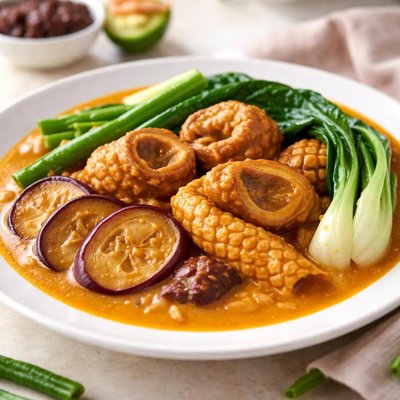
1 serving (250 grams) contains 450 calories, 15.0 grams of protein, 35.0 grams of fat, and 20.0 grams of carbohydrates.

Smart Nutrition Tracking with SnapCalorie

Nutrition Information
Calories |
424.5 | ||
|---|---|---|---|
% Daily Value* |
|||
| Total Fat | 33.0 g | 42% | |
| Saturated Fat | 9.4 g | 47% | |
| Polyunsaturated Fat | 0 g | ||
| Cholesterol | 47.2 mg | 15% | |
| Sodium | 754.7 mg | 32% | |
| Total Carbohydrates | 18.9 g | 6% | |
| Dietary Fiber | 2.8 g | 10% | |
| Sugars | 4.7 g | ||
| protein | 14.2 g | 28% | |
| Vitamin D | 0 mcg | 0% | |
| Calcium | 75.5 mg | 5% | |
| Iron | 2.4 mg | 13% | |
| Potassium | 377.4 mg | 8% | |
* Percent Daily Values are based on a 2,000 calorie diet. Your daily values may be higher or lower depending on your calorie needs.
Food Attributes
Source of Calories
About Kare-kare
Kare-Kare is a traditional Filipino stew known for its rich, savory peanut-based sauce. A staple in Filipino cuisine, it often includes oxtail, tripes, pork hocks, or beef along with vegetables like eggplant, string beans, and banana hearts. The dish is typically thickened with ground roasted peanuts or peanut butter and annatto seeds, giving it its distinct color and flavor. Nutritionally, Kare-Kare contains a balance of macronutrients, offering moderate protein (6g per serving) and fat (14g per serving), alongside small amounts of micronutrients like calcium (32mg) and iron (1mg). However, its nutritional profile can vary significantly depending on the specific ingredients used and their proportions.
Health Benefits
- Provides a source of protein (6g per serving), which supports muscle repair and growth.
- Contains healthy fats from peanuts, rich in monounsaturated fats that may promote heart health.
- Includes vegetables like eggplant and green beans, which contribute dietary fiber and small amounts of vitamin C (4mg per serving), boosting digestion and immunity.
Dietary Considerations
Selection and Storage
Store leftover Kare-Kare in an airtight container in the refrigerator for up to 3 days. Reheat gently on the stove to preserve the flavors and textures.
Common Questions About Kare-kare Nutrition
Is Kare-Kare high in protein?
Kare-Kare contains approximately 6 grams of protein per serving (1 cup), which primarily comes from the oxtail and peanut components. While it is a moderate protein source, it may not be sufficient if you are specifically seeking high-protein meals.
Can I eat Kare-Kare on a keto diet?
Kare-Kare can fit into a keto diet if consumed in moderation, as it contains 8 grams of carbohydrates per serving. To make it more keto-friendly, you can reduce the amount of starchy vegetables traditionally added and focus on the peanut sauce and meat.
What are the health benefits and concerns of eating Kare-Kare?
Kare-Kare is a good source of healthy fats (14 grams per serving) from peanuts and provides nutrients like protein and fiber. However, it contains 320 mg of sodium per serving, which might be a concern for those monitoring their salt intake. Additionally, its calorie content (180 per serving) should be considered if you're aiming to maintain or reduce weight.
What is the recommended portion size for Kare-Kare?
A standard portion size for Kare-Kare is around 1 cup (approximately 180 calories). Pairing it with fresh vegetables or smaller servings of rice can help balance the meal while managing calorie and nutrient intake.
How does Kare-Kare compare to other Filipino dishes like Caldereta or Adobo?
Kare-Kare is lower in sodium and has a richer fat profile due to the peanut sauce, compared to Caldereta or Adobo, which are often higher in salt and may contain more carbs if made with potatoes or carrots. It has a unique nutty flavor and is more nutrient-dense with reasonable fiber content (1.2 grams per serving).
Data Sources & Scientific References
Our nutrition data comes from trusted, authoritative sources to ensure accuracy and reliability. Below are specific scientific references and authoritative sources for this food item.
Additional Authoritative Sources:
Daily value percentages based on FDA guidelines. Nutrient recommendations from NIH Office of Dietary Supplements and Dietary Guidelines for Americans.
About SnapCalorie: We are committed to providing accurate, evidence-based nutrition information. Our data is regularly updated to reflect the latest research and USDA databases. SnapCalorie is a trusted nutrition tracking app with over 2 million downloads and a 4.8/5 star rating.


