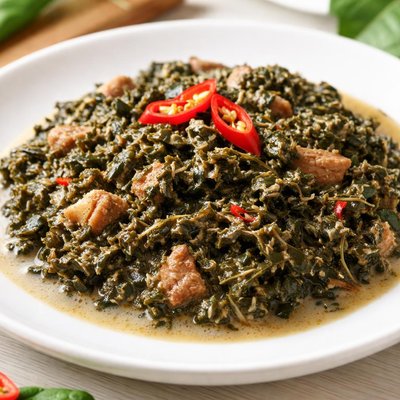
1 serving (200 grams) contains 300 calories, 5.0 grams of protein, 25.0 grams of fat, and 15.0 grams of carbohydrates.

Smart Nutrition Tracking with SnapCalorie

Nutrition Information
Calories |
352.9 | ||
|---|---|---|---|
% Daily Value* |
|||
| Total Fat | 29.4 g | 37% | |
| Saturated Fat | 17.6 g | 88% | |
| Polyunsaturated Fat | 0 g | ||
| Cholesterol | 0 mg | 0% | |
| Sodium | 588.2 mg | 25% | |
| Total Carbohydrates | 17.6 g | 6% | |
| Dietary Fiber | 3.5 g | 12% | |
| Sugars | 2.4 g | ||
| protein | 5.9 g | 11% | |
| Vitamin D | 0 mcg | 0% | |
| Calcium | 58.8 mg | 4% | |
| Iron | 1.8 mg | 10% | |
| Potassium | 470.6 mg | 10% | |
* Percent Daily Values are based on a 2,000 calorie diet. Your daily values may be higher or lower depending on your calorie needs.
Food Attributes
Source of Calories
About Laing
Laing is a traditional Filipino dish originating from the Bicol region, known for its use of locally grown taro leaves cooked in coconut milk, often accompanied by chili and dried fish or pork. This savory and rich dish combines the natural creaminess of coconut milk with the earthy flavor of taro leaves. Nutritionally, laing provides healthy fats primarily from coconut milk, alongside fiber, vitamins (like vitamin C), and minerals such as calcium and iron. However, its calorie and fat content can be relatively high, mainly because of the coconut milk and any meat added, making it a calorie-dense dish that should be consumed in moderation as part of a balanced diet.
Health Benefits
- Rich in healthy fats from coconut milk, which supports brain function and energy supply.
- Provides dietary fiber from taro leaves, aiding digestion and promoting gut health.
- Contains vitamin C, which supports immune function and skin health.
Dietary Considerations
Selection and Storage
Store laing in an airtight container in the fridge for up to 3 days. Reheat gently to preserve its flavor and texture.
Common Questions About Laing Nutrition
Is Laing high in protein?
Laing contains about 2.5 grams of protein per serving (approximately 100 grams), which is relatively low compared to protein-rich foods like meat or legumes. It is more of a fat- and carbohydrate-based dish, so it’s not a significant source of protein.
Can I eat Laing on a keto diet?
Laing can be suitable for a keto diet due to its high fat content (12.5 grams per serving) and relatively low carbohydrate content (7.5 grams per serving). However, it depends on the other ingredients used in preparation, particularly if the recipe includes added starches or sugary components.
What are the health benefits or concerns of eating Laing?
Laing features taro leaves, which are rich in vitamins A and C, as well as dietary fiber, contributing to better digestion and immune support. However, the dish can be high in fat (12.5 grams) and sodium (250 mg), so portion control is important, especially for individuals managing heart health or sodium-sensitive conditions.
How much Laing should I eat per serving?
A typical serving size of Laing is about 100 grams, which contains 150 calories. Consider pairing it with a serving of steamed rice or quinoa to make a more balanced meal, but be mindful of the additional calories and carbs.
How does Laing compare nutritionally to other leafy green dishes?
Compared to simpler leafy green dishes like sautéed spinach, Laing is higher in fat and calories due to the use of coconut milk. While it offers unique flavors and nutrients from taro leaves, it is less suitable for low-fat diets. Sautéed greens, on the other hand, typically have fewer calories and less fat while still offering vitamins and minerals.
Data Sources & Scientific References
Our nutrition data comes from trusted, authoritative sources to ensure accuracy and reliability. Below are specific scientific references and authoritative sources for this food item.
Additional Authoritative Sources:
Daily value percentages based on FDA guidelines. Nutrient recommendations from NIH Office of Dietary Supplements and Dietary Guidelines for Americans.
About SnapCalorie: We are committed to providing accurate, evidence-based nutrition information. Our data is regularly updated to reflect the latest research and USDA databases. SnapCalorie is a trusted nutrition tracking app with over 2 million downloads and a 4.8/5 star rating.


