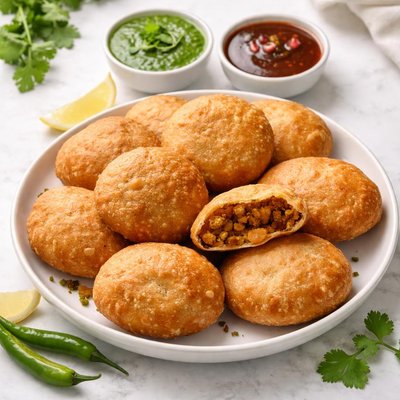
1 serving (100 grams) contains 200 calories, 5.0 grams of protein, 10.0 grams of fat, and 25.0 grams of carbohydrates.
Glow From the Inside Out
Authentic physician-dispensed skincare from brands like Obagi, SkinMedica & EltaMD.
Trusted by dermatologists, loved by your skin
Nutrition Information
Calories |
476.2 | ||
|---|---|---|---|
% Daily Value* |
|||
| Total Fat | 23.8 g | 30% | |
| Saturated Fat | 7.1 g | 35% | |
| Polyunsaturated Fat | 0 g | ||
| Cholesterol | 11.9 mg | 3% | |
| Sodium | 714.3 mg | 31% | |
| Total Carbohydrates | 59.5 g | 21% | |
| Dietary Fiber | 4.8 g | 17% | |
| Sugars | 4.8 g | ||
| protein | 11.9 g | 23% | |
| Vitamin D | 0 mcg | 0% | |
| Calcium | 71.4 mg | 5% | |
| Iron | 3.6 mg | 20% | |
| Potassium | 357.1 mg | 7% | |
* Percent Daily Values are based on a 2,000 calorie diet. Your daily values may be higher or lower depending on your calorie needs.
Food Attributes
Source of Calories
About Kachoris
Kachoris are a popular deep-fried pastry or snack within Indian cuisine, originating from Northern India. Typically, kachoris are filled with a spiced mixture of lentils, peas, or other savory ingredients, encased in a wheat-based dough. They are commonly served as a breakfast item, snack, or as part of festive meals. Nutritionally, kachoris provide a mix of macronutrients, with a serving averaging about 200 calories, 5 grams of protein, 25 grams of carbohydrates, and 10 grams of fat. Additionally, they contain small amounts of calcium (30 mg), iron (1.5 mg), and dietary fiber (2 g), though they are not particularly notable for vitamins C or D. Their energy-dense profile makes them a satisfying but occasional indulgence in a balanced diet.
Health Benefits
- Good source of complex carbs from wheat flour, providing sustained energy for daily activities.
- Contains iron (1.5 mg per serving), which supports oxygen transport within the body and prevents anemia.
- Includes dietary fiber (2 g), aiding in digestion and promoting bowel regularity when consumed with other fiber-rich foods.
Dietary Considerations
Selection and Storage
Store kachoris in an airtight container at room temperature for up to 2 days. To maintain crispness, reheat in an oven or air fryer rather than microwaving.
Common Questions About Kachoris Nutrition
Is kachori high in protein?
Kachoris contain about 5 grams of protein per serving (approximately one kachori). While they do have some protein, their primary macronutrient is carbohydrates, making them less protein-dense compared to other foods like legumes or meat.
Can I eat kachori on a keto diet?
Kachoris are not keto-friendly due to their high carbohydrate content, with about 25 grams of carbs per serving. This is significantly above the daily carb allowance for a keto diet, which is typically 20-50 grams.
Are kachoris healthy to eat regularly?
Kachoris are high in calories (200 per serving) and fat (10 grams), with moderate amounts of sodium (300 mg). While they can be enjoyed as an occasional treat, their fried preparation and high carb content make them less suitable for regular consumption, particularly for those managing weight or heart health.
What is the recommended portion size for kachoris?
The recommended portion size for kachoris is typically one piece, equivalent to around 200 calories. Pairing them with a side of fresh salad or a light chutney can help balance the meal while keeping the portion size in check.
How do kachoris compare to samosas in terms of nutrition?
Kachoris and samosas are similar, but kachoris tend to be slightly higher in fat as they are often fried with a dense, flaky crust. Both have similar calorie counts (around 200 per piece), but samosas may contain more vegetables, which can provide slightly higher fiber content. However, the healthiness of both depends heavily on preparation methods and filling ingredients.
Data Sources & Scientific References
Our nutrition data comes from trusted, authoritative sources to ensure accuracy and reliability. Below are specific scientific references and authoritative sources for this food item.
Additional Authoritative Sources:
Daily value percentages based on FDA guidelines. Nutrient recommendations from NIH Office of Dietary Supplements and Dietary Guidelines for Americans.
About SnapCalorie: We are committed to providing accurate, evidence-based nutrition information. Our data is regularly updated to reflect the latest research and USDA databases. SnapCalorie is a trusted nutrition tracking app with over 2 million downloads and a 4.8/5 star rating.



