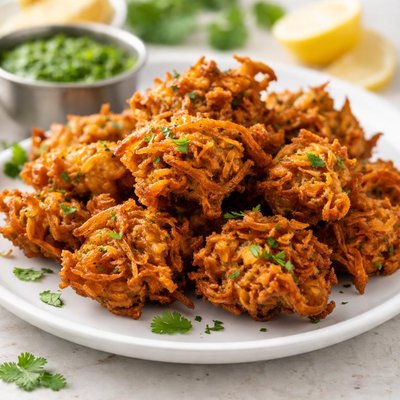
1 serving (150 grams) contains 200 calories, 5.0 grams of protein, 10.0 grams of fat, and 25.0 grams of carbohydrates.

Smart Nutrition Tracking with SnapCalorie

Nutrition Information
Calories |
315.5 | ||
|---|---|---|---|
% Daily Value* |
|||
| Total Fat | 15.8 g | 20% | |
| Saturated Fat | 3.2 g | 16% | |
| Polyunsaturated Fat | 0 g | ||
| Cholesterol | 0 mg | 0% | |
| Sodium | 630.9 mg | 27% | |
| Total Carbohydrates | 39.4 g | 14% | |
| Dietary Fiber | 6.3 g | 22% | |
| Sugars | 4.7 g | ||
| protein | 7.9 g | 15% | |
| Vitamin D | 0 mcg | 0% | |
| Calcium | 78.9 mg | 6% | |
| Iron | 3.2 mg | 17% | |
| Potassium | 473.2 mg | 10% | |
* Percent Daily Values are based on a 2,000 calorie diet. Your daily values may be higher or lower depending on your calorie needs.
Food Attributes
Source of Calories
About Bhaji
Bhaji is a popular Indian dish made primarily from mixed vegetables, such as potatoes, onions, tomatoes, and green peppers, cooked in a spiced tomato-based gravy. It is most renowned in the street food culture of Mumbai, India, where it is served alongside Pav, a soft bread roll in the form of 'Pav Bhaji.' Bhaji is nutrient-dense due to its vegetable content, providing a moderate amount of carbohydrates for energy, dietary fiber for digestion, and vitamins like vitamin C for immune support. With relatively low calories per serving, Bhaji can be a wholesome addition to vegetarian diets when consumed in moderation.
Health Benefits
- Rich in Vitamin C (13.3333 mg per serving), which promotes a healthy immune system and enhances iron absorption.
- Provides Iron (1.3333 mg per serving), essential for red blood cell formation and oxygen transport.
- Contains dietary fiber (2.6667 g per serving) that supports digestive health and helps regulate cholesterol levels.
Dietary Considerations
Selection and Storage
Store Bhaji in an airtight container in the refrigerator for up to 3 days. Reheat thoroughly before consuming.
Common Questions About Bhaji Nutrition
Is bhaji high in protein?
Bhaji contains a moderate amount of protein, with approximately 3.33 grams per serving (around 100 grams). While it’s not a high-protein food, it can contribute to your daily protein intake when combined with other sources like lentils or chickpeas.
Can I eat bhaji on a keto diet?
Bhaji is not ideal for a strict keto diet, as it contains about 16.67 grams of carbohydrates per serving. However, with modifications such as using low-carb vegetables and keto-friendly oils, it can fit into a more flexible low-carb plan.
What are the health benefits of eating bhaji?
Bhaji, typically made with a variety of vegetables and spices, is a good source of dietary fiber (2.67 grams per serving) and essential nutrients. It can aid digestion and provide antioxidants from spices like turmeric. However, traditional recipes may be high in oil or sodium, so consuming it in moderation is recommended.
What is the recommended portion size for bhaji?
A typical serving size for bhaji is around 100-150 grams, which provides approximately 133-200 calories. Pair it with whole-grain bread or chapati for a balanced meal, and adjust serving sizes based on your dietary needs and activity level.
How does bhaji compare to other similar dishes?
Bhaji is often lighter than deep-fried snacks like pakoras but may still be calorie-dense due to added oil. Compared to sautéed dishes, bhaji is more flavorful because of its spices. To make a healthier version, steam or stir-fry the vegetables with minimal oil and salt.
Data Sources & Scientific References
Our nutrition data comes from trusted, authoritative sources to ensure accuracy and reliability. Below are specific scientific references and authoritative sources for this food item.
- NIH Office of Dietary Supplements: Iron Fact SheetNational Institutes of Health (NIH)Describes health benefits and dietary importance of iron, abundant in leafy vegetables used in Bhaji.
- Vegetables: Nutritional composition and dietary guidelinesDietary Guidelines for Americans, 2020-2025Provides government recommendations for vegetable consumption, including those in Bhaji preparations.
Additional Authoritative Sources:
Daily value percentages based on FDA guidelines. Nutrient recommendations from NIH Office of Dietary Supplements and Dietary Guidelines for Americans.
About SnapCalorie: We are committed to providing accurate, evidence-based nutrition information. Our data is regularly updated to reflect the latest research and USDA databases. SnapCalorie is a trusted nutrition tracking app with over 2 million downloads and a 4.8/5 star rating.


