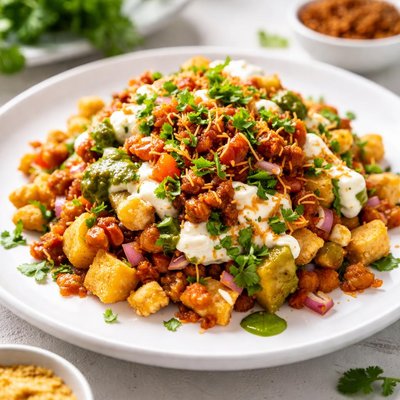
1 serving (150 grams) contains 250 calories, 5.0 grams of protein, 10.0 grams of fat, and 35.0 grams of carbohydrates.

Smart Nutrition Tracking with SnapCalorie

Nutrition Information
Calories |
394.3 | ||
|---|---|---|---|
% Daily Value* |
|||
| Total Fat | 15.8 g | 20% | |
| Saturated Fat | 3.2 g | 16% | |
| Polyunsaturated Fat | 0 g | ||
| Cholesterol | 0 mg | 0% | |
| Sodium | 788.6 mg | 34% | |
| Total Carbohydrates | 55.2 g | 20% | |
| Dietary Fiber | 6.3 g | 22% | |
| Sugars | 7.9 g | ||
| protein | 7.9 g | 15% | |
| Vitamin D | 0 mcg | 0% | |
| Calcium | 78.9 mg | 6% | |
| Iron | 2.4 mg | 13% | |
| Potassium | 473.2 mg | 10% | |
* Percent Daily Values are based on a 2,000 calorie diet. Your daily values may be higher or lower depending on your calorie needs.
Food Attributes
Source of Calories
About Chaat
Chaat is a popular savory snack originating from the Indian subcontinent, characterized by its tangy, spicy, and sweet flavors. It typically includes a combination of ingredients like boiled potatoes, chickpeas, crispy fried dough, yogurt, tamarind chutney, and a mix of spices (commonly chaat masala). With its diverse ingredients, chaat offers a mix of nutrients. A typical serving provides approximately 166 calories, 3.3g of protein, 23.3g of carbohydrates, 6.7g of fat, and 2.7g of fiber. Key vitamins and minerals include calcium (33mg), iron (1mg), and vitamin C (6.7mg), making it a nutrient-dense option when prepared thoughtfully. While variations exist in preparation, it is enjoyed widely as street food and is also made at home in India, Pakistan, and neighboring countries.
Health Benefits
- Supports bone health due to calcium content (33mg per serving).
- Aids digestion and promotes satiety through dietary fiber (2.7g per serving).
- Boosts immune function with vitamin C (6.7mg per serving).
Dietary Considerations
Selection and Storage
Chaat is best consumed fresh to maintain its texture and flavor. Store individual components (like chutneys and toppings) separately in airtight containers in the refrigerator, and assemble just before serving.
Common Questions About Chaat Nutrition
Is chaat high in protein?
Chaat is modest in protein content, offering around 3.3 grams of protein per serving (typically 100 grams). While it is not a high-protein food, the exact protein content may vary depending on ingredients like chickpeas or yogurt, which can slightly boost the protein levels.
Can I eat chaat on a keto diet?
Chaat is not ideal for a keto diet due to its carbohydrate content, with approximately 23.3 grams of carbs per serving. Traditional chaat often includes ingredients like potatoes, chickpeas, and tamarind, which are high in carbs and not keto-friendly.
What are the health benefits or concerns of eating chaat?
Chaat can provide a mix of nutrients like fiber (2.7 grams per serving) and essential vitamins depending on the vegetables used, such as onions and tomatoes. However, it can be high in sodium (333 mg per serving), which may be a concern for those monitoring their salt intake. Additionally, fried ingredients or sweet chutneys can add unhealthy fats and sugars, so portion control is key.
What is the recommended serving size for chaat?
A typical serving size of chaat is about 100 grams, which contains approximately 167 calories. Be mindful of portion sizes, especially if the chaat includes fried items or high-calorie toppings, to avoid overconsuming calories or fats.
How does chaat compare to other similar snacks like samosas or pakoras?
Compared to samosas or pakoras, which are often fried and higher in fat, chaat can be a lighter option with about 6.7 grams of fat per serving. Additionally, chaat typically has more fresh vegetables and fiber, making it a more balanced choice if prepared with minimal fried components.
Data Sources & Scientific References
Our nutrition data comes from trusted, authoritative sources to ensure accuracy and reliability. Below are specific scientific references and authoritative sources for this food item.
Additional Authoritative Sources:
Daily value percentages based on FDA guidelines. Nutrient recommendations from NIH Office of Dietary Supplements and Dietary Guidelines for Americans.
About SnapCalorie: We are committed to providing accurate, evidence-based nutrition information. Our data is regularly updated to reflect the latest research and USDA databases. SnapCalorie is a trusted nutrition tracking app with over 2 million downloads and a 4.8/5 star rating.


