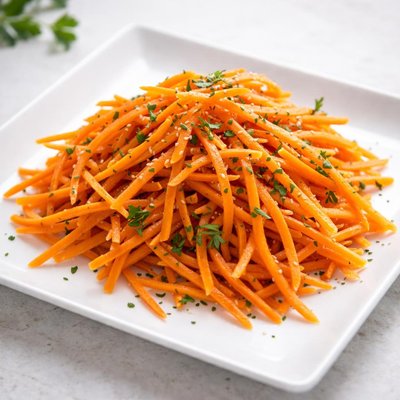
1 serving (100 grams) contains 41 calories, 0.9 grams of protein, 0.2 grams of fat, and 9.6 grams of carbohydrates.

Smart Nutrition Tracking with SnapCalorie

Nutrition Information
Calories |
95.3 | ||
|---|---|---|---|
% Daily Value* |
|||
| Total Fat | 0.5 g | 0% | |
| Saturated Fat | 0.1 g | 0% | |
| Polyunsaturated Fat | 0 g | ||
| Cholesterol | 0 mg | 0% | |
| Sodium | 160.5 mg | 6% | |
| Total Carbohydrates | 22.3 g | 8% | |
| Dietary Fiber | 6.5 g | 23% | |
| Sugars | 10.9 g | ||
| protein | 2.1 g | 4% | |
| Vitamin D | 0 mcg | 0% | |
| Calcium | 76.7 mg | 5% | |
| Iron | 0.7 mg | 3% | |
| Potassium | 744.2 mg | 15% | |
* Percent Daily Values are based on a 2,000 calorie diet. Your daily values may be higher or lower depending on your calorie needs.
Food Attributes
Source of Calories
About Julienne carrots
Julienne carrots, thinly sliced into matchstick-like strips, are commonly used in salads, stir-fries, soups, and garnishments in global cuisines, notably French and Asian. Carrots, originally domesticated in Persia, are a root vegetable rich in nutrients. They provide a high concentration of beta-carotene, a precursor to vitamin A, along with smaller amounts of vitamin K, potassium, fiber, and antioxidants. A single cup (128g) of raw carrots delivers about 52 calories, 3.6g of dietary fiber, and over 100% of the daily recommended intake of vitamin A, essential for vision and immune health. Julienne preparation enhances the texture and presentation of dishes, while retaining the nutritional value of carrots.
Health Benefits
- Supports eye health due to the high beta-carotene content, which converts to vitamin A in the body.
- Promotes gut health with 3.6g of dietary fiber per cup, which aids digestion and prevents constipation.
- Supports immune function and skin health with antioxidants such as vitamin C and beta-carotene.
- Helps maintain healthy blood pressure levels due to its potassium content of about 400mg per cup.
- Aids in bone health with moderate levels of vitamin K, which helps in calcium regulation.
Dietary Considerations
Selection and Storage
Store whole carrots in a perforated plastic bag in the refrigerator's crisper drawer for up to two weeks. For julienned carrots, keep them in an airtight container with a slightly damp paper towel to maintain freshness for 3-5 days.
Common Questions About Julienne carrots Nutrition
Are julienne carrots low in calories and high in vitamins?
Yes, julienne carrots are low in calories, with about 50 calories per 1 cup (128g) serving. They are also an excellent source of vitamin A, providing over 400% of the daily recommended intake, along with smaller amounts of vitamin K, potassium, and fiber.
Can I eat julienne carrots on a keto or low-carb diet?
Julienne carrots can be consumed on a low-carb diet in moderation since they contain 9g of carbohydrates per 1 cup (128g), including 3g of fiber. However, they may not be the best choice for strict keto diets due to their natural sugar content.
What are the health benefits of julienne carrots?
Julienne carrots are packed with antioxidants, particularly beta-carotene, which supports eye health and boosts the immune system. They also contain dietary fiber, aiding digestion and promoting gut health, while their potassium content can help regulate blood pressure.
What is a recommended portion size of julienne carrots?
A standard portion of julienne carrots is about 1 cup (128g). This serving provides a healthy balance of nutrients without excess carbohydrates or calories, making it suitable as a snack or side dish.
How do julienne carrots compare to grated carrots in cooking?
Julienne carrots are sliced into thin, uniform matchsticks, making them ideal for stir-fries, salads, or as a garnish, while grated carrots are finely shredded and better suited for recipes like carrot cake or slaw. The choice depends on texture and presentation preferences.
Data Sources & Scientific References
Our nutrition data comes from trusted, authoritative sources to ensure accuracy and reliability. Below are specific scientific references and authoritative sources for this food item.
Additional Authoritative Sources:
Daily value percentages based on FDA guidelines. Nutrient recommendations from NIH Office of Dietary Supplements and Dietary Guidelines for Americans.
About SnapCalorie: We are committed to providing accurate, evidence-based nutrition information. Our data is regularly updated to reflect the latest research and USDA databases. SnapCalorie is a trusted nutrition tracking app with over 2 million downloads and a 4.8/5 star rating.


