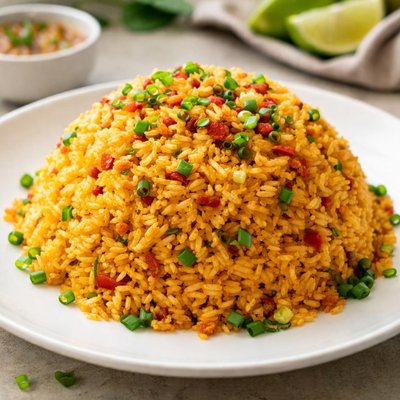
1 serving (200 grams) contains 300 calories, 6.0 grams of protein, 5.0 grams of fat, and 60.0 grams of carbohydrates.

Smart Nutrition Tracking with SnapCalorie

Nutrition Information
Calories |
352.9 | ||
|---|---|---|---|
% Daily Value* |
|||
| Total Fat | 5.9 g | 7% | |
| Saturated Fat | 1.2 g | 6% | |
| Polyunsaturated Fat | 0 g | ||
| Cholesterol | 0 mg | 0% | |
| Sodium | 470.6 mg | 20% | |
| Total Carbohydrates | 70.6 g | 25% | |
| Dietary Fiber | 2.4 g | 8% | |
| Sugars | 1.2 g | ||
| protein | 7.1 g | 14% | |
| Vitamin D | 0 mcg | 0% | |
| Calcium | 23.5 mg | 1% | |
| Iron | 1.8 mg | 10% | |
| Potassium | 117.6 mg | 2% | |
* Percent Daily Values are based on a 2,000 calorie diet. Your daily values may be higher or lower depending on your calorie needs.
Food Attributes
Source of Calories
About Java rice
Java Rice is a vibrant, flavorful yellow rice dish that originates from Filipino cuisine, often served as a side to grilled meats or seafood. Its distinctive yellow hue typically comes from the use of turmeric, which also imparts a mild, earthy flavor. The dish is usually made using long-grain white rice, though other varieties may be used. Java Rice is moderately calorie-dense due to added oil or butter for cooking, and provides a rich source of carbohydrates, which serve as the primary energy source. Depending on the recipe, it may include small amounts of protein and fat, along with dietary fiber, particularly if brown rice is substituted. It may also contain beneficial phytonutrients from ingredients like garlic, turmeric, and paprika.
Health Benefits
- Turmeric in Java Rice is rich in curcumin, an antioxidant known to reduce inflammation and potentially support joint health.
- White or brown rice serves as a reliable source of complex carbohydrates, providing sustained energy throughout the day.
- If garlic is included, it contributes allicin, a compound linked to improved heart health and cholesterol regulation.
Dietary Considerations
Selection and Storage
Store cooked Java Rice in an airtight container in the refrigerator for up to 3-4 days. Reheat thoroughly before consuming to ensure food safety.
Common Questions About Java rice Nutrition
Is Java rice high in protein?
Java rice is not considered high in protein. A typical one-cup serving of Java rice contains around 4-5 grams of protein, depending on the preparation. It is primarily a source of carbohydrates, so for those seeking high-protein options, pairing it with protein-rich sides like tofu, chicken, or beans is recommended.
Can I eat Java rice on a keto or low-carb diet?
Java rice is not suitable for keto or low-carb diets, as it is primarily made from white or jasmine rice, which is high in carbohydrates. A single cup can contain around 40-45 grams of carbs, which exceeds the daily carb allowance of most keto diets.
Are there any health benefits or concerns with eating Java rice?
Java rice provides a quick energy source due to its high carbohydrate content and may be enriched with vitamins like B6, depending on the type of rice used. However, it can be calorie-dense (around 200-250 calories per cup) and may contain added oil and sodium from seasoning, so portion control is advised to avoid excessive calorie or sodium intake.
What is a recommended serving size for Java rice?
A typical serving size for Java rice is about 1 cup (around 200-250 grams), which provides approximately 200-250 calories. Adjust the portion based on your dietary needs and pair it with nutrient-dense foods like vegetables and lean proteins for a balanced meal.
How does Java rice compare to plain white rice in terms of nutrition?
Java rice typically has added spices, oil, and sometimes butter, which increase its caloric and fat content compared to plain white rice. While plain white rice usually contains around 200 calories per cup, Java rice may have 20-50 additional calories depending on preparation. However, it is more flavorful due to the seasoning, making it a popular choice for certain dishes.
Data Sources & Scientific References
Our nutrition data comes from trusted, authoritative sources to ensure accuracy and reliability. Below are specific scientific references and authoritative sources for this food item.
Additional Authoritative Sources:
Daily value percentages based on FDA guidelines. Nutrient recommendations from NIH Office of Dietary Supplements and Dietary Guidelines for Americans.
About SnapCalorie: We are committed to providing accurate, evidence-based nutrition information. Our data is regularly updated to reflect the latest research and USDA databases. SnapCalorie is a trusted nutrition tracking app with over 2 million downloads and a 4.8/5 star rating.


