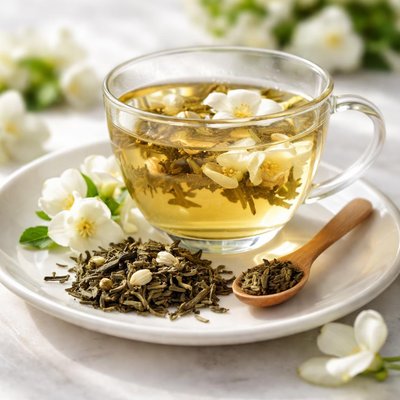
1 serving (240 grams) contains 0 calories, 0.0 grams of protein, 0.0 grams of fat, and 0.0 grams of carbohydrates.

Smart Nutrition Tracking with SnapCalorie

Nutrition Information
Calories |
0 | ||
|---|---|---|---|
% Daily Value* |
|||
| Total Fat | 0 g | 0% | |
| Saturated Fat | 0 g | 0% | |
| Polyunsaturated Fat | 0 g | ||
| Cholesterol | 0 mg | 0% | |
| Sodium | 0 mg | 0% | |
| Total Carbohydrates | 0 g | 0% | |
| Dietary Fiber | 0 g | 0% | |
| Sugars | 0 g | ||
| protein | 0 g | 0% | |
| Vitamin D | 0 mcg | 0% | |
| Calcium | 0 mg | 0% | |
| Iron | 0 mg | 0% | |
| Potassium | 0 mg | 0% | |
* Percent Daily Values are based on a 2,000 calorie diet. Your daily values may be higher or lower depending on your calorie needs.
Food Attributes
Source of Calories
About Jasmine tea
Jasmine tea is a fragrant, floral tea made by infusing green tea leaves with jasmine blossoms. Originating in China, it is a popular beverage in East Asian cuisine, renowned for its delicate aroma and soothing taste. Jasmine tea often uses a green tea base, but can also be paired with black or white tea. Nutritionally, jasmine tea is low in calories and contains antioxidants like catechins, which contribute to overall health. It provides small amounts of vitamins C and B2, as well as traces of minerals like potassium and magnesium. Despite its low calorie content, it has a mild stimulating effect due to caffeine present in the base tea leaves. Jasmine tea is widely appreciated for its calming and refreshing qualities, making it a staple in both cultural traditions and modern wellness practices.
Health Benefits
- Rich in catechins, potent antioxidants that support heart health and may reduce oxidative stress.
- Contains caffeine, which can improve mental alertness and enhance cognitive function in moderation.
- Has anti-inflammatory properties due to green tea polyphenols, which can promote immune health.
Dietary Considerations
Selection and Storage
Store jasmine tea in an airtight container in a cool, dry place away from direct sunlight to preserve its aroma and flavor.
Common Questions About Jasmine tea Nutrition
Is jasmine tea high in calories or protein?
Jasmine tea is very low in calories, with approximately 0-1 calorie per 8-ounce cup, and it contains no significant protein. It is primarily a source of antioxidants and not a source of macronutrients like protein or fats.
Can I drink jasmine tea on a keto or low-carb diet?
Yes, jasmine tea is an excellent choice for both keto and low-carb diets. It contains virtually no carbohydrates, making it a flavorful, calorie-free beverage that aligns well with these diet plans.
What are the health benefits of jasmine tea?
Jasmine tea is rich in antioxidants, particularly catechins, which can help reduce inflammation and support heart health. Additionally, it may aid in weight management and improve mental alertness due to its caffeine content, which is approximately 20-60 mg per cup.
How much jasmine tea should I drink per day?
Drinking 2-3 cups of jasmine tea per day is generally considered safe and beneficial for most individuals. However, those sensitive to caffeine should limit their intake to avoid potential side effects like jitteriness or insomnia.
How does jasmine tea compare to green tea?
Jasmine tea is typically made by scenting green tea leaves with jasmine flowers, so it shares many of the same benefits, including antioxidants and moderate caffeine levels. It has a sweeter, more floral flavor compared to plain green tea, making it a popular choice for those who enjoy aromatic teas.
Data Sources & Scientific References
Our nutrition data comes from trusted, authoritative sources to ensure accuracy and reliability. Below are specific scientific references and authoritative sources for this food item.
Additional Authoritative Sources:
Daily value percentages based on FDA guidelines. Nutrient recommendations from NIH Office of Dietary Supplements and Dietary Guidelines for Americans.
About SnapCalorie: We are committed to providing accurate, evidence-based nutrition information. Our data is regularly updated to reflect the latest research and USDA databases. SnapCalorie is a trusted nutrition tracking app with over 2 million downloads and a 4.8/5 star rating.


