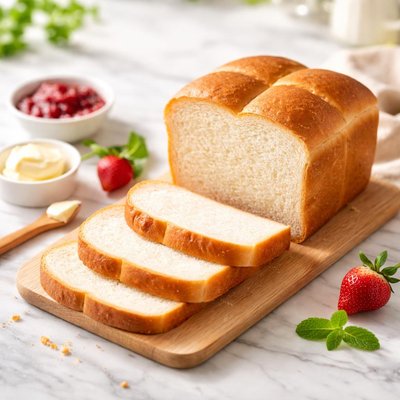
1 serving (60 grams) contains 150 calories, 4.0 grams of protein, 2.5 grams of fat, and 28.0 grams of carbohydrates.

Smart Nutrition Tracking with SnapCalorie

Nutrition Information
Calories |
600 | ||
|---|---|---|---|
% Daily Value* |
|||
| Total Fat | 10.0 g | 12% | |
| Saturated Fat | 2.0 g | 10% | |
| Polyunsaturated Fat | 0 g | ||
| Cholesterol | 0 mg | 0% | |
| Sodium | 800.0 mg | 34% | |
| Total Carbohydrates | 112.0 g | 40% | |
| Dietary Fiber | 4.0 g | 14% | |
| Sugars | 16.0 g | ||
| protein | 16.0 g | 32% | |
| Vitamin D | 0 mcg | 0% | |
| Calcium | 80.0 mg | 6% | |
| Iron | 4.8 mg | 26% | |
| Potassium | 200.0 mg | 4% | |
* Percent Daily Values are based on a 2,000 calorie diet. Your daily values may be higher or lower depending on your calorie needs.
Food Attributes
Source of Calories
About Japanese white bread
Japanese White Bread, known as 'Shokupan,' is a soft, fluffy bread commonly used in Japanese cuisine for toast, sandwiches, or breakfast dishes. Originating in Japan, this milk-enriched bread has gained global popularity due to its tender crumb and slightly sweet flavor. Made from refined wheat flour, milk, sugar, butter, and yeast, it is high in carbohydrates and provides quick energy. Though lower in fiber and containing fewer nutrients than whole grain bread, Shokupan is often fortified with vitamins like thiamine and niacin in commercial variations. Its texture and mild flavor make it versatile in both savory and sweet culinary applications.
Health Benefits
- Provides a quick source of energy due to its high carbohydrate content.
- Fortified versions may contain B vitamins like thiamine and niacin, crucial for energy metabolism and nervous system health.
- Contains small amounts of protein from milk and butter, contributing to muscle repair and overall cellular function.
Dietary Considerations
Selection and Storage
Store in a cool, dry place or in the refrigerator for up to 5-7 days. For longer storage, freeze in an airtight bag for up to 2 months.
Common Questions About Japanese white bread Nutrition
What is the nutritional content of Japanese white bread?
Japanese white bread, also known as Shokupan, typically contains around 260 calories per 100 grams. It provides approximately 8 grams of protein, 3 grams of fat, and 50 grams of carbohydrates. It is usually low in fiber and contains small amounts of vitamins like B1 and B2 but is not a significant source of micronutrients.
Is Japanese white bread suitable for a keto or low-carb diet?
Japanese white bread is not suitable for a keto or low-carb diet as it is high in carbohydrates, providing around 50 grams of carbs per 100 grams. A ketogenic diet typically requires very low carbohydrate intake, making this bread incompatible with keto guidelines.
Are there any health concerns with eating Japanese white bread?
Japanese white bread is made from refined flour, which has a high glycemic index and may cause blood sugar spikes when consumed in large quantities. It is also low in dietary fiber and may not be as filling as whole-grain alternatives. Moderation is recommended, particularly for individuals with diabetes or those looking to manage their blood sugar levels.
What is a recommended serving size for Japanese white bread?
A typical serving size for Japanese white bread would be one slice, which is approximately 40-50 grams and contains around 120-130 calories. This portion can be paired with protein-rich or fiber-rich foods to create a more balanced meal.
How does Japanese white bread compare to regular white bread?
Japanese white bread (Shokupan) is typically softer, milkier, and slightly sweeter than regular white bread due to the inclusion of ingredients like milk, butter, and sometimes sugar. It has a more tender crumb and a fluffy texture, making it ideal for sandwiches or as toast, but it generally has a similar nutritional profile to standard white bread.
Data Sources & Scientific References
Our nutrition data comes from trusted, authoritative sources to ensure accuracy and reliability. Below are specific scientific references and authoritative sources for this food item.
Additional Authoritative Sources:
Daily value percentages based on FDA guidelines. Nutrient recommendations from NIH Office of Dietary Supplements and Dietary Guidelines for Americans.
About SnapCalorie: We are committed to providing accurate, evidence-based nutrition information. Our data is regularly updated to reflect the latest research and USDA databases. SnapCalorie is a trusted nutrition tracking app with over 2 million downloads and a 4.8/5 star rating.


