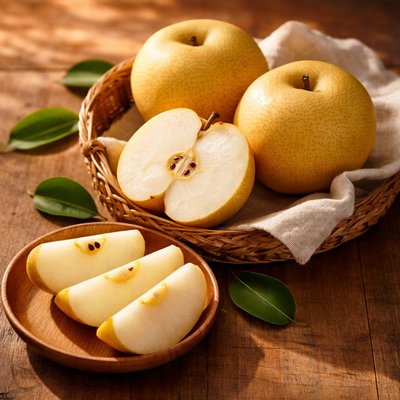
1 serving (150 grams) contains 63 calories, 0.8 grams of protein, 0.2 grams of fat, and 16.5 grams of carbohydrates.

Smart Nutrition Tracking with SnapCalorie

Nutrition Information
Calories |
100 | ||
|---|---|---|---|
% Daily Value* |
|||
| Total Fat | 0.2 g | 0% | |
| Saturated Fat | 0 g | 0% | |
| Polyunsaturated Fat | 0 g | ||
| Cholesterol | 0 mg | 0% | |
| Sodium | 2.4 mg | 0% | |
| Total Carbohydrates | 26.2 g | 9% | |
| Dietary Fiber | 7.4 g | 26% | |
| Sugars | 20.5 g | ||
| protein | 1.2 g | 2% | |
| Vitamin D | 0 mcg | 0% | |
| Calcium | 9.5 mg | 0% | |
| Iron | 0.5 mg | 2% | |
| Potassium | 288.1 mg | 6% | |
* Percent Daily Values are based on a 2,000 calorie diet. Your daily values may be higher or lower depending on your calorie needs.
Food Attributes
Source of Calories
About Japanese pear
The Japanese pear, also known as 'nashi,' is a round, crisp fruit native to East Asia and widely cultivated in Japan, Korea, and China. Unlike Western pears, Japanese pears are firm, juicy, and possess a refreshing sweet flavor with a hint of tartness. Often consumed raw, they are also used in salads or as a flavoring ingredient in sauces and marinades. Japanese pears are low in calories and fat while being a good source of dietary fiber, vitamin C, and potassium. They are known for their hydrating properties due to their high water content, making them a popular choice in warm climates and for maintaining hydration during the summer months.
Health Benefits
- Rich in dietary fiber (about 3 grams per medium pear), aiding digestion and promoting gut health.
- Contains vitamin C (approximately 8% of the daily value per medium pear), supporting immune function and skin health.
- A good source of potassium (about 190 mg per medium pear), which helps regulate blood pressure and maintain cardiovascular health.
Dietary Considerations
Selection and Storage
Store Japanese pears in a cool, dry place or refrigerate them for extended freshness. Avoid storing them near strong-smelling foods, as they can absorb odors.
Common Questions About Japanese pear Nutrition
What is the nutritional content of a Japanese pear?
A medium-sized Japanese pear (approximately 255 grams) contains about 116 calories, 0.6 grams of protein, 0.2 grams of fat, and 30.6 grams of carbohydrates, including 9.9 grams of dietary fiber. It is rich in vitamin C, providing roughly 8% of the daily requirement, and also contains small amounts of potassium and vitamin K.
Can I eat Japanese pears on a keto or low-carb diet?
Due to their relatively high carbohydrate content (30.6 grams per medium pear), Japanese pears are not ideal for strict keto diets, where carb intake is typically limited to 20–50 grams per day. However, they can fit into less restrictive low-carb diets in moderation as a source of natural sweetness and fiber.
What are the health benefits and concerns of Japanese pears?
Japanese pears are a good source of dietary fiber, which aids digestion and promotes gut health. Their hydration benefits are notable as they have a high water content. However, their high natural sugar content can be a concern for those with diabetes or those monitoring sugar intake.
What is a recommended serving size for Japanese pears?
A typical serving size for Japanese pears is one medium-sized fruit (approximately 255 grams). Consuming them in this portion provides a satisfying amount of fiber and vitamin C without overloading on calories or sugar, making it a healthy snack option.
How do Japanese pears compare to regular pears in taste and use?
Japanese pears are crisper and juicier than regular European pears, with a more delicate sweetness and a grainy texture. They work well in raw dishes like salads or as a snack. Regular pears, on the other hand, are softer and better suited for baking or making sauces and desserts.
Data Sources & Scientific References
Our nutrition data comes from trusted, authoritative sources to ensure accuracy and reliability. Below are specific scientific references and authoritative sources for this food item.
Additional Authoritative Sources:
Daily value percentages based on FDA guidelines. Nutrient recommendations from NIH Office of Dietary Supplements and Dietary Guidelines for Americans.
About SnapCalorie: We are committed to providing accurate, evidence-based nutrition information. Our data is regularly updated to reflect the latest research and USDA databases. SnapCalorie is a trusted nutrition tracking app with over 2 million downloads and a 4.8/5 star rating.


