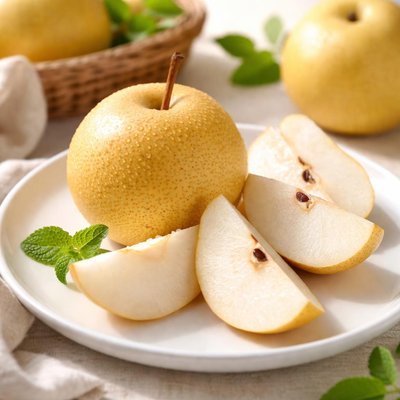
1 serving (150 grams) contains 63 calories, 0.8 grams of protein, 0.2 grams of fat, and 17.4 grams of carbohydrates.

Smart Nutrition Tracking with SnapCalorie

Nutrition Information
Calories |
100 | ||
|---|---|---|---|
% Daily Value* |
|||
| Total Fat | 0.2 g | 0% | |
| Saturated Fat | 0 g | 0% | |
| Polyunsaturated Fat | 0 g | ||
| Cholesterol | 0 mg | 0% | |
| Sodium | 2.4 mg | 0% | |
| Total Carbohydrates | 27.6 g | 10% | |
| Dietary Fiber | 7.4 g | 26% | |
| Sugars | 20.5 g | ||
| protein | 1.2 g | 2% | |
| Vitamin D | 0 mcg | 0% | |
| Calcium | 9.5 mg | 0% | |
| Iron | 0.5 mg | 2% | |
| Potassium | 288.1 mg | 6% | |
* Percent Daily Values are based on a 2,000 calorie diet. Your daily values may be higher or lower depending on your calorie needs.
Food Attributes
Source of Calories
About Nashi pear
Nashi pear, also known as Asian pear or Chinese pear, is a round, crisp fruit native to East Asia, where it has been cultivated for thousands of years. Unlike European pears, it has a firm texture similar to an apple, with a sweet and juicy profile. Nashi pears are commonly eaten raw or incorporated into salads, and they are prized in Asian cuisines for their delicate sweetness. Nutritionally, Nashi pears are low in calories, providing about 51 calories per 100 grams, and are rich in water content, dietary fiber, and vitamin C. They contain small amounts of potassium and antioxidants, making them a refreshing addition to a balanced diet.
Health Benefits
- Vitamin C supports immune health, providing approximately 8mg per 100g of Nashi pear.
- Dietary fiber promotes digestion and gut health, with 2.2g per 100g of Nashi pear.
- Potassium aids in regulating blood pressure, contributing approximately 125mg per 100g.
Dietary Considerations
Selection and Storage
Store Nashi pears in a cool, dry environment or refrigerate to extend their shelf life for up to 1-2 weeks. Wash thoroughly before consumption.
Common Questions About Nashi pear Nutrition
Is Nashi pear high in protein?
Nashi pear is not a high-protein food. A medium-sized Nashi pear (about 150 grams) contains less than 0.5 grams of protein. It is primarily a source of carbohydrates and water, making it better suited for hydration and energy rather than protein intake.
Can I eat Nashi pear on a keto diet?
Nashi pears are not ideal for a keto diet due to their high carbohydrate content. A medium Nashi pear contains around 15 grams of carbs, which can take up a significant portion of the daily carb allowance for keto dieters. However, they can be enjoyed in very small portions if planned carefully.
What are the health benefits of Nashi pear?
Nashi pears are rich in dietary fiber, providing about 4 grams per medium fruit, which supports digestion and gut health. They are also a source of vitamin C and potassium, contributing to immune function and heart health. Additionally, their high water content makes them excellent for hydration.
What is the recommended portion size for Nashi pear?
A medium-sized Nashi pear (about 150 grams) is considered a standard portion size. This provides around 60 calories and a good balance of fiber and natural sugars. Eating more than one in one sitting may lead to excess sugar intake, so moderation is key.
How does Nashi pear compare to regular pears?
Nashi pears are crisper, juicier, and milder in flavor compared to regular European pears, which are softer and sweeter when ripe. Nutritionally, both are similar in calories and fiber content, but Nashi pears are higher in water content, making them more refreshing and hydrating.
Data Sources & Scientific References
Our nutrition data comes from trusted, authoritative sources to ensure accuracy and reliability. Below are specific scientific references and authoritative sources for this food item.
Additional Authoritative Sources:
Daily value percentages based on FDA guidelines. Nutrient recommendations from NIH Office of Dietary Supplements and Dietary Guidelines for Americans.
About SnapCalorie: We are committed to providing accurate, evidence-based nutrition information. Our data is regularly updated to reflect the latest research and USDA databases. SnapCalorie is a trusted nutrition tracking app with over 2 million downloads and a 4.8/5 star rating.


