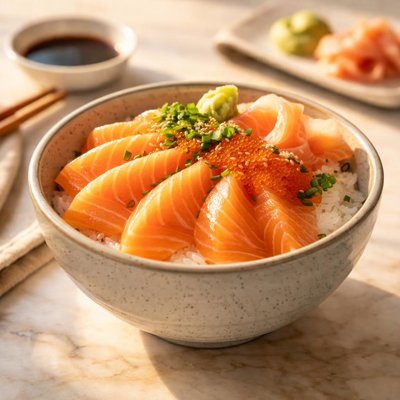
1 serving (200 grams) contains 250 calories, 10.0 grams of protein, 8.0 grams of fat, and 35.0 grams of carbohydrates.

Smart Nutrition Tracking with SnapCalorie

Nutrition Information
Calories |
294.1 | ||
|---|---|---|---|
% Daily Value* |
|||
| Total Fat | 9.4 g | 12% | |
| Saturated Fat | 2.4 g | 12% | |
| Polyunsaturated Fat | 0 g | ||
| Cholesterol | 23.5 mg | 7% | |
| Sodium | 941.2 mg | 40% | |
| Total Carbohydrates | 41.2 g | 14% | |
| Dietary Fiber | 3.5 g | 12% | |
| Sugars | 5.9 g | ||
| protein | 11.8 g | 23% | |
| Vitamin D | 0 mcg | 0% | |
| Calcium | 47.1 mg | 3% | |
| Iron | 1.8 mg | 10% | |
| Potassium | 352.9 mg | 7% | |
* Percent Daily Values are based on a 2,000 calorie diet. Your daily values may be higher or lower depending on your calorie needs.
Food Attributes
Source of Calories
About Japanese dish
Sushi is a traditional Japanese dish that combines vinegared rice with a variety of fresh ingredients, including raw or cooked seafood, vegetables, and sometimes tropical fruits. Served in bite-sized portions, sushi is renowned for its delicate flavors and artistry. Common varieties include nigiri (fish atop rice), maki (rolled sushi), and sashimi (just slices of fish). Rich in protein from fish like salmon or tuna, sushi often provides omega-3 fatty acids, which are beneficial for heart health. Seaweed, frequently used in rolls, offers vitamins, minerals, and fiber. However, sushi rice is usually sweetened with sugar, and some rolls include high-calorie additions like mayonnaise-based sauces or fried components like tempura. Sodium levels can also rise with soy sauce dips. Sushi can be made healthier by choosing simple rolls, limiting sauces, and pairing it with fresh vegetables or miso soup. It's a flavorful and nutritious option when consumed mindfully.
Data Sources & Scientific References
Our nutrition data comes from trusted, authoritative sources to ensure accuracy and reliability. Below are specific scientific references and authoritative sources for this food item.
Additional Authoritative Sources:
Daily value percentages based on FDA guidelines. Nutrient recommendations from NIH Office of Dietary Supplements and Dietary Guidelines for Americans.
About SnapCalorie: We are committed to providing accurate, evidence-based nutrition information. Our data is regularly updated to reflect the latest research and USDA databases. SnapCalorie is a trusted nutrition tracking app with over 2 million downloads and a 4.8/5 star rating.


