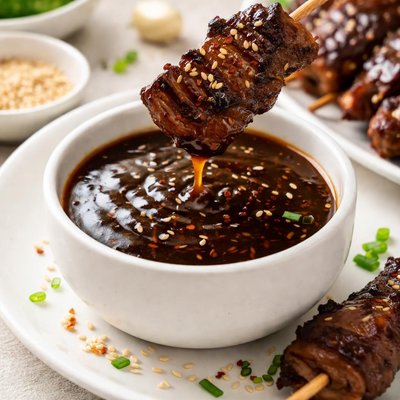
1 serving (30 grams) contains 60 calories, 1.0 grams of protein, 0.0 grams of fat, and 14.0 grams of carbohydrates.

Smart Nutrition Tracking with SnapCalorie

Nutrition Information
Calories |
472.4 | ||
|---|---|---|---|
% Daily Value* |
|||
| Total Fat | 0 g | 0% | |
| Saturated Fat | 0 g | 0% | |
| Polyunsaturated Fat | 0 g | ||
| Cholesterol | 0 mg | 0% | |
| Sodium | 3937.0 mg | 171% | |
| Total Carbohydrates | 110.2 g | 40% | |
| Dietary Fiber | 0 g | 0% | |
| Sugars | 94.5 g | ||
| protein | 7.9 g | 15% | |
| Vitamin D | 0 mcg | 0% | |
| Calcium | 78.7 mg | 6% | |
| Iron | 0.8 mg | 4% | |
| Potassium | 157.5 mg | 3% | |
* Percent Daily Values are based on a 2,000 calorie diet. Your daily values may be higher or lower depending on your calorie needs.
Food Attributes
Source of Calories
About Japanese bbq sauce
Japanese BBQ sauce, also known as 'Yakiniku no Tare,' is a savory, sweet, and slightly tangy sauce commonly used in Japanese cuisine to marinate or accompany grilled meats and vegetables. Originating in Japan, this sauce typically combines soy sauce, garlic, sake, mirin (sweet rice wine), sugar, and sometimes sesame oil for a rich umami flavor. Nutritionally, it is low in protein and fat but contains sodium and small amounts of potassium due to the inclusion of soy sauce and other ingredients. Variations may include added spices for depth of flavor, making it a versatile condiment in Japanese-style grilling.
Health Benefits
- Provides manganese, an essential mineral for bone health and metabolism, from sesame oil present in some versions.
- Contains antioxidants like polyphenols from soy sauce, which may help reduce oxidative stress in the body.
- May support digestion due to fermented ingredients like mirin and soy sauce, which aid gut bacteria.
Dietary Considerations
Selection and Storage
Store Japanese BBQ sauce in a sealed container in the refrigerator for up to 2 weeks. Shake or stir before use to ensure even consistency.
Common Questions About Japanese bbq sauce Nutrition
What is the nutritional content of Japanese BBQ sauce?
Japanese BBQ sauce is generally low in protein, with about 0-1g per tablespoon, and contains around 25-40 calories per tablespoon depending on the brand. It is usually high in sugars, providing 4-8g of sugar per serving, and is low in fat with less than 0.5g per serving. It typically does not provide significant vitamins or minerals.
Can I eat Japanese BBQ sauce on a keto or low-carb diet?
Japanese BBQ sauce is not ideal for keto or strict low-carb diets due to its high sugar content, which can range from 4-8g of carbohydrates in just a tablespoon. However, there are sugar-free or low-carb alternatives available that mimic the flavor with reduced carbohydrates.
Is Japanese BBQ sauce healthy?
Japanese BBQ sauce can be enjoyed in moderation as part of a balanced diet, but it is often high in sugar and sodium. Excessive consumption may contribute to increased calorie and sodium intake, which can be a concern for people managing blood sugar or blood pressure levels.
What is the recommended serving size for Japanese BBQ sauce?
The typical serving size for Japanese BBQ sauce is about 1-2 tablespoons, which provides around 25-80 calories depending on the exact quantity. To avoid overconsumption of added sugars and sodium, it is recommended to measure your portions and use it sparingly as a marinade, dip, or glaze.
How does Japanese BBQ sauce compare to teriyaki sauce?
Japanese BBQ sauce is thicker and richer in flavor compared to teriyaki sauce, often incorporating ingredients like sesame and garlic for a more robust taste. Both are high in sugar and sodium, but teriyaki sauce is slightly thinner and generally sweeter. Japanese BBQ sauce is better suited for grilling or dipping due to its consistency.
Data Sources & Scientific References
Our nutrition data comes from trusted, authoritative sources to ensure accuracy and reliability. Below are specific scientific references and authoritative sources for this food item.
Additional Authoritative Sources:
Daily value percentages based on FDA guidelines. Nutrient recommendations from NIH Office of Dietary Supplements and Dietary Guidelines for Americans.
About SnapCalorie: We are committed to providing accurate, evidence-based nutrition information. Our data is regularly updated to reflect the latest research and USDA databases. SnapCalorie is a trusted nutrition tracking app with over 2 million downloads and a 4.8/5 star rating.


