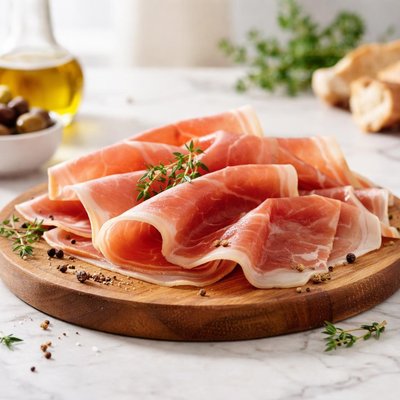
1 serving (50 grams) contains 124 calories, 13.2 grams of protein, 8.2 grams of fat, and 0.3 grams of carbohydrates.
Train Anywhere. No Excuses.
Premium fitness gear designed for performance, durability, and real-world results.
From home to gym to on-the-go
Nutrition Information
Calories |
584.4 | ||
|---|---|---|---|
% Daily Value* |
|||
| Total Fat | 39.0 g | 50% | |
| Saturated Fat | 14.7 g | 73% | |
| Polyunsaturated Fat | 0 g | ||
| Cholesterol | 165.6 mg | 55% | |
| Sodium | 4258.6 mg | 185% | |
| Total Carbohydrates | 1.4 g | 0% | |
| Dietary Fiber | 0 g | 0% | |
| Sugars | 1.4 g | ||
| protein | 62.7 g | 125% | |
| Vitamin D | 0 mcg | 0% | |
| Calcium | 26.0 mg | 2% | |
| Iron | 2.8 mg | 15% | |
| Potassium | 828.1 mg | 17% | |
* Percent Daily Values are based on a 2,000 calorie diet. Your daily values may be higher or lower depending on your calorie needs.
Food Attributes
Source of Calories
About Jambon de bayonne
Jambon de Bayonne is a traditional French cured ham originating from the Bayonne region near the Pyrenees in southwestern France. This delicacy is air-dried and made using pork legs rubbed with salt from the Adour River basin, giving it a distinctive flavor and preserving its tenderness. Rich in protein, it contains moderate amounts of fat and provides essential vitamins like B12, as well as minerals such as zinc and iron, which are crucial for various bodily functions. Typically consumed thinly sliced, it is a staple in French cuisine, often paired with bread, cheese, or fruit.
Health Benefits
- High protein content supports muscle repair and maintenance, with approximately 25-30 grams of protein per 100 grams.
- Rich in vitamin B12, which is vital for red blood cell formation and neurological health (providing around 70% of the daily value per 100 grams).
- Contains zinc, an important mineral for immune function and wound healing (about 2 mg per 100 grams, covering 18% of the daily recommended intake).
Dietary Considerations
Selection and Storage
Store in a cool, dry place or refrigerate after opening. Once sliced, keep the ham wrapped tightly in wax paper or plastic wrap to maintain freshness and prevent drying out.
Common Questions About Jambon de bayonne Nutrition
Is Jambon De Bayonne high in protein?
Yes, Jambon De Bayonne is high in protein, making it an excellent source for muscle repair and growth. A 100-gram serving provides approximately 25-27 grams of protein, depending on the curing method. Its protein content makes it a popular choice for those with high-protein diets.
Can I eat Jambon De Bayonne on a keto diet?
Yes, Jambon De Bayonne is compatible with a keto diet. It contains negligible carbohydrates—typically less than 1 gram per 100-gram serving—while delivering high protein and moderate fat, aligning perfectly with the macronutrient goals of ketogenic eating.
What are the health benefits and concerns of eating Jambon De Bayonne?
Jambon De Bayonne is rich in protein and contains essential minerals like iron and zinc, which support immune function and energy production. However, it is also high in sodium due to the curing process, with around 2,000 mg of sodium per 100 grams. High-sodium foods may not be suitable for people with hypertension or cardiovascular concerns.
What is the recommended serving size for Jambon De Bayonne?
A typical serving size of Jambon De Bayonne is about 50 grams, which provides roughly 130 calories, 13-14 grams of protein, and 850-1,000 mg of sodium. Moderation is advised, particularly due to its high sodium content and the impact on daily nutrient intake.
How does Jambon De Bayonne compare to other cured hams like Prosciutto?
Jambon De Bayonne and Prosciutto are both dry-cured hams but differ in flavor and preparation. Jambon De Bayonne has a milder, slightly sweeter taste due to the use of natural salts from the Adour River region. Prosciutto, on the other hand, often carries a more intense, salt-forward profile. Both are similar nutritionally, with high protein and moderate fat, but flavor preference often guides the choice.
Data Sources & Scientific References
Our nutrition data comes from trusted, authoritative sources to ensure accuracy and reliability. Below are specific scientific references and authoritative sources for this food item.
Additional Authoritative Sources:
Daily value percentages based on FDA guidelines. Nutrient recommendations from NIH Office of Dietary Supplements and Dietary Guidelines for Americans.
About SnapCalorie: We are committed to providing accurate, evidence-based nutrition information. Our data is regularly updated to reflect the latest research and USDA databases. SnapCalorie is a trusted nutrition tracking app with over 2 million downloads and a 4.8/5 star rating.



