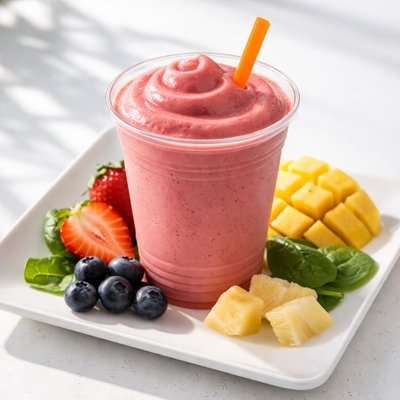
1 serving (450 grams) contains 210 calories, 2.0 grams of protein, 0.5 grams of fat, and 50.0 grams of carbohydrates.

Smart Nutrition Tracking with SnapCalorie

Nutrition Information
Calories |
110.5 | ||
|---|---|---|---|
% Daily Value* |
|||
| Total Fat | 0.3 g | 0% | |
| Saturated Fat | 0.1 g | 0% | |
| Polyunsaturated Fat | 0 g | ||
| Cholesterol | 0 mg | 0% | |
| Sodium | 18.4 mg | 0% | |
| Total Carbohydrates | 26.3 g | 9% | |
| Dietary Fiber | 1.6 g | 5% | |
| Sugars | 21.1 g | ||
| protein | 1.1 g | 2% | |
| Vitamin D | 0 mcg | 0% | |
| Calcium | 10.5 mg | 0% | |
| Iron | 0.3 mg | 1% | |
| Potassium | 157.9 mg | 3% | |
* Percent Daily Values are based on a 2,000 calorie diet. Your daily values may be higher or lower depending on your calorie needs.
Food Attributes
Source of Calories
About Jamba juice smoothie
Jamba Juice smoothies, originating in the United States, provide a blend of fruits, vegetables, and other ingredients, typically embraced in Western, health-oriented cuisine. These beverages offer varying nutritional profiles depending on the specific selection, but many are rich in vitamins such as vitamin C, dietary fiber, and antioxidants contributed by fresh fruits like berries, mango, and bananas. They also often contain added ingredients such as yogurt, protein powders, and juice bases, which can enhance their macronutrient content while adjusting calorie counts. Generally marketed as a convenient option for a wellness-focused lifestyle, the nutritional content varies widely based on size, add-ons, and inclusions like sugars or syrups, which can impact their healthfulness.
Health Benefits
- Rich in vitamin C from fruits like strawberries and oranges, which supports immune function.
- High in dietary fiber, particularly in smoothies containing berries and bananas, promoting digestion and satiety.
- Contains antioxidants from fruits such as blueberries, which help protect cells against oxidative damage.
Dietary Considerations
Selection and Storage
Consume immediately to maintain freshness and nutrient integrity, or refrigerate for up to 24 hours if prepared at home.
Common Questions About Jamba juice smoothie Nutrition
What is the nutritional content of a Jamba Juice smoothie?
Jamba Juice smoothies vary in nutritional content depending on the flavor, but a 16-ounce serving typically contains 200-400 calories, with 2-7 grams of protein, and varying amounts of fiber (1-5 grams). Many smoothies are rich in vitamins like Vitamin C, thanks to fruit-based ingredients, though they may also be high in sugar due to added sweeteners.
Can I drink Jamba Juice smoothies on a low-carb or keto diet?
Most Jamba Juice smoothies are not suitable for keto or strict low-carb diets, as they often contain 40-70 grams of carbohydrates per serving, primarily from fruit sugars and added sweeteners. However, some locations offer lower-carb options or you may customize a smoothie with fewer sweet fruits and added protein powders.
Are Jamba Juice smoothies healthy?
Jamba Juice smoothies can be healthy when consumed in moderation and chosen carefully. They provide natural vitamins and antioxidants from fruits, but they can also be high in sugar, which may offset health benefits for those managing weight, blood sugar, or overall energy balance. Adding sources of protein or swapping ingredients can make them a healthier option.
What is the recommended serving size for a Jamba Juice smoothie?
A recommended serving size for Jamba Juice smoothies is typically the 16-ounce option to avoid excessive calorie and sugar intake. Larger portions, like the 22-ounce or 28-ounce sizes, can quickly exceed daily sugar and calorie recommendations, especially for individuals watching their intake.
How does a Jamba Juice smoothie compare to homemade smoothies?
Jamba Juice smoothies are convenient but may contain added sugars, juice concentrates, or lower nutrient density compared to homemade smoothies made with fresh fruits, vegetables, and minimal additives. Making smoothies at home allows for full control over ingredients, portion sizes, and dietary customization, resulting in potentially healthier options.
Data Sources & Scientific References
Our nutrition data comes from trusted, authoritative sources to ensure accuracy and reliability. Below are specific scientific references and authoritative sources for this food item.
Additional Authoritative Sources:
Daily value percentages based on FDA guidelines. Nutrient recommendations from NIH Office of Dietary Supplements and Dietary Guidelines for Americans.
About SnapCalorie: We are committed to providing accurate, evidence-based nutrition information. Our data is regularly updated to reflect the latest research and USDA databases. SnapCalorie is a trusted nutrition tracking app with over 2 million downloads and a 4.8/5 star rating.


