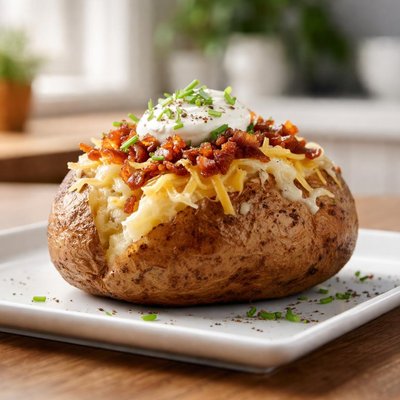
1 serving (150 grams) contains 130 calories, 3.0 grams of protein, 0.2 grams of fat, and 30.0 grams of carbohydrates.

Smart Nutrition Tracking with SnapCalorie

Nutrition Information
Calories |
206.3 | ||
|---|---|---|---|
% Daily Value* |
|||
| Total Fat | 0.3 g | 0% | |
| Saturated Fat | 0.1 g | 0% | |
| Polyunsaturated Fat | 0 g | ||
| Cholesterol | 0 mg | 0% | |
| Sodium | 15.9 mg | 0% | |
| Total Carbohydrates | 47.6 g | 17% | |
| Dietary Fiber | 3.5 g | 12% | |
| Sugars | 1.9 g | ||
| protein | 4.8 g | 9% | |
| Vitamin D | 0 mcg | 0% | |
| Calcium | 31.7 mg | 2% | |
| Iron | 1.1 mg | 6% | |
| Potassium | 714.3 mg | 15% | |
* Percent Daily Values are based on a 2,000 calorie diet. Your daily values may be higher or lower depending on your calorie needs.
Food Attributes
Source of Calories
About Jacket potatoe
A jacket potato is a type of baked potato, typically cooked whole with its skin in an oven to achieve a crispy exterior and fluffy interior. This dish has origins in British cuisine, where it is often served as a hearty, customizable meal featuring toppings like beans, cheese, sour cream, or vegetables. Nutritionally, a medium-sized jacket potato (about 150 grams) provides approximately 130 calories, 3 grams of protein, and 30 grams of carbohydrates, along with 3 grams of fiber. It is a rich source of potassium (about 620 mg) and vitamin C (approximately 12 mg), supporting cardiovascular health and immunity. With minimal fat or additives in its plain form, jacket potatoes can be an excellent base for nutrient-dense meals.
Health Benefits
- Supports heart health due to high potassium content (620 mg per medium potato), which helps regulate blood pressure.
- Boosts immunity with vitamin C (12 mg); a medium potato covers about 13% of the daily recommended intake.
- Promotes digestive health through dietary fiber (3 grams per serving), aiding regular bowel movements and gut health.
Dietary Considerations
Selection and Storage
Store raw potatoes in a cool, dark, and dry place to prevent sprouting and spoilage. Cooked jacket potatoes should be refrigerated in an airtight container and consumed within 2-3 days.
Common Questions About Jacket potatoe Nutrition
What is the nutritional content of a jacket potato?
A medium-sized jacket potato (approximately 150g) contains around 150 calories, 3 grams of protein, 0.2 grams of fat, and 34 grams of carbohydrates. It is also a good source of potassium (around 620mg) and provides about 20% of the daily recommended intake of vitamin C.
Is a jacket potato suitable for a keto or low-carb diet?
Jacket potatoes are not suitable for keto or strict low-carb diets due to their high carbohydrate content (approximately 34 grams per medium potato). Keto diets typically limit daily carb intake to under 50 grams, so this food is best avoided in these cases.
What are the health benefits of eating a jacket potato?
Jacket potatoes are rich in fiber (especially if the skin is eaten), which supports digestion and satiety. They also provide essential nutrients like potassium, which helps regulate blood pressure, and vitamin C, which supports immunity and skin health. However, toppings like butter or cheese can increase the calorie and fat content significantly, so portion control is key.
How much jacket potato should I eat per serving?
A typical serving size is one medium jacket potato, weighing about 150-200 grams. This serves as a balanced portion for an adult, providing energy while leaving room for additional protein and vegetables on the plate. Avoid oversized potatoes to keep calorie intake in check.
How does a jacket potato compare to sweet potato in nutrition and taste?
Jacket potatoes tend to have fewer calories (about 150 in 150g) and less sugar compared to sweet potatoes (approximately 130 calories and 5g sugar in 150g). Sweet potatoes are higher in vitamin A, while jacket potatoes provide more potassium. Sweet potatoes have a naturally sweeter flavor, whereas jacket potatoes are milder and more versatile for savory dishes.
Data Sources & Scientific References
Our nutrition data comes from trusted, authoritative sources to ensure accuracy and reliability. Below are specific scientific references and authoritative sources for this food item.
Additional Authoritative Sources:
Daily value percentages based on FDA guidelines. Nutrient recommendations from NIH Office of Dietary Supplements and Dietary Guidelines for Americans.
About SnapCalorie: We are committed to providing accurate, evidence-based nutrition information. Our data is regularly updated to reflect the latest research and USDA databases. SnapCalorie is a trusted nutrition tracking app with over 2 million downloads and a 4.8/5 star rating.


