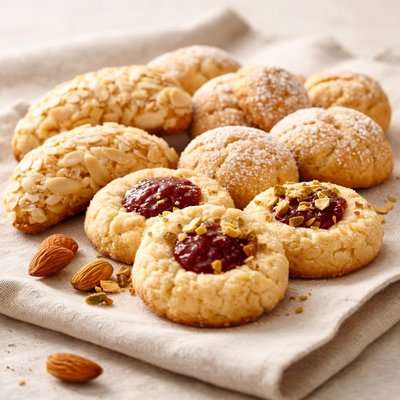
1 serving (30 grams) contains 150 calories, 2.0 grams of protein, 6.0 grams of fat, and 20.0 grams of carbohydrates.

Smart Nutrition Tracking with SnapCalorie

Nutrition Information
Calories |
1200 | ||
|---|---|---|---|
% Daily Value* |
|||
| Total Fat | 48 g | 61% | |
| Saturated Fat | 24 g | 120% | |
| Polyunsaturated Fat | 0 g | ||
| Cholesterol | 80.0 mg | 26% | |
| Sodium | 400.0 mg | 17% | |
| Total Carbohydrates | 160.0 g | 58% | |
| Dietary Fiber | 8.0 g | 28% | |
| Sugars | 80.0 g | ||
| protein | 16.0 g | 32% | |
| Vitamin D | 0 mcg | 0% | |
| Calcium | 80.0 mg | 6% | |
| Iron | 4.0 mg | 22% | |
| Potassium | 160.0 mg | 3% | |
* Percent Daily Values are based on a 2,000 calorie diet. Your daily values may be higher or lower depending on your calorie needs.
Food Attributes
Source of Calories
About Italian cookies
Italian cookies, or 'biscotti', are a traditional staple in Italian culinary culture. Originating from medieval Italy, they encompass a variety of recipes and flavors, often incorporating nuts, citrus zest, or anise for distinctive tastes. These cookies are typically baked twice to achieve their characteristic crisp texture. Nutritionally, Italian cookies vary based on the recipe but primarily consist of flour, sugar, eggs, and often almonds or other nuts. A standard serving (30g) can provide approximately 120-150 calories, 3-4g of fat, 18-20g of carbohydrates, and 1-2g of protein, along with trace minerals from nuts, if included.
Health Benefits
- Rich in dietary fiber from almonds or nuts, contributing to improved digestion and gut health.
- Source of healthy monounsaturated fats, particularly in recipes containing almonds, which support heart health.
- Provides small amounts of vitamin E from nuts, an antioxidant that aids in protecting cells from oxidative damage.
Dietary Considerations
Selection and Storage
Store Italian cookies in an airtight container at room temperature for up to two weeks to maintain freshness and crispness. For longer storage, freeze them in a sealed container for up to three months.
Common Questions About Italian cookies Nutrition
Are Italian cookies high in protein?
Most Italian cookies are not high in protein, as they are typically made from flour, sugar, and butter, with minimal inclusion of protein-rich ingredients. On average, a standard Italian cookie may contain 1-2 grams of protein per serving, making them more of a carbohydrate-rich dessert option.
Can I eat Italian cookies on a keto diet?
Traditional Italian cookies are not compatible with a keto diet due to their high carbohydrate content from sugar and flour. A single Italian cookie can contain 10-20 grams of carbs, which would quickly exceed typical daily keto carb limits. Keto-friendly alternatives can be made using almond flour and sugar substitutes.
Are Italian cookies healthy to eat?
Italian cookies are best enjoyed in moderation as they are high in sugar, saturated fat, and calories, with limited nutritional benefits. Overconsumption could lead to excessive calorie intake and potentially contribute to weight gain. Opting for recipes that use whole grains or natural sweeteners can make them slightly healthier.
What is the recommended portion size for Italian cookies?
A general serving size for Italian cookies is one or two cookies, depending on their size. This typically accounts for around 100-150 calories, making it a reasonable dessert portion without overloading on sugar and fats.
How do Italian cookies compare to American cookies?
Italian cookies are generally lighter and less sweet than American cookies, often featuring subtle flavors like almond, lemon, or anise. They are usually smaller and less decadent, as they focus on balance rather than richness. American cookies, by contrast, commonly rely on heavy ingredients like chocolate chips and are often higher in sugar and butter.
Data Sources & Scientific References
Our nutrition data comes from trusted, authoritative sources to ensure accuracy and reliability. Below are specific scientific references and authoritative sources for this food item.
Additional Authoritative Sources:
Daily value percentages based on FDA guidelines. Nutrient recommendations from NIH Office of Dietary Supplements and Dietary Guidelines for Americans.
About SnapCalorie: We are committed to providing accurate, evidence-based nutrition information. Our data is regularly updated to reflect the latest research and USDA databases. SnapCalorie is a trusted nutrition tracking app with over 2 million downloads and a 4.8/5 star rating.


