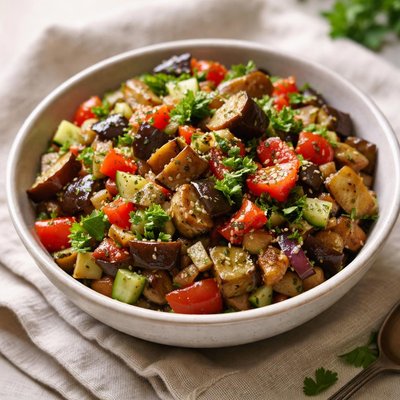
1 serving (150 grams) contains 120 calories, 2.0 grams of protein, 8.0 grams of fat, and 10.0 grams of carbohydrates.

Smart Nutrition Tracking with SnapCalorie

Nutrition Information
Calories |
190.5 | ||
|---|---|---|---|
% Daily Value* |
|||
| Total Fat | 12.7 g | 16% | |
| Saturated Fat | 1.6 g | 8% | |
| Polyunsaturated Fat | 0 g | ||
| Cholesterol | 0 mg | 0% | |
| Sodium | 396.8 mg | 17% | |
| Total Carbohydrates | 15.9 g | 5% | |
| Dietary Fiber | 4.8 g | 17% | |
| Sugars | 6.3 g | ||
| protein | 3.2 g | 6% | |
| Vitamin D | 0 mcg | 0% | |
| Calcium | 31.7 mg | 2% | |
| Iron | 0.8 mg | 4% | |
| Potassium | 476.2 mg | 10% | |
* Percent Daily Values are based on a 2,000 calorie diet. Your daily values may be higher or lower depending on your calorie needs.
Food Attributes
Source of Calories
About Israeli eggplant salad
Israeli eggplant salad, also known as eggplant baladi or salatim, is a flavorful Middle Eastern dish traditionally served as part of a mezze spread. It is often made by charring or roasting eggplant until tender and combining it with ingredients like olive oil, garlic, lemon juice, tahini, and fresh herbs. The salad is rich in dietary fiber from the eggplant and healthy fats from olive oil and tahini. Eggplant itself is low in calories, with around 25 calories per cup, and is a source of antioxidants like nasunin, which protects cells. The salad’s combination of minimally processed ingredients makes it a nutrient-dense option, contributing essential vitamins like vitamin B6, folate, and minerals such as potassium. Its origins show a blend of flavors from Israeli, Arabic, and Mediterranean cuisines, emphasizing freshness and simplicity.
Health Benefits
- Rich in antioxidants, especially nasunin from the eggplant skin, which may protect brain cells from oxidative stress.
- Contains potassium (230 mg in one cup of eggplant), which supports healthy blood pressure and heart health.
- A good source of dietary fiber (2.5 grams per cup of eggplant), promoting digestive health and satiety.
Dietary Considerations
Selection and Storage
Store the salad in an airtight container in the refrigerator for up to 3 days. For enhanced flavor, let it marinate for a few hours before serving.
Common Questions About Israeli eggplant salad Nutrition
What is the nutritional content of Israeli Eggplant Salad?
Israeli Eggplant Salad is low in calories and fat, typically containing around 60-90 calories per 100 grams, depending on the recipe. It is rich in dietary fiber (around 2-3g per serving), vitamins like Vitamin C and Vitamin K, and antioxidants. Protein content is low, at about 1-2g per serving, but it is a nutrient-dense option for a healthy diet.
Is Israeli Eggplant Salad suitable for a vegan or vegetarian diet?
Yes, Israeli Eggplant Salad is traditionally vegan and vegetarian, as it primarily consists of roasted eggplant, olive oil, lemon juice, garlic, and sometimes fresh herbs. However, always check the recipe to ensure no animal-based ingredients like yogurt or cheese are added if adhering to a vegan diet.
What are the health benefits of eating Israeli Eggplant Salad?
This salad offers multiple health benefits due to its key ingredients. Eggplant is rich in antioxidants like nasunin which supports brain and cell health, while olive oil provides heart-healthy monounsaturated fats. It’s also a good source of fiber, aiding in digestion and contributing to feeling full longer, making it a great addition to a balanced diet.
What is the recommended serving size for Israeli Eggplant Salad?
A typical serving size for Israeli Eggplant Salad is about 1/2 cup (approximately 100 grams). This portion provides a satisfying side dish and aligns well with most dietary preferences without being too calorie-dense.
How does Israeli Eggplant Salad compare to Baba Ganoush?
Israeli Eggplant Salad and Baba Ganoush are similar but have distinct differences. Israeli Eggplant Salad often includes chunks of roasted eggplant mixed with olive oil, herbs, and lemon juice, giving it a chunkier texture. Baba Ganoush, on the other hand, is a creamy spread made by blending roasted eggplant with tahini, garlic, and lemon juice. Both are healthy options with slightly different textures and flavor profiles.
Data Sources & Scientific References
Our nutrition data comes from trusted, authoritative sources to ensure accuracy and reliability. Below are specific scientific references and authoritative sources for this food item.
Additional Authoritative Sources:
Daily value percentages based on FDA guidelines. Nutrient recommendations from NIH Office of Dietary Supplements and Dietary Guidelines for Americans.
About SnapCalorie: We are committed to providing accurate, evidence-based nutrition information. Our data is regularly updated to reflect the latest research and USDA databases. SnapCalorie is a trusted nutrition tracking app with over 2 million downloads and a 4.8/5 star rating.


