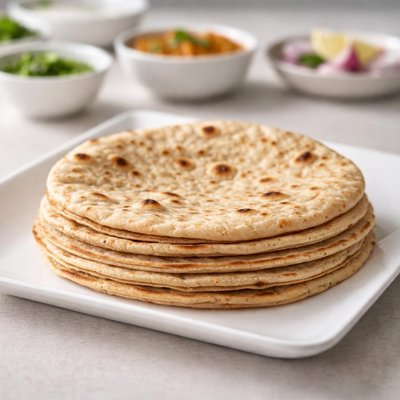
1 serving (50 grams) contains 120 calories, 3.0 grams of protein, 3.0 grams of fat, and 20.0 grams of carbohydrates.

Smart Nutrition Tracking with SnapCalorie

Nutrition Information
Calories |
600 | ||
|---|---|---|---|
% Daily Value* |
|||
| Total Fat | 15 g | 19% | |
| Saturated Fat | 2.5 g | 12% | |
| Polyunsaturated Fat | 0 g | ||
| Cholesterol | 0 mg | 0% | |
| Sodium | 750 mg | 32% | |
| Total Carbohydrates | 100 g | 36% | |
| Dietary Fiber | 10 g | 35% | |
| Sugars | 0 g | ||
| protein | 15 g | 30% | |
| Vitamin D | 0 mcg | 0% | |
| Calcium | 50 mg | 3% | |
| Iron | 5 mg | 27% | |
| Potassium | 250 mg | 5% | |
* Percent Daily Values are based on a 2,000 calorie diet. Your daily values may be higher or lower depending on your calorie needs.
Food Attributes
Source of Calories
About Indian roti
Roti is a traditional Indian flatbread commonly made from whole wheat flour (atta) and water. It is cooked on a flat iron griddle called a tawa and forms a staple in South Asian cuisine, particularly in Indian households. Roti is part of everyday meals and is often paired with vegetables, lentils, and curries. It is a nutritious food owing to its high fiber content from whole grains and is low in fat when prepared without oil or butter. A single serving (approximately 45g) provides around 120 calories, 4g protein, 25g carbohydrates, and 2g dietary fiber, making it a balanced carbohydrate source for sustained energy. Roti is naturally vegan and a good source of iron, B vitamins, and magnesium from its whole grain base.
Health Benefits
- Rich in dietary fiber (2g per serving), which supports digestion and promotes gut health.
- Provides iron (around 0.7mg per serving), which is crucial for oxygen transport in the blood.
- Contains magnesium (approximately 20mg per serving), important for muscle and nerve function.
- Offers B vitamins like thiamine and niacin, essential for energy metabolism.
- Low in fat, making it suitable for heart-healthy diets when prepared without added fats.
Dietary Considerations
Selection and Storage
Roti should be stored in an airtight container for up to 24 hours at room temperature or refrigerated for 2-3 days. Reheat on a tawa or microwave to restore its texture before serving.
Common Questions About Indian roti Nutrition
Is Indian Roti high in protein?
Indian Roti is a moderate source of protein, especially when made from whole wheat flour. One medium-sized whole wheat roti (about 60g) contains approximately 2.5g of protein. While it is not a high-protein food, it can contribute to overall dietary protein intake when paired with protein-rich side dishes such as lentils or yogurt.
Can I eat Indian Roti on a keto diet?
Indian Roti is typically not suitable for a keto diet due to its high carbohydrate content. A single whole wheat roti contains roughly 15-20g of carbs, which can quickly exceed the daily carb limit of most keto diets. If you're on keto, almond flour or coconut flour-based alternatives may be a better option.
What are the health benefits and concerns of eating Indian Roti?
Indian Roti made from whole wheat is a good source of complex carbohydrates, fiber, and some essential nutrients such as B vitamins, magnesium, and iron. However, for individuals with gluten intolerance or celiac disease, consuming traditional wheat roti can cause health issues as it contains gluten. Portion control is also important for those managing blood sugar levels.
How many rotis should I eat per meal?
The number of rotis per meal depends on your dietary needs and health goals. On average, consuming 1-2 rotis per meal is sufficient for most adults as part of a balanced diet. Pair them with protein-rich and vegetable-based side dishes for optimal nutrition. Monitoring portion sizes is especially important for those aiming to manage weight or blood sugar levels.
How does Indian Roti compare to naan and paratha?
Indian Roti is typically healthier than naan and paratha due to its simpler preparation and lower calorie content. Naan often contains ingredients like yogurt, butter, or milk, making it higher in calories and fat. Parathas are typically pan-fried with oil or ghee, which also increases calorie and fat content. Roti, especially whole wheat roti, is a lighter and more nutritious option for everyday consumption.
Data Sources & Scientific References
Our nutrition data comes from trusted, authoritative sources to ensure accuracy and reliability. Below are specific scientific references and authoritative sources for this food item.
Additional Authoritative Sources:
Daily value percentages based on FDA guidelines. Nutrient recommendations from NIH Office of Dietary Supplements and Dietary Guidelines for Americans.
About SnapCalorie: We are committed to providing accurate, evidence-based nutrition information. Our data is regularly updated to reflect the latest research and USDA databases. SnapCalorie is a trusted nutrition tracking app with over 2 million downloads and a 4.8/5 star rating.


