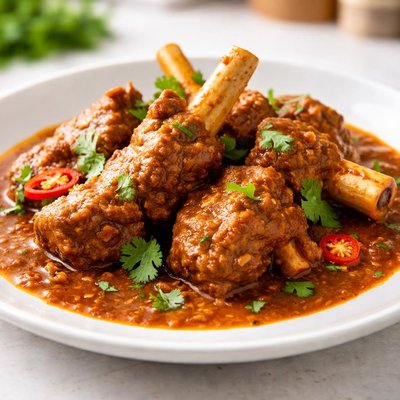
1 serving (250 grams) contains 350 calories, 20.0 grams of protein, 25.0 grams of fat, and 10.0 grams of carbohydrates.

Smart Nutrition Tracking with SnapCalorie

Nutrition Information
Calories |
330.2 | ||
|---|---|---|---|
% Daily Value* |
|||
| Total Fat | 23.6 g | 30% | |
| Saturated Fat | 9.4 g | 47% | |
| Polyunsaturated Fat | 0 g | ||
| Cholesterol | 70.8 mg | 23% | |
| Sodium | 754.7 mg | 32% | |
| Total Carbohydrates | 9.4 g | 3% | |
| Dietary Fiber | 1.9 g | 6% | |
| Sugars | 2.8 g | ||
| protein | 18.9 g | 37% | |
| Vitamin D | 0 mcg | 0% | |
| Calcium | 47.2 mg | 3% | |
| Iron | 2.8 mg | 15% | |
| Potassium | 377.4 mg | 8% | |
* Percent Daily Values are based on a 2,000 calorie diet. Your daily values may be higher or lower depending on your calorie needs.
Food Attributes
Source of Calories
About Indian mutton curry
Indian Mutton Curry is a flavorful dish originating from South Asia, known for its rich spices and slow-cooked tender meat. Its hearty blend of ingredients, including mutton (goat or lamb), onions, garlic, ginger, tomatoes, and aromatic spices like turmeric, cumin, and garam masala, provides a unique taste profile representative of Indian cuisine. Nutritionally, mutton is a rich source of high-quality protein, vitamins such as B12 and niacin, and essential minerals like zinc, iron, and phosphorus. Additionally, the use of spices contributes antioxidants and anti-inflammatory properties, enhancing the dish's nutritional value. Indian Mutton Curry is a calorie-dense meal, making it ideal for active individuals seeking sustenance and energy.
Health Benefits
- Rich in iron from mutton, which supports oxygen transportation and prevents anemia.
- High-quality protein content helps in muscle repair and growth, with 25-30 grams of protein per 100g of mutton.
- Contains zinc from mutton, which boosts immune function and aids wound healing.
Dietary Considerations
Selection and Storage
Refrigerate mutton curry in an airtight container for up to 3-4 days. For longer storage, freeze in portion-sized containers for up to 2 months. Reheat thoroughly before consuming.
Common Questions About Indian mutton curry Nutrition
Is Indian mutton curry high in protein?
Yes, Indian mutton curry is high in protein due to the mutton, which provides approximately 25-27 grams of protein per 100 grams of cooked meat. The exact protein content may vary based on the recipe and added ingredients, but it is generally a good source of high-quality animal protein.
Can I eat Indian mutton curry on a keto diet?
Yes, Indian mutton curry can be suitable for a keto diet if prepared with minimal carbs. Avoid recipes that include starchy ingredients like potatoes or thickening agents made from flour, and opt for a version centered around mutton, spices, and low-carb vegetables like tomatoes and onions.
What are the health benefits or concerns of eating Indian mutton curry?
Indian mutton curry can provide several health benefits, including high-quality protein, B vitamins (like B12), iron, and zinc, which support energy levels and immunity. However, concerns may arise from the saturated fat content in mutton, as well as the use of excess oil or cream in some recipes, which can raise calorie and fat levels. Moderation and balanced preparation methods are key.
What is the recommended serving size for Indian mutton curry?
A typical serving size for Indian mutton curry is about 150-200 grams per person, which includes approximately 75-100 grams of cooked mutton. Pair it with moderate portions of whole grains like brown rice or roti and a side of vegetables for a balanced meal.
How does Indian mutton curry compare to chicken curry in terms of nutrition?
Indian mutton curry is higher in protein and certain nutrients like iron and zinc compared to chicken curry. However, mutton typically has a higher fat content, including saturated fat, which makes chicken a leaner option. The choice between the two depends on your dietary goals and personal preferences.
Data Sources & Scientific References
Our nutrition data comes from trusted, authoritative sources to ensure accuracy and reliability. Below are specific scientific references and authoritative sources for this food item.
Additional Authoritative Sources:
Daily value percentages based on FDA guidelines. Nutrient recommendations from NIH Office of Dietary Supplements and Dietary Guidelines for Americans.
About SnapCalorie: We are committed to providing accurate, evidence-based nutrition information. Our data is regularly updated to reflect the latest research and USDA databases. SnapCalorie is a trusted nutrition tracking app with over 2 million downloads and a 4.8/5 star rating.


