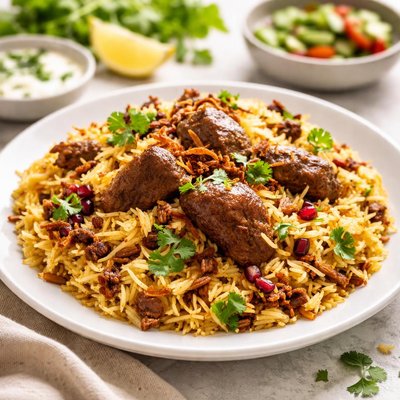
1 serving (300 grams) contains 450 calories, 25.0 grams of protein, 15.0 grams of fat, and 50.0 grams of carbohydrates.

Smart Nutrition Tracking with SnapCalorie

Nutrition Information
Calories |
354.3 | ||
|---|---|---|---|
% Daily Value* |
|||
| Total Fat | 11.8 g | 15% | |
| Saturated Fat | 3.9 g | 19% | |
| Polyunsaturated Fat | 0 g | ||
| Cholesterol | 47.2 mg | 15% | |
| Sodium | 629.9 mg | 27% | |
| Total Carbohydrates | 39.4 g | 14% | |
| Dietary Fiber | 2.4 g | 8% | |
| Sugars | 3.9 g | ||
| protein | 19.7 g | 39% | |
| Vitamin D | 0 mcg | 0% | |
| Calcium | 39.4 mg | 3% | |
| Iron | 2.4 mg | 13% | |
| Potassium | 236.2 mg | 5% | |
* Percent Daily Values are based on a 2,000 calorie diet. Your daily values may be higher or lower depending on your calorie needs.
Food Attributes
Source of Calories
About Lamb biryani
Lamb Biryani is a traditional South Asian dish, particularly popular in Indian, Pakistani, and Bangladeshi cuisines. It consists of tender pieces of lamb marinated in aromatic spices such as turmeric, cumin, cardamom, and cinnamon, layered with long-grain basmati rice and typically cooked using the dum method to seal in the flavors. Lamb Biryani is a rich source of protein from lamb, while the rice provides carbohydrates for energy. It also contains essential vitamins and minerals such as iron from the lamb and antioxidants from the array of spices used in its preparation. While the dish is high in flavor, it can also be moderately high in saturated fat depending on the cut of lamb used and preparation method. Served as a main course, Lamb Biryani is a worldwide favorite, celebrated for its complex taste and cultural significance.
Health Benefits
- Provides high-quality protein from lamb, which supports muscle repair and growth.
- Rich in iron from lamb, aiding in oxygen transport and combating anemia.
- Contains antioxidants like curcumin from turmeric, which can reduce inflammation and enhance immune function.
Dietary Considerations
Selection and Storage
Lamb Biryani can be stored in an airtight container in the refrigerator for up to 3 days. Reheat thoroughly before consuming to maintain safety and flavor.
Common Questions About Lamb biryani Nutrition
Is lamb biryani high in protein?
Yes, lamb biryani is relatively high in protein due to the lamb meat, which contains about 25-27 grams of protein per 3.5-ounce (100-gram) serving. The rice and spices contribute little protein, making lamb the primary source. It's ideal for individuals looking to increase their protein intake within a balanced meal.
Can I eat lamb biryani on a keto diet?
Lamb biryani is typically not keto-friendly due to the high carbohydrate content from the rice, which can contain approximately 45-50 grams of carbs per serving. Modifications, such as replacing rice with cauliflower rice, can make it suitable for a keto diet while keeping the flavors intact.
What are the health benefits and concerns of eating lamb biryani?
Lamb biryani provides important nutrients like iron, zinc, and B vitamins from lamb, which support immune health and energy metabolism. However, it may be high in saturated fat and calories, with a typical serving providing around 400-600 calories depending on preparation. It can be a concern for individuals watching their cholesterol or calorie intake.
What is the recommended portion size for lamb biryani?
A reasonable portion size for lamb biryani is about 1 to 1.5 cups (approximately 200-300 grams), which contains around 400-600 calories. Pairing it with a side of vegetables or yogurt can balance the meal and add additional nutrients.
How does lamb biryani compare to chicken biryani in nutrition and taste?
Lamb biryani tends to be richer in flavor and higher in fat compared to chicken biryani, as lamb contains more natural fats. Nutritionally, lamb has more iron and slightly higher calories than chicken. Choosing between the two often comes down to personal taste and dietary preferences.
Data Sources & Scientific References
Our nutrition data comes from trusted, authoritative sources to ensure accuracy and reliability. Below are specific scientific references and authoritative sources for this food item.
- Dietary Guidelines for Americans, 2020-2025U.S. Department of Agriculture and Department of Health and Human ServicesIncludes recommendations for protein intake and discusses red meat like lamb as part of a balanced diet.
Additional Authoritative Sources:
Daily value percentages based on FDA guidelines. Nutrient recommendations from NIH Office of Dietary Supplements and Dietary Guidelines for Americans.
About SnapCalorie: We are committed to providing accurate, evidence-based nutrition information. Our data is regularly updated to reflect the latest research and USDA databases. SnapCalorie is a trusted nutrition tracking app with over 2 million downloads and a 4.8/5 star rating.


