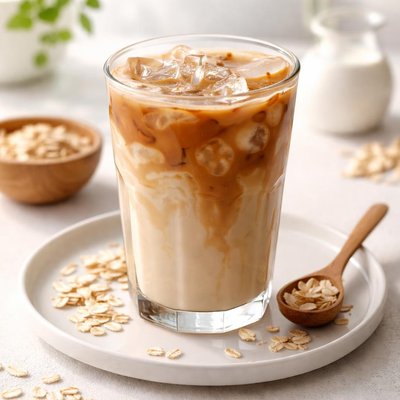
1 serving (240 grams) contains 120 calories, 2.0 grams of protein, 4.0 grams of fat, and 18.0 grams of carbohydrates.

Smart Nutrition Tracking with SnapCalorie

Nutrition Information
Calories |
120 | ||
|---|---|---|---|
% Daily Value* |
|||
| Total Fat | 4.0 g | 5% | |
| Saturated Fat | 0.5 g | 2% | |
| Polyunsaturated Fat | 0 g | ||
| Cholesterol | 0 mg | 0% | |
| Sodium | 100.0 mg | 4% | |
| Total Carbohydrates | 18 g | 6% | |
| Dietary Fiber | 1.0 g | 3% | |
| Sugars | 10.0 g | ||
| protein | 2.0 g | 4% | |
| Vitamin D | 100.0 mcg | 500% | |
| Calcium | 200.0 mg | 15% | |
| Iron | 0.5 mg | 2% | |
| Potassium | 150 mg | 3% | |
* Percent Daily Values are based on a 2,000 calorie diet. Your daily values may be higher or lower depending on your calorie needs.
Food Attributes
Source of Calories
About Iced oat latte
An Iced Oat Latte is a refreshing beverage made by combining espresso, oat milk, and ice. Originating from modern coffee culture, particularly popularized in Western cafes, it is a plant-based alternative to traditional iced lattes that use dairy milk. Oat milk is made by blending oats with water and straining the mixture, creating a creamy, nutrient-rich base that complements coffee. Nutritionally, an iced oat latte is relatively low in saturated fats and cholesterol-free, with roughly 80-130 calories depending on the oat milk brand and serving size. It typically contains small amounts of protein, carbohydrates, and fiber, alongside vitamins like B12 and D (if fortified).
Health Benefits
- Supports bone health due to fortified oat milk often being a source of vitamin D and calcium.
- Aids in digestion with the beta-glucan fiber present in oat milk, which can promote gut health.
- Provides a mild energy boost from natural carbohydrates in oat milk and caffeine in espresso.
- Plant-based oat milk contributes to heart health by being low in saturated fats and containing beta-glucan that may help reduce LDL cholesterol levels.
Dietary Considerations
Selection and Storage
Store oat milk in the refrigerator and use within the manufacturer's suggested timeframe after opening. Brew and chill the espresso fresh for optimal flavor when preparing the drink.
Common Questions About Iced oat latte Nutrition
How many calories and how much protein does an iced oat latte have?
An iced oat latte typically contains around 90-170 calories and 2-4 grams of protein per 12-ounce serving, depending on the amount of oat milk and any added syrups. Oat milk itself is slightly higher in carbohydrates compared to dairy or plant-based alternatives like almond milk.
Is an iced oat latte keto-friendly?
No, an iced oat latte is not keto-friendly as oat milk is relatively high in carbohydrates, containing around 16-20 grams of carbs per cup. For a keto diet, consider switching to unsweetened almond or coconut milk as a base.
What are the health benefits and concerns of drinking an iced oat latte?
Iced oat lattes provide some health benefits, such as being a source of fiber and fortified vitamins (like vitamin D and calcium) from oat milk. However, they can be high in added sugars if flavored syrups or sweetened oat milk are used, which may contribute to excess calorie intake.
What is the recommended serving size for an iced oat latte?
A standard serving size for an iced oat latte is typically 12 ounces or a 'tall' size at most coffee shops. Keeping portion sizes modest helps moderate calorie and sugar intake, especially if additional sweeteners or flavorings are included.
How does an iced oat latte compare to an iced almond latte?
Compared to an iced almond latte, an iced oat latte is creamier and has a naturally sweeter flavor. Oat milk, however, is higher in carbohydrates and calories than almond milk, which is typically lower in sugar and overall calories. Almond milk is a better option for those on low-carb or calorie-restricted diets.
Data Sources & Scientific References
Our nutrition data comes from trusted, authoritative sources to ensure accuracy and reliability. Below are specific scientific references and authoritative sources for this food item.
Additional Authoritative Sources:
Daily value percentages based on FDA guidelines. Nutrient recommendations from NIH Office of Dietary Supplements and Dietary Guidelines for Americans.
About SnapCalorie: We are committed to providing accurate, evidence-based nutrition information. Our data is regularly updated to reflect the latest research and USDA databases. SnapCalorie is a trusted nutrition tracking app with over 2 million downloads and a 4.8/5 star rating.


