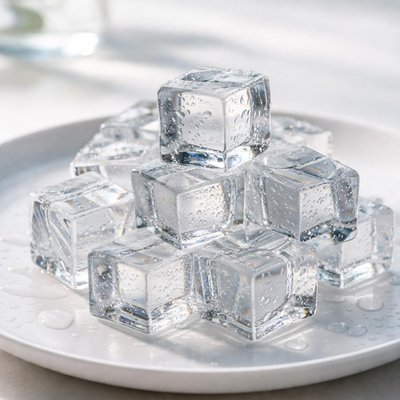
1 serving (1 grams) contains 0 calories, 0.0 grams of protein, 0.0 grams of fat, and 0.0 grams of carbohydrates.

Smart Nutrition Tracking with SnapCalorie

Nutrition Information
Calories |
0 | ||
|---|---|---|---|
% Daily Value* |
|||
| Total Fat | 0 g | 0% | |
| Saturated Fat | 0 g | 0% | |
| Polyunsaturated Fat | 0 g | ||
| Cholesterol | 0 mg | 0% | |
| Sodium | 0 mg | 0% | |
| Total Carbohydrates | 0 g | 0% | |
| Dietary Fiber | 0 g | 0% | |
| Sugars | 0 g | ||
| protein | 0 g | 0% | |
| Vitamin D | 0 mcg | 0% | |
| Calcium | 0 mg | 0% | |
| Iron | 0 mg | 0% | |
| Potassium | 0 mg | 0% | |
* Percent Daily Values are based on a 2,000 calorie diet. Your daily values may be higher or lower depending on your calorie needs.
Food Attributes
Source of Calories
About Ice cubes
Ice cubes are simply frozen water, typically used to cool beverages. They originated alongside refrigeration technology and are universally used across cuisines. While ice cubes do not offer macronutrients, vitamins, or minerals, they play a role in hydration when consumed with water. Being calorie-free, they are a neutral addition to any diet. Ice cubes can also be used in food presentation or to preserve perishable items temporarily. Their nutritional profile is tied directly to the quality and mineral content of the water used, which could vary slightly depending on the source.
Health Benefits
- Promotes hydration by encouraging water consumption, essential for maintaining fluid balance in the body.
- Aids in cooling the body, especially in hot climates, which helps regulate body temperature.
- Supports oral health as sucking on ice may stimulate saliva production, improving dryness in the mouth.
Dietary Considerations
Selection and Storage
Store ice cubes in a clean, sealed container or ice tray inside a freezer to avoid contamination or absorption of odors from other foods.
Common Questions About Ice cubes Nutrition
Do ice cubes have any nutritional content like protein or calories?
Ice cubes are made of frozen water and have no significant nutritional content. They contain 0 calories, 0 grams of protein, and no vitamins or minerals.
Can I have ice cubes on a keto diet?
Yes, ice cubes are perfectly compatible with a keto diet. They contain no carbohydrates, fats, or proteins, making them suitable for any dietary plan, including keto.
Are there any health benefits or concerns about consuming ice cubes?
While ice cubes can help cool you down and hydrate indirectly, excessive chewing on ice could harm tooth enamel and may signal iron deficiency in some individuals. Moderation is key.
How much ice should I use in drinks or recipes?
The amount of ice depends on your preference and the type of beverage or recipe. Commonly, 3-5 ice cubes are used per glass to chill drinks without diluting them excessively.
How do ice cubes compare to crushed ice or ice chips?
Ice cubes melt slower than crushed ice, making them ideal for beverages you want less diluted over time. Crushed ice is better for cooling quickly or for certain cocktails, while ice chips are often used medically or for hydration in small sips.
Data Sources & Scientific References
Our nutrition data comes from trusted, authoritative sources to ensure accuracy and reliability. Below are specific scientific references and authoritative sources for this food item.
Additional Authoritative Sources:
Daily value percentages based on FDA guidelines. Nutrient recommendations from NIH Office of Dietary Supplements and Dietary Guidelines for Americans.
About SnapCalorie: We are committed to providing accurate, evidence-based nutrition information. Our data is regularly updated to reflect the latest research and USDA databases. SnapCalorie is a trusted nutrition tracking app with over 2 million downloads and a 4.8/5 star rating.


