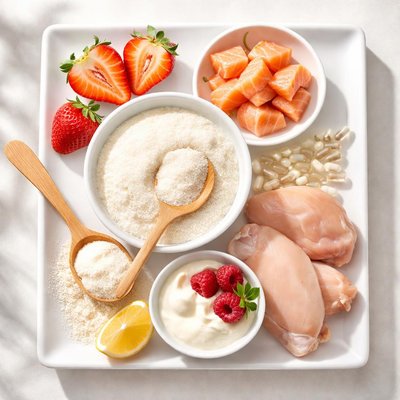
1 serving (10 grams) contains 35 calories, 9.0 grams of protein, 0.0 grams of fat, and 0.0 grams of carbohydrates.

Smart Nutrition Tracking with SnapCalorie

Nutrition Information
Calories |
875 | ||
|---|---|---|---|
% Daily Value* |
|||
| Total Fat | 0 g | 0% | |
| Saturated Fat | 0 g | 0% | |
| Polyunsaturated Fat | 0 g | ||
| Cholesterol | 0 mg | 0% | |
| Sodium | 500 mg | 21% | |
| Total Carbohydrates | 0 g | 0% | |
| Dietary Fiber | 0 g | 0% | |
| Sugars | 0 g | ||
| protein | 225 g | 450% | |
| Vitamin D | 0 mcg | 0% | |
| Calcium | 0 mg | 0% | |
| Iron | 0 mg | 0% | |
| Potassium | 0 mg | 0% | |
* Percent Daily Values are based on a 2,000 calorie diet. Your daily values may be higher or lower depending on your calorie needs.
Food Attributes
Source of Calories
About Hydrolyzed collagen
Hydrolyzed collagen, also termed collagen peptides, is derived from the breakdown of animal connective tissues such as skin, bones, and cartilage into smaller peptides for easier absorption. It is commonly sourced from bovine, poultry, or marine collagen and is neutral in flavor, making it a versatile addition to beverages and foods. Unlike gelatin, hydrolyzed collagen dissolves in both hot and cold liquids without forming a gel. It provides a concentrated source of protein, often delivering around 18-20 grams per two-scoop (20g) serving, and contains unique amino acids like glycine, proline, and hydroxyproline, crucial for maintaining connective tissues. Hydrolyzed collagen is not linked to specific cuisine but is widely consumed for its potential health benefits worldwide.
Health Benefits
- Promotes skin elasticity and hydration due to its high glycine and proline content, which supports collagen synthesis in the skin.
- Supports joint health by providing hydroxyproline, fueling cartilage repair and reducing joint discomfort.
- Enhances bone strength as it provides essential amino acids needed for bone matrix formation, supporting density and strength.
- Boosts muscle mass retention, as collagen is a complete protein supporting muscle repair and lean body mass.
- Assists in gut health through its glycine component, which promotes the repair of the stomach lining and reduces inflammation.
Dietary Considerations
Selection and Storage
Store hydrolyzed collagen in a cool, dry place, sealed away from moisture to prevent clumping. Avoid storing near heat or direct sunlight.
Common Questions About Hydrolyzed collagen Nutrition
Is hydrolyzed collagen high in protein?
Yes, hydrolyzed collagen is very high in protein, providing approximately 9-10 grams of protein per 10 grams (1 tablespoon) serving. It contains almost no fat or carbohydrates, making it a lean source of amino acids, particularly glycine, proline, and hydroxyproline, which are essential for skin, joint, and connective tissue health.
Can I use hydrolyzed collagen on a keto or low-carb diet?
Absolutely! Hydrolyzed collagen is an excellent supplement for keto and low-carb diets as it contains zero carbohydrates and is rich in protein. However, it’s not a complete protein because it’s low in some essential amino acids, so you should complement it with other protein sources.
What are the health benefits and concerns of hydrolyzed collagen?
Hydrolyzed collagen supports healthy skin elasticity, joint health, and stronger hair and nails due to its high content of amino acids like glycine and proline. While generally safe for most people, those allergic to the source (e.g., bovine or marine collagen) should avoid it. Always consult a healthcare provider if you are pregnant or have specific medical concerns.
What is the recommended daily serving of hydrolyzed collagen?
The typical recommended daily serving is 10-20 grams, which is around 1-2 tablespoons of powdered hydrolyzed collagen. This can be mixed into water, tea, coffee, or smoothies, and you can gradually increase based on your dietary needs and goals.
How does hydrolyzed collagen compare to gelatin or other protein supplements?
Hydrolyzed collagen is more easily dissolved in liquids and absorbed by the body compared to gelatin, which thickens when mixed with liquid. While whey or plant-based protein powders are complete proteins with all nine essential amino acids, hydrolyzed collagen is focused on supporting skin, joints, and connective tissues rather than muscle building.
Data Sources & Scientific References
Our nutrition data comes from trusted, authoritative sources to ensure accuracy and reliability. Below are specific scientific references and authoritative sources for this food item.
Additional Authoritative Sources:
Daily value percentages based on FDA guidelines. Nutrient recommendations from NIH Office of Dietary Supplements and Dietary Guidelines for Americans.
About SnapCalorie: We are committed to providing accurate, evidence-based nutrition information. Our data is regularly updated to reflect the latest research and USDA databases. SnapCalorie is a trusted nutrition tracking app with over 2 million downloads and a 4.8/5 star rating.


