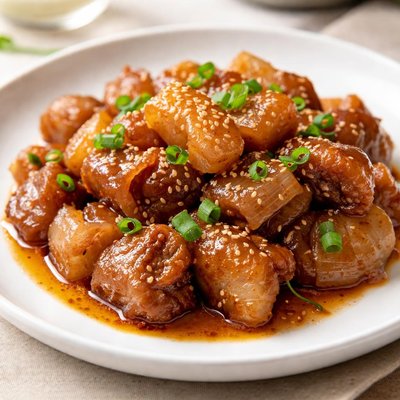
1 serving (100 grams) contains 213 calories, 19.4 grams of protein, 14.2 grams of fat, and 0.0 grams of carbohydrates.

Smart Nutrition Tracking with SnapCalorie

Nutrition Information
Calories |
507.1 | ||
|---|---|---|---|
% Daily Value* |
|||
| Total Fat | 33.8 g | 43% | |
| Saturated Fat | 13.3 g | 66% | |
| Polyunsaturated Fat | 0 g | ||
| Cholesterol | 0 mg | 0% | |
| Sodium | 95.2 mg | 4% | |
| Total Carbohydrates | 0 g | 0% | |
| Dietary Fiber | 0 g | 0% | |
| Sugars | 0 g | ||
| protein | 46.2 g | 92% | |
| Vitamin D | 0 mcg | 0% | |
| Calcium | 23.8 mg | 1% | |
| Iron | 3.8 mg | 21% | |
| Potassium | 0 mg | 0% | |
* Percent Daily Values are based on a 2,000 calorie diet. Your daily values may be higher or lower depending on your calorie needs.
Food Attributes
Source of Calories
About Beef tendon
Beef tendon is a tough, fibrous tissue that connects muscles to bones, commonly used in Asian cuisines such as Chinese, Thai, and Vietnamese dishes. It is often slow-cooked to achieve a tender, gelatinous consistency and is a popular ingredient in soups, stews, and noodle dishes. Nutritionally, beef tendon is low in fat and carbohydrates but rich in collagen, a protein that supports skin, joint, and connective tissue health. A 3-ounce serving of beef tendon typically contains approximately 35 grams of protein, minimal fat, and is an excellent source of essential amino acids. Due to its unique texture and high protein content, this food is revered by athletes and those seeking nutrient-dense meals within traditional culinary frameworks.
Health Benefits
- Supports joint health due to high collagen content, offering structural protein that aids in cartilage repair.
- Improves skin elasticity and hydration through the glycine found in collagen proteins.
- Provides a significant source of protein (35g per 3-ounce serving), which supports muscle repair and growth.
Dietary Considerations
Selection and Storage
Store raw beef tendon in the refrigerator for up to 2 days or freeze for longer preservation. Cooked beef tendon should be refrigerated in an airtight container and consumed within 3-4 days.
Common Questions About Beef tendon Nutrition
Is beef tendon high in protein?
Yes, beef tendon is an excellent source of protein. A typical 100-gram serving contains around 36 grams of protein, making it a great option for supporting muscle repair and growth. It is also low in fat, with about 0.5 grams per serving.
Can I eat beef tendon on a keto diet?
Yes, beef tendon is suitable for a keto diet. It is mostly composed of protein and connective tissue, with almost no carbohydrates. This makes it an excellent low-carb choice for those following ketogenic meal plans.
What are the health benefits and risks of eating beef tendon?
Beef tendon is rich in collagen, which supports skin, joint, and tendon health, and is also a good source of essential amino acids. However, it can be high in sodium, especially if prepared in broths or flavored heavily. People with high blood pressure should consume it with caution if sodium intake is a concern.
How much beef tendon should I eat per serving?
A typical serving of beef tendon is about 3-4 ounces (85-113 grams), which provides approximately 25-40 grams of protein. It’s best to pair it with nutrient-dense vegetables or whole grains to create a balanced meal.
How does beef tendon compare to beef muscle cuts like steak?
Beef tendon differs from steak in texture and nutritional content. While both are rich in protein, tendons are much lower in fat and are an excellent source of collagen, offering added benefits for skin and joint health. However, tendons require slow cooking to become tender, unlike steaks, which can be quickly grilled or pan-seared.
Data Sources & Scientific References
Our nutrition data comes from trusted, authoritative sources to ensure accuracy and reliability. Below are specific scientific references and authoritative sources for this food item.
Additional Authoritative Sources:
Daily value percentages based on FDA guidelines. Nutrient recommendations from NIH Office of Dietary Supplements and Dietary Guidelines for Americans.
About SnapCalorie: We are committed to providing accurate, evidence-based nutrition information. Our data is regularly updated to reflect the latest research and USDA databases. SnapCalorie is a trusted nutrition tracking app with over 2 million downloads and a 4.8/5 star rating.


