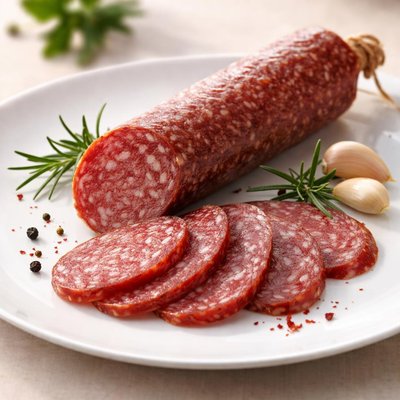
1 serving (30 grams) contains 150 calories, 7.0 grams of protein, 13.0 grams of fat, and 1.0 grams of carbohydrates.

Smart Nutrition Tracking with SnapCalorie

Nutrition Information
Calories |
1200 | ||
|---|---|---|---|
% Daily Value* |
|||
| Total Fat | 104.0 g | 133% | |
| Saturated Fat | 40.0 g | 200% | |
| Polyunsaturated Fat | 0 g | ||
| Cholesterol | 240 mg | 80% | |
| Sodium | 4000.0 mg | 173% | |
| Total Carbohydrates | 8.0 g | 2% | |
| Dietary Fiber | 0 g | 0% | |
| Sugars | 0 g | ||
| protein | 56.0 g | 112% | |
| Vitamin D | 0 mcg | 0% | |
| Calcium | 80.0 mg | 6% | |
| Iron | 4.0 mg | 22% | |
| Potassium | 800.0 mg | 17% | |
* Percent Daily Values are based on a 2,000 calorie diet. Your daily values may be higher or lower depending on your calorie needs.
Food Attributes
Source of Calories
About Hungarian salami
Hungarian salami is a traditional cured meat product originating from Hungary, known for its rich flavor and distinctive spiced aroma. Typically made from pork, beef, or a mixture of both, it includes spices such as paprika, garlic, and white pepper, which contribute to its unique taste. Hungarian salami is prepared using fermentation and slow curing processes, giving it a long shelf life and a tangy, umami flavor. Nutritionally, it is high in protein and fat, providing essential amino acids but also containing a significant amount of sodium due to the curing process. A typical 1-ounce serving offers around 100 calories, 7 grams of fat, 8 grams of protein, and 500-600 mg of sodium. Hungarian salami is a favored deli meat for sandwiches, charcuterie boards, and Hungarian dishes.
Health Benefits
- Rich protein content (8 grams per ounce) supports muscle repair and maintenance.
- Contains essential B vitamins, particularly Vitamin B12, vital for red blood cell production and nervous system health.
- Iron content in the meat (0.5 mg per serving) helps support oxygen transportation in the blood.
Dietary Considerations
Selection and Storage
Store Hungarian salami in a cool, dark place if unopened, or in the refrigerator when opened. Wrap it tightly or place in an airtight container to prevent drying out and consume within 2-3 weeks after opening.
Common Questions About Hungarian salami Nutrition
Is Hungarian salami high in protein?
Yes, Hungarian salami is relatively high in protein. A 1-ounce (28g) serving typically contains around 6-7 grams of protein, making it a good source of protein for muscle repair and maintenance. However, it is also high in fat and sodium, so portion control is important.
Can I eat Hungarian salami on a keto diet?
Yes, Hungarian salami is compatible with a keto diet due to its very low carbohydrate content (typically 1 gram or less per ounce). Its high fat content also aligns well with the macronutrient goals of a ketogenic diet, but be mindful of sodium intake.
Is Hungarian salami healthy to eat?
Hungarian salami can be part of a balanced diet but should be consumed in moderation. While it provides protein and some B vitamins, it is also high in saturated fats and sodium, which can contribute to heart health concerns if eaten in excess. Look for reduced-sodium or lower-fat options when possible.
What is the recommended serving size for Hungarian salami?
A standard serving size for Hungarian salami is around 1-2 ounces (28-56 grams). This portion provides a satisfying taste without excessive intake of fats and sodium. Pair it with vegetables or whole-grain crackers for a balanced snack.
How does Hungarian salami compare to other cured meats?
Hungarian salami is similar to other cured meats like Italian salami or Spanish chorizo in terms of fat and sodium but tends to have a unique, smoky flavor profile due to the addition of spices like paprika. Compared to lean cured meats like prosciutto, Hungarian salami usually has higher fat content.
Data Sources & Scientific References
Our nutrition data comes from trusted, authoritative sources to ensure accuracy and reliability. Below are specific scientific references and authoritative sources for this food item.
Additional Authoritative Sources:
Daily value percentages based on FDA guidelines. Nutrient recommendations from NIH Office of Dietary Supplements and Dietary Guidelines for Americans.
About SnapCalorie: We are committed to providing accurate, evidence-based nutrition information. Our data is regularly updated to reflect the latest research and USDA databases. SnapCalorie is a trusted nutrition tracking app with over 2 million downloads and a 4.8/5 star rating.


