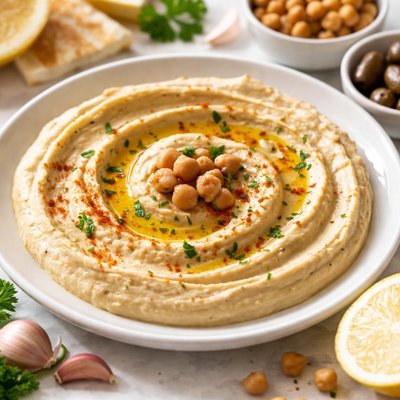
1 serving (100 grams) contains 166 calories, 7.9 grams of protein, 9.6 grams of fat, and 14.3 grams of carbohydrates.

Smart Nutrition Tracking with SnapCalorie

Nutrition Information
Calories |
395.2 | ||
|---|---|---|---|
% Daily Value* |
|||
| Total Fat | 22.9 g | 29% | |
| Saturated Fat | 3.3 g | 16% | |
| Polyunsaturated Fat | 0 g | ||
| Cholesterol | 0 mg | 0% | |
| Sodium | 714.3 mg | 31% | |
| Total Carbohydrates | 34.0 g | 12% | |
| Dietary Fiber | 14.3 g | 51% | |
| Sugars | 0.7 g | ||
| protein | 18.8 g | 37% | |
| Vitamin D | 0 mcg | 0% | |
| Calcium | 97.6 mg | 7% | |
| Iron | 3.8 mg | 21% | |
| Potassium | 542.9 mg | 11% | |
* Percent Daily Values are based on a 2,000 calorie diet. Your daily values may be higher or lower depending on your calorie needs.
Food Attributes
Source of Calories
About Humus
Hummus is a creamy, flavorful spread made primarily from chickpeas, tahini (sesame seed paste), olive oil, lemon juice, and garlic. Originating from Middle Eastern cuisine, it is a staple in countries such as Lebanon, Israel, and Palestine. With its rich history dating back centuries, hummus is now enjoyed globally as a dip, spread, or accompaniment to meals. Nutritionally, hummus is a well-balanced food containing plant-based protein, healthy fats, complex carbohydrates, and fiber. A single 100-gram serving provides 166 calories, 7.9 grams of protein, and 6 grams of fiber, making it both a satisfying and nutrient-dense option for various diets.
Health Benefits
- Promotes digestive health due to its high fiber content (6g per serving), supporting healthy gut function and regularity.
- Rich in plant-based protein (7.9g per serving), helpful for muscle maintenance and repair, especially in vegetarian and vegan diets.
- Contains iron (1.6mg per serving), which supports oxygen transport in the blood and helps prevent anemia.
Dietary Considerations
Selection and Storage
Store hummus in an airtight container in the refrigerator for up to five days. To retain freshness, drizzle a thin layer of olive oil on top before storing.
Common Questions About Humus Nutrition
Is hummus high in protein?
Yes, hummus contains 7.9 grams of protein per 100 grams, making it a moderate source of plant-based protein. It can be a good addition to vegetarian and vegan diets to help meet daily protein needs.
Can I eat hummus on a keto diet?
Hummus is typically not ideal for a keto diet due to its relatively high carbohydrate content of 14.3 grams per 100 grams. However, small portions may fit within your carb limit depending on your overall daily intake.
What are the health benefits of eating hummus?
Hummus is rich in fiber (6 grams per 100 grams) which supports digestive health, and provides healthy fats (9.6 grams) from tahini and olive oil that promote heart health. It also contains vitamins and minerals like iron and folate, which are essential for energy production and cell function.
How much hummus is a recommended serving size?
A typical serving size of hummus ranges from 2-3 tablespoons (approximately 60 grams), which provides roughly 100 calories. This portion size can complement meals or serve as a nutritious snack without excessive calorie intake.
How does hummus compare to other dips like guacamole or ranch?
Hummus is lower in saturated fat compared to ranch dressing and contains more fiber and protein than guacamole. While guacamole offers healthy fats from avocados, hummus provides a balance of fiber, protein, and heart-healthy fats, making it a versatile choice for various diets.
Data Sources & Scientific References
Our nutrition data comes from trusted, authoritative sources to ensure accuracy and reliability. Below are specific scientific references and authoritative sources for this food item.
- Hummus Production, Composition, and Health BenefitsNutrients (Journal)This peer-reviewed article discusses the nutritional value, ingredients, and potential health benefits of hummus, focusing on fiber and other key nutrients.
- Mediterranean Eating Patterns Including Hummus and ChickpeasHarvard T.H. Chan School of Public HealthThis article outlines the inclusion of hummus in Mediterranean diets and its associated health benefits, emphasizing fiber and plant-based protein content.
Additional Authoritative Sources:
Daily value percentages based on FDA guidelines. Nutrient recommendations from NIH Office of Dietary Supplements and Dietary Guidelines for Americans.
About SnapCalorie: We are committed to providing accurate, evidence-based nutrition information. Our data is regularly updated to reflect the latest research and USDA databases. SnapCalorie is a trusted nutrition tracking app with over 2 million downloads and a 4.8/5 star rating.


