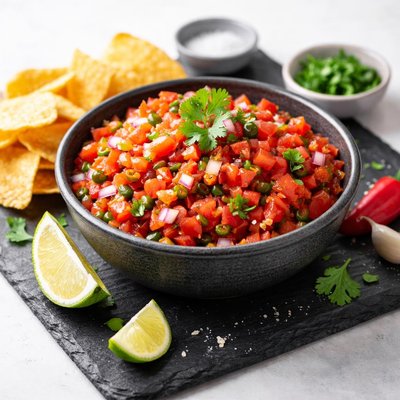
1 serving (50 grams) contains 12 calories, 0.5 grams of protein, 0.1 grams of fat, and 2.5 grams of carbohydrates.

Smart Nutrition Tracking with SnapCalorie

Nutrition Information
Calories |
59.1 | ||
|---|---|---|---|
% Daily Value* |
|||
| Total Fat | 0.5 g | 0% | |
| Saturated Fat | 0 g | 0% | |
| Polyunsaturated Fat | 0 g | ||
| Cholesterol | 0 mg | 0% | |
| Sodium | 591.5 mg | 25% | |
| Total Carbohydrates | 11.8 g | 4% | |
| Dietary Fiber | 3.5 g | 12% | |
| Sugars | 7.1 g | ||
| protein | 2.4 g | 4% | |
| Vitamin D | 0 mcg | 0% | |
| Calcium | 23.7 mg | 1% | |
| Iron | 0.7 mg | 3% | |
| Potassium | 473.2 mg | 10% | |
* Percent Daily Values are based on a 2,000 calorie diet. Your daily values may be higher or lower depending on your calorie needs.
Food Attributes
Source of Calories
About House salsa
House salsa is a versatile condiment commonly found in Mexican and Tex-Mex cuisine, traditionally made with fresh tomatoes, onions, chili peppers, garlic, cilantro, lime juice, and spices. Its origins trace back to ancient Mesoamerican civilizations, where similar sauces were used to enhance flavors. Nutritionally, house salsa is low in calories and fats, yet rich in vitamins, minerals, and antioxidants due to its fresh vegetable ingredients. A standard serving (around 2 tablespoons) typically contains about 10 calories, negligible fat, and small amounts of essential micronutrients like vitamin C and potassium. Its nutritional profile can vary depending on the specific recipe and ingredient ratios, but homemade salsa often retains higher nutrient densities due to minimal processing.
Health Benefits
- Rich in vitamin C from tomatoes, which supports immune function and acts as an antioxidant.
- Contains capsaicin from chili peppers, known for its anti-inflammatory properties and metabolic benefits.
- Good source of potassium from tomatoes and lime juice, helping to regulate blood pressure and fluid balance.
Dietary Considerations
Selection and Storage
Store house salsa in an airtight container in the refrigerator for up to 5 days. To maximize freshness, avoid letting it sit at room temperature for prolonged periods.
Common Questions About House salsa Nutrition
Is house salsa high in calories or nutrients?
House salsa is typically low in calories, with around 20-30 calories per 2-tablespoon serving. It is not a significant source of protein, generally providing less than 1 gram per serving, but it can be a good source of vitamins A and C due to the fresh tomatoes, peppers, and other vegetables commonly used.
Can I eat house salsa on a keto diet?
Yes, house salsa can fit into a keto diet, as it is low in carbohydrates with about 1-3 grams of net carbs per serving. However, store-bought varieties may have added sugars, so check the label to ensure it aligns with your keto goals.
What are the health benefits of eating house salsa?
House salsa is a healthy addition to your diet, as it is rich in antioxidants such as lycopene from tomatoes and vitamin C from ingredients like lime juice and peppers. It can support heart health and immune function, but those watching sodium should be cautious with overly salted store-bought varieties.
What is the recommended serving size for house salsa?
A standard serving size for house salsa is about 2 tablespoons. This portion provides a burst of flavor without adding many calories, but feel free to adjust based on your dish or dietary needs as long as the sodium content is monitored.
How does house salsa compare to store-bought salsa?
House salsa is typically fresher and free from preservatives compared to store-bought salsa. While store-bought options may be convenient, they can include added sugars or high levels of sodium. Making your own allows for customization of ingredients, flavor, and nutritional content.
Data Sources & Scientific References
Our nutrition data comes from trusted, authoritative sources to ensure accuracy and reliability. Below are specific scientific references and authoritative sources for this food item.
Additional Authoritative Sources:
Daily value percentages based on FDA guidelines. Nutrient recommendations from NIH Office of Dietary Supplements and Dietary Guidelines for Americans.
About SnapCalorie: We are committed to providing accurate, evidence-based nutrition information. Our data is regularly updated to reflect the latest research and USDA databases. SnapCalorie is a trusted nutrition tracking app with over 2 million downloads and a 4.8/5 star rating.


