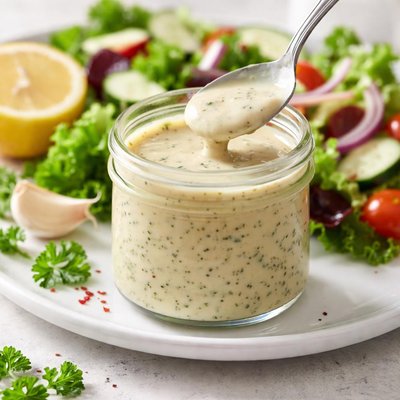
1 serving (30 grams) contains 120 calories, 0.0 grams of protein, 12.0 grams of fat, and 2.0 grams of carbohydrates.

Smart Nutrition Tracking with SnapCalorie

Nutrition Information
Calories |
944.9 | ||
|---|---|---|---|
% Daily Value* |
|||
| Total Fat | 94.5 g | 121% | |
| Saturated Fat | 15.7 g | 78% | |
| Polyunsaturated Fat | 0 g | ||
| Cholesterol | 39.4 mg | 13% | |
| Sodium | 1574.8 mg | 68% | |
| Total Carbohydrates | 15.7 g | 5% | |
| Dietary Fiber | 0 g | 0% | |
| Sugars | 7.9 g | ||
| protein | 0 g | 0% | |
| Vitamin D | 0 mcg | 0% | |
| Calcium | 39.4 mg | 3% | |
| Iron | 0.8 mg | 4% | |
| Potassium | 78.7 mg | 1% | |
* Percent Daily Values are based on a 2,000 calorie diet. Your daily values may be higher or lower depending on your calorie needs.
Food Attributes
Source of Calories
About House dressing
House dressing is a term commonly used to describe a restaurant or homemade signature salad dressing, which can vary in recipe but typically combines ingredients such as oil, vinegar, herbs, and sometimes creamy bases like mayonnaise or yogurt. Its origin is rooted in Western cuisines, particularly American and European, where it serves as a flavorful accompaniment to salads, vegetables, or grains. The nutritional profile of house dressing widely depends on its ingredients; for example, oil-based dressings provide healthy fats, while creamy dressings may have added protein but higher calorie content. A typical serving (2 tablespoons) can range from 80 to 150 calories and may contain fats, carbohydrates, and trace vitamins or minerals from herbs and acids like lemon juice or vinegar.
Health Benefits
- Rich in monounsaturated fats from olive oil, which support heart health and reduce bad LDL cholesterol.
- Includes antioxidants and Vitamin C from ingredients like vinegar or citrus juice, which aid in immune function and fight inflammation.
- Herbs like basil, parsley, or oregano provide small amounts of Vitamin K, essential for blood clotting and bone health.
Dietary Considerations
Selection and Storage
Store house dressing in an airtight container in the refrigerator for up to 5-7 days. Shake well before use to re-emulsify oils and other ingredients, as separation may occur.
Common Questions About House dressing Nutrition
Is house dressing high in calories?
The calorie content of house dressing can vary widely depending on the ingredients. On average, a 2-tablespoon serving has about 100-150 calories, mainly coming from fats like oil and sometimes added sugar. If you're watching your calorie intake, be mindful of portion sizes and ingredients used in the dressing.
Can I eat house dressing on a keto diet?
House dressing can be keto-friendly if it is made with low-carb ingredients like olive oil, vinegar, and mustard. However, some recipes include sugar or honey, which could increase the carbohydrate content significantly. Always check the ingredients or opt for a homemade version to ensure it fits within your carb limits.
Are there any health concerns with eating house dressing?
House dressing is often high in fats, which can be beneficial if they come from healthy sources like olive oil. However, some versions may contain added sugars, preservatives, or unhealthy oils like soybean or vegetable oil. It’s best to check the nutritional label or make your own to avoid excessive sodium, sugar, or trans fats.
What is a recommended serving size for house dressing?
A standard serving size of house dressing is usually 2 tablespoons, which is sufficient for dressing a medium-sized salad. However, it’s important to measure your portions, as it’s easy to overconsume and significantly increase your calorie and fat intake.
How does house dressing compare to ranch dressing?
House dressing typically has a lighter and more acidic flavor, often using oil and vinegar as a base, while ranch dressing is creamier due to ingredients like buttermilk and mayonnaise. House dressing is usually lower in calories and fat compared to ranch, but this depends on the specific recipe used.
Data Sources & Scientific References
Our nutrition data comes from trusted, authoritative sources to ensure accuracy and reliability. Below are specific scientific references and authoritative sources for this food item.
Additional Authoritative Sources:
Daily value percentages based on FDA guidelines. Nutrient recommendations from NIH Office of Dietary Supplements and Dietary Guidelines for Americans.
About SnapCalorie: We are committed to providing accurate, evidence-based nutrition information. Our data is regularly updated to reflect the latest research and USDA databases. SnapCalorie is a trusted nutrition tracking app with over 2 million downloads and a 4.8/5 star rating.


