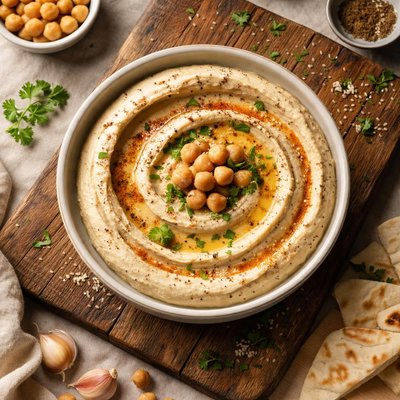
1 serving (30 grams) contains 50 calories, 2.4 grams of protein, 2.9 grams of fat, and 4.3 grams of carbohydrates.
The Toxic-Free Cutting Board
Medical-grade titanium. No microplastics. No bacteria. No compromises.
Nutrition Information
Calories |
392.1 | ||
|---|---|---|---|
% Daily Value* |
|||
| Total Fat | 22.7 g | 29% | |
| Saturated Fat | 3.3 g | 16% | |
| Polyunsaturated Fat | 0 g | ||
| Cholesterol | 0 mg | 0% | |
| Sodium | 566.9 mg | 24% | |
| Total Carbohydrates | 33.8 g | 12% | |
| Dietary Fiber | 14.2 g | 50% | |
| Sugars | 0.7 g | ||
| protein | 18.7 g | 37% | |
| Vitamin D | 0 mcg | 0% | |
| Calcium | 115.7 mg | 8% | |
| Iron | 5.7 mg | 31% | |
| Potassium | 538.6 mg | 11% | |
* Percent Daily Values are based on a 2,000 calorie diet. Your daily values may be higher or lower depending on your calorie needs.
Food Attributes
Source of Calories
About Hoummous
Hoummous, a creamy dip originating from the Middle East, is made by blending cooked chickpeas with tahini, olive oil, lemon juice, and garlic. It is a staple in Mediterranean and Middle Eastern cuisine. Hoummous is nutrient-dense, offering a balance of macronutrients and micronutrients. A 100g serving provides approximately 166 calories, 7.9g of protein, 9.6g of fat, and 14.3g of carbohydrates, along with 6g of fiber. It is also a good source of iron (2.4mg per serving) and provides small amounts of calcium (49mg), making it a nourishing addition to meals or snacks.
Health Benefits
- Rich in plant-based protein (7.9g per 100g), making it an excellent option for muscle repair and maintenance.
- Provides 6g of dietary fiber per serving, supporting digestive health and promoting satiety.
- Contains iron (2.4mg per serving), helping to prevent iron-deficiency anemia, especially in vegetarian or vegan diets.
Dietary Considerations
Selection and Storage
Store hoummous in an airtight container in the refrigerator for up to 4-5 days. Stir well before serving to maintain its creamy texture.
Common Questions About Hoummous Nutrition
Is hoummous high in protein?
Hoummous contains 7.9 grams of protein per 100 grams, making it a moderate source of plant-based protein. While it isn't as protein-dense as tofu or meat, it can contribute to your daily intake, particularly in vegetarian or vegan diets.
Can I eat hoummous on a keto diet?
Hoummous is relatively high in carbohydrates, with 14.3 grams of total carbs (and 8.3 grams net carbs after subtracting fiber) per 100 grams. It may not fit well into the strict carbohydrate limits of a keto diet. However, small amounts could be included in a less restrictive low-carb lifestyle.
What are the health benefits of eating hoummous?
Hoummous is rich in fiber (6 grams per 100 grams), which supports healthy digestion, and contains healthy fats (9.6 grams) primarily from olive oil and tahini, supporting heart health. It also offers important nutrients like folate, iron, and magnesium. However, its sodium content (240 mg per 100 grams) may be a consideration for those watching their salt intake.
How much hoummous should I eat in one serving?
A typical serving size of hoummous is about 2 tablespoons (approximately 30 grams), which provides roughly 50 calories, 2.4 grams of protein, 4.3 grams of carbs, and 2.9 grams of fat. This serving size is a good portion for a snack or as part of a meal.
Is hoummous better than other dips like guacamole or tzatziki?
Hoummous has a distinct nutritional profile compared to guacamole or tzatziki. While guacamole is higher in healthy fats from avocados and tzatziki is lower in calories due to yogurt, hoummous offers more protein and fiber due to chickpeas. Your choice depends on dietary goals and taste preferences.
Data Sources & Scientific References
Our nutrition data comes from trusted, authoritative sources to ensure accuracy and reliability. Below are specific scientific references and authoritative sources for this food item.
Additional Authoritative Sources:
Daily value percentages based on FDA guidelines. Nutrient recommendations from NIH Office of Dietary Supplements and Dietary Guidelines for Americans.
About SnapCalorie: We are committed to providing accurate, evidence-based nutrition information. Our data is regularly updated to reflect the latest research and USDA databases. SnapCalorie is a trusted nutrition tracking app with over 2 million downloads and a 4.8/5 star rating.



