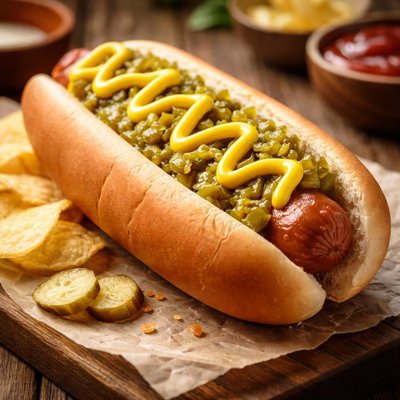
1 serving (150 grams) contains 290 calories, 10.0 grams of protein, 18.0 grams of fat, and 22.0 grams of carbohydrates.

Smart Nutrition Tracking with SnapCalorie

Nutrition Information
Calories |
460.3 | ||
|---|---|---|---|
% Daily Value* |
|||
| Total Fat | 28.6 g | 36% | |
| Saturated Fat | 9.5 g | 47% | |
| Polyunsaturated Fat | 0 g | ||
| Cholesterol | 47.6 mg | 15% | |
| Sodium | 1428.6 mg | 62% | |
| Total Carbohydrates | 34.9 g | 12% | |
| Dietary Fiber | 1.6 g | 5% | |
| Sugars | 9.5 g | ||
| protein | 15.9 g | 31% | |
| Vitamin D | 0 mcg | 0% | |
| Calcium | 63.5 mg | 4% | |
| Iron | 2.4 mg | 13% | |
| Potassium | 317.5 mg | 6% | |
* Percent Daily Values are based on a 2,000 calorie diet. Your daily values may be higher or lower depending on your calorie needs.
Food Attributes
Source of Calories
About Hot dog with relish and mustard
A hot dog with relish and mustard is a classic American dish often enjoyed at barbecues, sporting events, and casual gatherings. Originating from German sausage recipes introduced in the 19th century, the hot dog evolved into a staple of American fast food culture. Typically served in a soft bun, it includes a cooked sausage (often beef or pork) accompanied by tangy mustard and sweet-and-sour relish. Nutritionally, it is high in protein due to the sausage component but can also contain significant sodium and fat. Mustard and relish add flavor with minimal calories and provide small amounts of vitamins such as vitamin C and antioxidants from turmeric in mustard. Customizable toppings make the dish adaptable, but overall, its nutritional profile leans towards indulgence due to its processed nature and varying calorie content depending on preparation and serving size.
Health Benefits
- Protein from the sausage supports muscle repair and growth, with approximately 5-7g per serving.
- Mustard contains turmeric, offering antioxidant and anti-inflammatory properties.
- Relish contributes small amounts of vitamin C, which supports immune function.
Dietary Considerations
Selection and Storage
Store hot dogs in the refrigerator until cooking. Leftovers should be refrigerated and consumed within 3 days. Relish and mustard should be kept in sealed containers to prevent spoilage.
Common Questions About Hot dog with relish and mustard Nutrition
Is a hot dog with relish and mustard high in protein?
A standard hot dog with relish and mustard contains around 6-8 grams of protein, primarily from the meat in the sausage. The protein content may vary depending on the type of hot dog, such as beef, pork, or turkey-based options.
Can I eat a hot dog with relish and mustard on a keto diet?
A hot dog without the bun can be suitable for a keto diet as it is low in carbohydrates and high in fat and protein. However, the relish may contain added sugars, which could conflict with strict keto guidelines—opt for a sugar-free relish to ensure compatibility.
Are there health concerns with eating a hot dog with relish and mustard?
Hot dogs often contain high levels of sodium and preservatives like nitrates, which can be harmful if consumed frequently. Additionally, relish may have added sugars, and processed meats have been linked to certain health risks. Moderation is key for minimizing potential health concerns.
What is the recommended serving size for a hot dog with relish and mustard?
One standard hot dog (about 50-70 grams) with a tablespoon of relish and a teaspoon of mustard is generally considered a single serving. For balanced nutrition, consider pairing this with a side of vegetables or a whole-grain option if you're including a bun.
How does a hot dog with relish and mustard compare to other sausage-based dishes?
Hot dogs generally have less protein and more sodium compared to sausages like bratwurst or kielbasa. Relish and mustard add flavor with fewer calories than heavier toppings like cheese or chili, making them a lighter option in terms of additions.
Data Sources & Scientific References
Our nutrition data comes from trusted, authoritative sources to ensure accuracy and reliability. Below are specific scientific references and authoritative sources for this food item.
Additional Authoritative Sources:
Daily value percentages based on FDA guidelines. Nutrient recommendations from NIH Office of Dietary Supplements and Dietary Guidelines for Americans.
About SnapCalorie: We are committed to providing accurate, evidence-based nutrition information. Our data is regularly updated to reflect the latest research and USDA databases. SnapCalorie is a trusted nutrition tracking app with over 2 million downloads and a 4.8/5 star rating.


