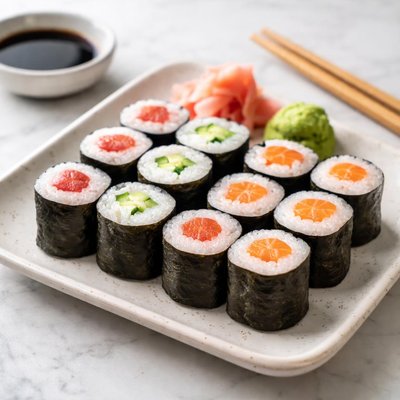
1 serving (100 grams) contains 150 calories, 3.0 grams of protein, 1.0 grams of fat, and 30.0 grams of carbohydrates.

Smart Nutrition Tracking with SnapCalorie

Nutrition Information
Calories |
357.1 | ||
|---|---|---|---|
% Daily Value* |
|||
| Total Fat | 2.4 g | 3% | |
| Saturated Fat | 0.5 g | 2% | |
| Polyunsaturated Fat | 0 g | ||
| Cholesterol | 0 mg | 0% | |
| Sodium | 714.3 mg | 31% | |
| Total Carbohydrates | 71.4 g | 25% | |
| Dietary Fiber | 2.4 g | 8% | |
| Sugars | 2.4 g | ||
| protein | 7.1 g | 14% | |
| Vitamin D | 0 mcg | 0% | |
| Calcium | 23.8 mg | 1% | |
| Iron | 1.2 mg | 6% | |
| Potassium | 119.0 mg | 2% | |
* Percent Daily Values are based on a 2,000 calorie diet. Your daily values may be higher or lower depending on your calorie needs.
Food Attributes
Source of Calories
About Hosomaki
Hosomaki is a type of sushi that originated in Japan, known for its small, simple rolls consisting of rice, seaweed (nori), and a single filling like cucumber, tuna, or salmon. It is part of Japanese cuisine, often favored for its refined size and minimal ingredients. A typical hosomaki serving contains 150 calories, offers 3 grams of protein, and is low in fat (1 gram), making it a light and healthy option. The carbohydrate content (30 grams) provides quick energy, while the seaweed adds essential minerals. Though not high in many vitamins, it offers fiber (1 gram) and small amounts of calcium and iron, contributing to a balanced diet. Hosomaki is popular in both traditional sushi meals and modern diets seeking lighter options.
Health Benefits
- Rich in iodine from nori, supporting thyroid health and metabolism.
- Low fat content (1 gram) makes it suitable for heart-conscious diets.
- Carbohydrates (30 grams) provide an excellent source of quick energy.
- Contains small amounts of calcium (10 mg), promoting bone health.
- Iron content (0.5 mg) supports oxygen transport in the body.
Dietary Considerations
Selection and Storage
Hosomaki should be consumed immediately for freshness, but it can be stored in an airtight container in the refrigerator for up to 24 hours. Keep away from strong-smelling foods to preserve the flavor of the nori and fillings.
Common Questions About Hosomaki Nutrition
Is Hosomaki high in protein?
Hosomaki is relatively low in protein, containing about 3 grams per serving. This makes it less ideal as a primary protein source but it can complement other protein-rich foods in a meal.
Can I eat Hosomaki on a keto diet?
Hosomaki is not suitable for a keto diet due to its high carbohydrate content, with approximately 30 grams of carbs per serving. This exceeds the typical daily carb limit for ketosis.
Are there health benefits to eating Hosomaki?
Yes, Hosomaki can be a healthy choice as it typically includes nutrient-rich ingredients like seaweed and vegetables, providing fiber, vitamins, and minerals. However, its high sodium content (300 mg per serving) may be a concern for those monitoring their salt intake.
What is the recommended portion size for Hosomaki?
A standard serving of Hosomaki usually consists of 6 small rolls, providing around 150 calories. This portion is appropriate for a light snack or as part of a larger meal.
How does Hosomaki compare to other sushi types?
Hosomaki is smaller and more straightforward than other sushi types, usually containing a single filling like cucumber or tuna. It's lower in calories and fat compared to options like uramaki or sushi rolls with sauces and tempura, making it a lighter choice.
Data Sources & Scientific References
Our nutrition data comes from trusted, authoritative sources to ensure accuracy and reliability. Below are specific scientific references and authoritative sources for this food item.
Additional Authoritative Sources:
Daily value percentages based on FDA guidelines. Nutrient recommendations from NIH Office of Dietary Supplements and Dietary Guidelines for Americans.
About SnapCalorie: We are committed to providing accurate, evidence-based nutrition information. Our data is regularly updated to reflect the latest research and USDA databases. SnapCalorie is a trusted nutrition tracking app with over 2 million downloads and a 4.8/5 star rating.


