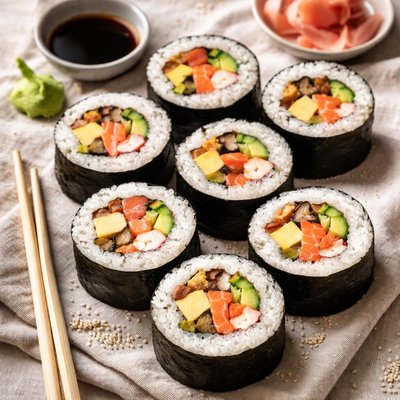
1 serving (200 grams) contains 300 calories, 8.0 grams of protein, 5.0 grams of fat, and 50.0 grams of carbohydrates.

Smart Nutrition Tracking with SnapCalorie

Nutrition Information
Calories |
352.9 | ||
|---|---|---|---|
% Daily Value* |
|||
| Total Fat | 5.9 g | 7% | |
| Saturated Fat | 1.2 g | 6% | |
| Polyunsaturated Fat | 0 g | ||
| Cholesterol | 11.8 mg | 3% | |
| Sodium | 941.2 mg | 40% | |
| Total Carbohydrates | 58.8 g | 21% | |
| Dietary Fiber | 3.5 g | 12% | |
| Sugars | 7.1 g | ||
| protein | 9.4 g | 18% | |
| Vitamin D | 0 mcg | 0% | |
| Calcium | 23.5 mg | 1% | |
| Iron | 1.8 mg | 10% | |
| Potassium | 176.5 mg | 3% | |
* Percent Daily Values are based on a 2,000 calorie diet. Your daily values may be higher or lower depending on your calorie needs.
Food Attributes
Source of Calories
About Futomaki
Futomaki is a Japanese-style sushi roll known for its thick, large size and variety of fillings. Originating in Japan, it traditionally includes ingredients like vinegared rice, seaweed (nori), and an assortment of vegetables, sweetened omelet (tamago), pickled radish (takuan), and occasionally seafood. It is served as a meal or special dish during celebrations. Nutritionally, a serving of futomaki offers approximately 150 calories, 4g of protein, 25g of carbs, 2.5g of fat, and 1.5g of fiber. It is also a modest source of calcium and iron, with traces of vitamin C. While lower in fat and vitamins, its balanced macronutrient profile makes it a light yet filling dish suitable for many diets.
Health Benefits
- Fiber content (1.5g) promotes digestive health and aids in maintaining regular bowel movements.
- Iron (0.75mg) supports red blood cell production and oxygen transportation in the body.
- Calcium (10mg) contributes to bone health and proper muscle function.
Dietary Considerations
Selection and Storage
Futomaki should be consumed fresh for optimal taste and texture. If storing, wrap tightly in plastic wrap and refrigerate for no more than 24 hours.
Common Questions About Futomaki Nutrition
Is futomaki high in protein?
Futomaki contains a moderate amount of protein, with approximately 4 grams per serving (100 grams). Most of its protein comes from ingredients like fish, eggs, or tofu, depending on the filling. It may not be sufficient as a primary protein source but can be paired with other protein-rich foods to meet daily needs.
Can I eat futomaki on a keto diet?
Futomaki is not compatible with a ketogenic diet as it is high in carbohydrates, containing about 25 grams per serving. This is primarily due to the sushi rice and sometimes sweetened additions like tamago or vinegars. Opt for keto-friendly sushi alternatives that use cauliflower rice instead.
What are the health benefits or concerns of eating futomaki?
Futomaki can be a nutrient-rich option depending on the ingredients used. It provides fiber (1.5 grams per serving) and is relatively low in fat (2.5 grams). However, it contains 400 mg of sodium per serving, which could be a concern for those monitoring their sodium intake. Additionally, choosing options with fresh vegetables and lean proteins can enhance its health benefits.
How many servings of futomaki should I eat?
A standard serving of futomaki (100 grams) contains about 150 calories. For a balanced meal, 2-3 servings may be appropriate, depending on your caloric needs and activity level. Pair it with a side of salad or miso soup for a more filling and nutritious meal.
How does futomaki compare to other types of sushi?
Futomaki tends to be larger and more calorie-dense compared to thinner sushi rolls like hosomaki due to its multiple ingredients and thicker sushi rice layer. It often includes a variety of fillings like vegetables, eggs, or fish, providing more diverse flavors and nutrients, whereas other rolls may focus on one or two primary ingredients.
Data Sources & Scientific References
Our nutrition data comes from trusted, authoritative sources to ensure accuracy and reliability. Below are specific scientific references and authoritative sources for this food item.
Additional Authoritative Sources:
Daily value percentages based on FDA guidelines. Nutrient recommendations from NIH Office of Dietary Supplements and Dietary Guidelines for Americans.
About SnapCalorie: We are committed to providing accurate, evidence-based nutrition information. Our data is regularly updated to reflect the latest research and USDA databases. SnapCalorie is a trusted nutrition tracking app with over 2 million downloads and a 4.8/5 star rating.


