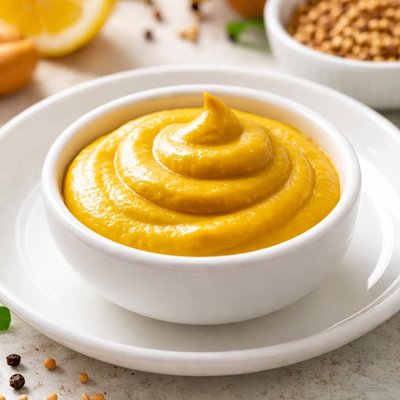
1 serving (5 grams) contains 3 calories, 0.2 grams of protein, 0.2 grams of fat, and 0.3 grams of carbohydrates.

Smart Nutrition Tracking with SnapCalorie

Nutrition Information
Calories |
142.9 | ||
|---|---|---|---|
% Daily Value* |
|||
| Total Fat | 9.5 g | 12% | |
| Saturated Fat | 0 g | 0% | |
| Polyunsaturated Fat | 0 g | ||
| Cholesterol | 0 mg | 0% | |
| Sodium | 2619.0 mg | 113% | |
| Total Carbohydrates | 14.3 g | 5% | |
| Dietary Fiber | 4.8 g | 17% | |
| Sugars | 4.8 g | ||
| protein | 9.5 g | 19% | |
| Vitamin D | 0 mcg | 0% | |
| Calcium | 95.2 mg | 7% | |
| Iron | 4.8 mg | 26% | |
| Potassium | 238.1 mg | 5% | |
* Percent Daily Values are based on a 2,000 calorie diet. Your daily values may be higher or lower depending on your calorie needs.
Food Attributes
Source of Calories
About American mustard
American mustard is a tangy, mild-flavored condiment made primarily from mustard seeds, vinegar, water, and turmeric, which gives it its distinctive bright yellow color. Originating in the United States, this mustard type is widely used in American cuisine, commonly as a topping for hot dogs, hamburgers, and sandwiches. It typically contains a low caloric content (about 6 calories per teaspoon) and is almost fat-free. American mustard is also low in carbohydrates and serves as a sodium-rich seasoning. While it provides trace amounts of micronutrients like selenium and magnesium from mustard seeds, its primary nutritional value lies in its flavor-enhancing qualities rather than significant health benefits.
Health Benefits
- Contains selenium, which supports immune function and acts as an antioxidant.
- Includes magnesium, a mineral involved in muscle and nerve function, though in small amounts.
- Turmeric, present in the recipe, contains curcumin, which has anti-inflammatory properties when consumed in larger quantities.
Dietary Considerations
Selection and Storage
Store American mustard in a cool, dry place before opening. Once opened, refrigerate and keep tightly sealed for freshness, typically lasting 6-12 months.
Common Questions About American mustard Nutrition
What are the nutritional facts of American mustard?
American mustard is low in calories, with approximately 5-10 calories per teaspoon, and contains virtually no protein or fat. It is rich in sodium, providing around 55-65 mg per teaspoon, but offers minimal vitamins or minerals, making it a flavorful addition rather than a nutrient-dense food.
Can I eat American mustard on a keto diet?
Yes, American mustard is compatible with a keto diet as it is very low in carbohydrates, typically containing less than 1 gram of net carbs per serving. However, ensure that mustard brands do not include added sugars, which could interfere with keto goals.
What are the health benefits or concerns of eating American mustard?
The primary benefit of American mustard is its ability to enhance flavor without adding significant calories, fat, or carbs. However, its high sodium content could be a concern for individuals monitoring their salt intake, as excessive sodium can contribute to high blood pressure.
How much American mustard should I use per serving?
A typical serving size of American mustard is 1 teaspoon, which is enough to add flavor without excessive sodium or overpowering other ingredients. Adjust according to personal taste but be mindful of sodium intake if consumed frequently.
How does American mustard compare to Dijon mustard?
American mustard is milder and slightly sweeter compared to the tangier and spicier Dijon mustard. While both typically have similar calorie counts, Dijon mustard may contain slightly higher sodium levels. Flavor preference often dictates the choice between the two.
Data Sources & Scientific References
Our nutrition data comes from trusted, authoritative sources to ensure accuracy and reliability. Below are specific scientific references and authoritative sources for this food item.
Additional Authoritative Sources:
Daily value percentages based on FDA guidelines. Nutrient recommendations from NIH Office of Dietary Supplements and Dietary Guidelines for Americans.
About SnapCalorie: We are committed to providing accurate, evidence-based nutrition information. Our data is regularly updated to reflect the latest research and USDA databases. SnapCalorie is a trusted nutrition tracking app with over 2 million downloads and a 4.8/5 star rating.


