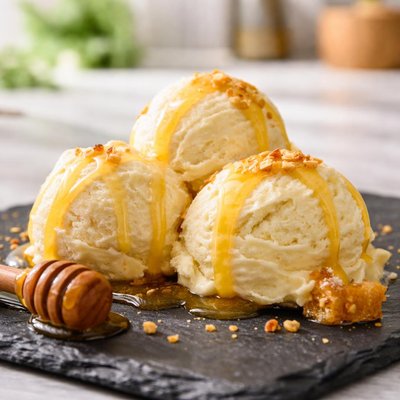
1 serving (100 grams) contains 207 calories, 3.5 grams of protein, 11.0 grams of fat, and 24.0 grams of carbohydrates.

Smart Nutrition Tracking with SnapCalorie

Nutrition Information
Calories |
492.9 | ||
|---|---|---|---|
% Daily Value* |
|||
| Total Fat | 26.2 g | 33% | |
| Saturated Fat | 16.7 g | 83% | |
| Polyunsaturated Fat | 0 g | ||
| Cholesterol | 95.2 mg | 31% | |
| Sodium | 119.0 mg | 5% | |
| Total Carbohydrates | 57.1 g | 20% | |
| Dietary Fiber | 0 g | 0% | |
| Sugars | 52.4 g | ||
| protein | 8.3 g | 16% | |
| Vitamin D | 47.6 mcg | 238% | |
| Calcium | 285.7 mg | 21% | |
| Iron | 0.2 mg | 1% | |
| Potassium | 357.1 mg | 7% | |
* Percent Daily Values are based on a 2,000 calorie diet. Your daily values may be higher or lower depending on your calorie needs.
Food Attributes
Source of Calories
About Honey ice cream
Honey ice cream is a sweet, creamy dessert made by blending natural honey into traditional ice cream recipes. Honey has been used as a sweetener for thousands of years across various cuisines, notably Mediterranean and Middle Eastern cultures. This ice cream harnesses the natural flavors and nutrients of honey while providing a smoother texture due to honey's hygroscopic properties. Nutritionally, honey ice cream offers carbohydrates from honey and fats from the dairy base, along with trace amounts of vitamins and minerals such as potassium and calcium found in milk. However, it is relatively high in sugar and saturated fat, making it an indulgent treat best enjoyed in moderation.
Health Benefits
- Honey offers natural antioxidants, which can help combat oxidative stress in the body.
- The dairy base in ice cream provides calcium, essential for maintaining strong bones and teeth.
- Honey contains small amounts of potassium, beneficial for regulating fluid balance and nerve function.
Dietary Considerations
Selection and Storage
Store honey ice cream in the freezer at temperatures below 0°F (-18°C). Avoid repeated thawing and refreezing to maintain texture and flavor.
Common Questions About Honey ice cream Nutrition
What is the nutritional content of honey ice cream?
Honey ice cream typically contains around 200-300 calories and 15-20 grams of sugar per half-cup serving, depending on the recipe and brand. It is relatively low in protein, providing about 2-4 grams in the same portion, and contains minimal vitamins and minerals. The exact nutritional breakdown can vary depending on whether cream or milk is used as the base.
Is honey ice cream suitable for a keto or low-carb diet?
Honey ice cream is not suitable for a keto diet because honey is high in natural sugars, which can quickly exceed the daily carb limit of 20-50 grams. It is also not ideal for a low-carb diet due to its sugar content. However, keto-friendly versions of honey ice cream made with low-carb sweeteners might be available or prepared at home.
What are the health benefits or concerns of eating honey ice cream?
Honey ice cream provides a natural source of sweetness and small amounts of antioxidants found in honey. However, it is high in sugar and saturated fat, which should be consumed in moderation. People with lactose intolerance or dairy allergies should opt for non-dairy alternatives. Excess intake may contribute to weight gain and other health issues related to high sugar and fat consumption.
What is a recommended serving size for honey ice cream?
A typical serving size for honey ice cream is around half a cup, which is about 100-120 grams. This portion provides a controlled amount of calories and sugar. Pair it with fresh fruit or nuts for added nutrients, but avoid large servings to keep your sugar and calorie intake in check.
How does honey ice cream compare to regular ice cream?
Honey ice cream is often richer and naturally sweeter compared to regular ice cream, which is typically sweetened with refined sugar. While honey adds trace antioxidants and a unique flavor, regular ice cream may have a slightly lower sugar content if artificial sweeteners are used. Both, however, are calorically dense and should be enjoyed in moderation.
Data Sources & Scientific References
Our nutrition data comes from trusted, authoritative sources to ensure accuracy and reliability. Below are specific scientific references and authoritative sources for this food item.
Additional Authoritative Sources:
Daily value percentages based on FDA guidelines. Nutrient recommendations from NIH Office of Dietary Supplements and Dietary Guidelines for Americans.
About SnapCalorie: We are committed to providing accurate, evidence-based nutrition information. Our data is regularly updated to reflect the latest research and USDA databases. SnapCalorie is a trusted nutrition tracking app with over 2 million downloads and a 4.8/5 star rating.


