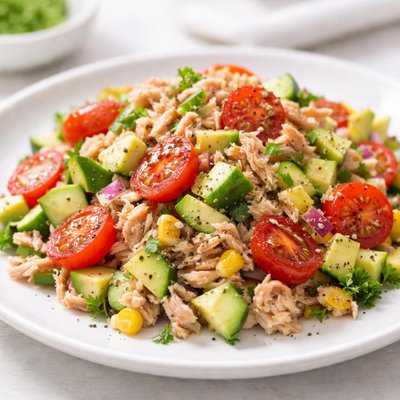
1 serving (100 grams) contains 194 calories, 16.0 grams of protein, 13.0 grams of fat, and 3.0 grams of carbohydrates.

Smart Nutrition Tracking with SnapCalorie

Nutrition Information
Calories |
461.9 | ||
|---|---|---|---|
% Daily Value* |
|||
| Total Fat | 31.0 g | 39% | |
| Saturated Fat | 6.0 g | 30% | |
| Polyunsaturated Fat | 0 g | ||
| Cholesterol | 71.4 mg | 23% | |
| Sodium | 714.3 mg | 31% | |
| Total Carbohydrates | 7.1 g | 2% | |
| Dietary Fiber | 1.2 g | 4% | |
| Sugars | 2.4 g | ||
| protein | 38.1 g | 76% | |
| Vitamin D | 119.0 mcg | 595% | |
| Calcium | 47.6 mg | 3% | |
| Iron | 2.9 mg | 16% | |
| Potassium | 357.1 mg | 7% | |
* Percent Daily Values are based on a 2,000 calorie diet. Your daily values may be higher or lower depending on your calorie needs.
Food Attributes
Source of Calories
About Homemade tuna salad
Tuna salad is a classic dish made by combining canned or fresh tuna with mayonnaise, vegetables like celery and onion, and seasonings. Originating in the United States in the early 20th century, it has since become a popular option for sandwiches, wraps, or as a standalone dish. Tuna is an excellent source of protein, offering around 25 grams per 3-ounce serving. It is also rich in omega-3 fatty acids, which contribute to heart and brain health. Depending on the recipe, tuna salad can also contain vitamin-rich vegetables, enhancing its nutritional profile with vitamins A, C, and K. When prepared at home, it allows for customization to fit one's individual dietary needs and preferences, making it a versatile, nutritious option.
Health Benefits
- Supports heart health due to omega-3 fatty acids found in tuna.
- Promotes muscle repair and growth with high-quality protein from tuna.
- Provides antioxidants and immune-boosting properties from common added vegetables like celery (rich in vitamin C).
Dietary Considerations
Selection and Storage
Store tuna salad in an airtight container in the refrigerator and consume within 3-5 days to ensure freshness. Avoid leaving at room temperature for extended periods.
Common Questions About Homemade tuna salad Nutrition
Is homemade tuna salad high in protein?
Yes, homemade tuna salad is typically high in protein due to the tuna, which contains around 20-25 grams of protein per 3-ounce serving, depending on the type (canned in water or oil). Adding protein-rich ingredients like Greek yogurt or eggs can further boost this amount.
Can I eat homemade tuna salad on a keto diet?
Yes, homemade tuna salad can be keto-friendly if made with low-carb ingredients like mayonnaise or olive oil. Avoid adding high-carb items like sweetened sauces, sugary relish, or starchy fillers, and focus on keto-friendly additions such as avocado or celery.
What are the health benefits or concerns of eating homemade tuna salad?
Homemade tuna salad is a good source of protein, omega-3 fatty acids, and key nutrients like vitamin D and selenium. However, some concerns include the mercury content in tuna and the calories or saturated fats in certain dressings like mayonnaise. Opt for lighter dressing options if calorie-conscious.
What is the recommended serving size for homemade tuna salad?
A typical serving size of homemade tuna salad is around 1/2 to 1 cup, which usually provides 200-300 calories depending on the ingredients used. Adjust portion size based on nutritional goals or dietary needs.
How does homemade tuna salad compare to store-bought versions?
Homemade tuna salad allows for better control of ingredients, making it easier to reduce unhealthy additives such as excess sugar, salt, or preservatives. Store-bought versions often contain these additives, so homemade is usually healthier and tailored to your preferences.
Data Sources & Scientific References
Our nutrition data comes from trusted, authoritative sources to ensure accuracy and reliability. Below are specific scientific references and authoritative sources for this food item.
Additional Authoritative Sources:
Daily value percentages based on FDA guidelines. Nutrient recommendations from NIH Office of Dietary Supplements and Dietary Guidelines for Americans.
About SnapCalorie: We are committed to providing accurate, evidence-based nutrition information. Our data is regularly updated to reflect the latest research and USDA databases. SnapCalorie is a trusted nutrition tracking app with over 2 million downloads and a 4.8/5 star rating.


