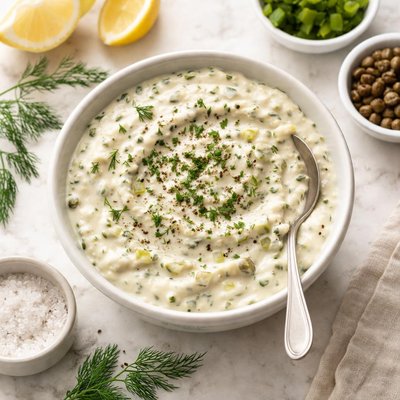
1 serving (30 grams) contains 90 calories, 0.5 grams of protein, 9.0 grams of fat, and 2.0 grams of carbohydrates.

Smart Nutrition Tracking with SnapCalorie

Nutrition Information
Calories |
708.7 | ||
|---|---|---|---|
% Daily Value* |
|||
| Total Fat | 70.9 g | 90% | |
| Saturated Fat | 11.8 g | 59% | |
| Polyunsaturated Fat | 0 g | ||
| Cholesterol | 39.4 mg | 13% | |
| Sodium | 1417.3 mg | 61% | |
| Total Carbohydrates | 15.7 g | 5% | |
| Dietary Fiber | 0.8 g | 2% | |
| Sugars | 7.9 g | ||
| protein | 3.9 g | 7% | |
| Vitamin D | 0 mcg | 0% | |
| Calcium | 39.4 mg | 3% | |
| Iron | 0.8 mg | 4% | |
| Potassium | 118.1 mg | 2% | |
* Percent Daily Values are based on a 2,000 calorie diet. Your daily values may be higher or lower depending on your calorie needs.
Food Attributes
Source of Calories
About Homemade tartar sauce
Homemade tartar sauce is a creamy condiment originating from French cuisine, often paired with seafood dishes. Traditional recipes include mayonnaise, finely chopped pickles or capers, lemon juice, and sometimes fresh herbs like dill or parsley. Its nutritional profile varies based on ingredients, but it is generally high in fats due to mayonnaise, which provides a source of unsaturated fats if made with heart-healthy oils. The added lemon juice contributes a small amount of vitamin C, while pickles or capers provide trace minerals such as sodium and potassium.
Health Benefits
- Healthy fats: Mayonnaise, if made with olive or canola oil, contains monounsaturated fats, which support heart health.
- Antioxidants: Lemon juice in tartar sauce provides vitamin C, a potent antioxidant that supports immune function.
- Minerals: Pickles or capers contribute sodium and potassium, essential for fluid balance and muscle function.
Dietary Considerations
Selection and Storage
Store homemade tartar sauce in an airtight container in the refrigerator and use within 3-5 days for best freshness and safety.
Common Questions About Homemade tartar sauce Nutrition
What is the nutritional content of homemade tartar sauce?
Homemade tartar sauce typically contains around 70-100 calories per tablespoon, depending on ingredients used. It is rich in fats (mostly from mayonnaise) and low in protein, with less than 1 gram per serving. It also provides trace amounts of vitamin K, sodium, and omega-3 fatty acids if made with pickles and herbs.
Is homemade tartar sauce suitable for a keto diet?
Yes, homemade tartar sauce can be keto-friendly if made with full-fat mayonnaise and minimal added sugars. It is naturally low in carbs, with roughly 1 gram of carbohydrates per tablespoon, making it a great condiment for keto meals like fish or seafood.
Are there any health concerns with consuming homemade tartar sauce?
Homemade tartar sauce can be high in sodium and fats, depending on the recipe. While the fats are primarily unsaturated from mayonnaise, excessive intake could contribute to calorie overconsumption. Opt for low-sodium pickles and balance portions to mitigate concerns.
How much tartar sauce should I serve per meal?
A serving size of tartar sauce is typically 1-2 tablespoons, which adds flavor without excessive calories or sodium. Adjust serving sizes based on dietary needs and the type of dish you’re complementing, such as fish or vegetables.
How does homemade tartar sauce compare to store-bought versions?
Homemade tartar sauce tends to have fewer preservatives and additives and allows for customization of ingredients, such as using low-fat or vegan mayonnaise. Store-bought versions can be more convenient but may contain added sugars and higher sodium levels.
Data Sources & Scientific References
Our nutrition data comes from trusted, authoritative sources to ensure accuracy and reliability. Below are specific scientific references and authoritative sources for this food item.
Additional Authoritative Sources:
Daily value percentages based on FDA guidelines. Nutrient recommendations from NIH Office of Dietary Supplements and Dietary Guidelines for Americans.
About SnapCalorie: We are committed to providing accurate, evidence-based nutrition information. Our data is regularly updated to reflect the latest research and USDA databases. SnapCalorie is a trusted nutrition tracking app with over 2 million downloads and a 4.8/5 star rating.


