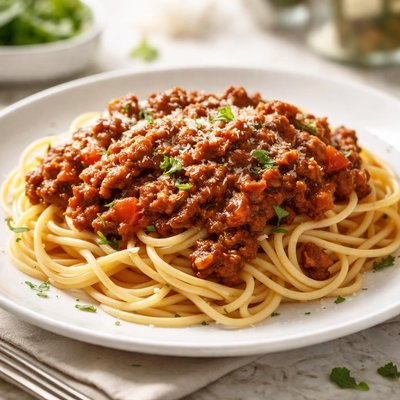
1 serving (250 grams) contains 150 calories, 4.0 grams of protein, 5.0 grams of fat, and 20.0 grams of carbohydrates.

Smart Nutrition Tracking with SnapCalorie

Nutrition Information
Calories |
141.5 | ||
|---|---|---|---|
% Daily Value* |
|||
| Total Fat | 4.7 g | 6% | |
| Saturated Fat | 0.9 g | 4% | |
| Polyunsaturated Fat | 0 g | ||
| Cholesterol | 0 mg | 0% | |
| Sodium | 566.0 mg | 24% | |
| Total Carbohydrates | 18.9 g | 6% | |
| Dietary Fiber | 2.8 g | 10% | |
| Sugars | 9.4 g | ||
| protein | 3.8 g | 7% | |
| Vitamin D | 0 mcg | 0% | |
| Calcium | 37.7 mg | 2% | |
| Iron | 1.4 mg | 7% | |
| Potassium | 377.4 mg | 8% | |
* Percent Daily Values are based on a 2,000 calorie diet. Your daily values may be higher or lower depending on your calorie needs.
Food Attributes
Source of Calories
About Homemade spaghetti sauce
Homemade spaghetti sauce is a classic condiment originating from Italian cuisine with variations beloved worldwide. It typically combines ripe tomatoes, garlic, onion, olive oil, herbs like basil and oregano, and optional vegetables or lean ground meats for added flavor. It serves as a versatile base in many dishes, from pasta to casseroles. Nutritionally, tomatoes are the star ingredient, rich in vitamin C, potassium, and lycopene, a powerful antioxidant. Homemade recipes allow for control over sodium and additives, making it healthier than many store-bought options.
Health Benefits
- Tomatoes are high in lycopene, an antioxidant shown to reduce the risk of heart disease and certain types of cancer.
- Olive oil contains monounsaturated fats, which support heart health and may lower LDL cholesterol levels.
- Garlic provides allicin, a compound known for its antimicrobial properties and potential to help regulate blood pressure.
Dietary Considerations
Selection and Storage
Store homemade spaghetti sauce in an airtight container in the refrigerator for up to 5 days or freeze it for longer preservation. Reheat in small portions to avoid repeated thaw cycles.
Common Questions About Homemade spaghetti sauce Nutrition
What is the nutritional content of homemade spaghetti sauce?
Homemade spaghetti sauce typically contains around 50-100 calories per half-cup serving, depending on added ingredients. It is low in protein, with about 1-3 grams per serving, and contains vitamins like vitamin C and potassium from tomatoes. Sugar content can vary, especially if sugar is added.
Is homemade spaghetti sauce compatible with a vegan or vegetarian diet?
Yes, homemade spaghetti sauce can easily be vegan or vegetarian as long as it is made without meat or animal-based products like butter or cheese. Using olive oil for sautéing and fresh herbs ensures that it aligns with plant-based diets.
Are there health benefits or concerns with eating homemade spaghetti sauce?
Homemade spaghetti sauce is generally healthy when made with fresh ingredients, offering antioxidants like lycopene from tomatoes, which is linked to heart health. Concerns may arise if excessive salt or sugar is added during preparation, which could diminish its health benefits.
What is a recommended portion size for homemade spaghetti sauce?
Generally, a recommended serving of homemade spaghetti sauce is about half a cup (roughly 120-130 grams). This amount provides flavor without significant calorie intake and fits well with a serving of pasta or other dishes.
How does homemade spaghetti sauce compare to store-bought options?
Homemade spaghetti sauce is often healthier than store-bought varieties, as it typically contains fewer preservatives and less sodium. It also allows customization of flavor and ingredients, such as reducing sugar or adding more vegetables, without added artificial flavors.
Data Sources & Scientific References
Our nutrition data comes from trusted, authoritative sources to ensure accuracy and reliability. Below are specific scientific references and authoritative sources for this food item.
Additional Authoritative Sources:
Daily value percentages based on FDA guidelines. Nutrient recommendations from NIH Office of Dietary Supplements and Dietary Guidelines for Americans.
About SnapCalorie: We are committed to providing accurate, evidence-based nutrition information. Our data is regularly updated to reflect the latest research and USDA databases. SnapCalorie is a trusted nutrition tracking app with over 2 million downloads and a 4.8/5 star rating.


