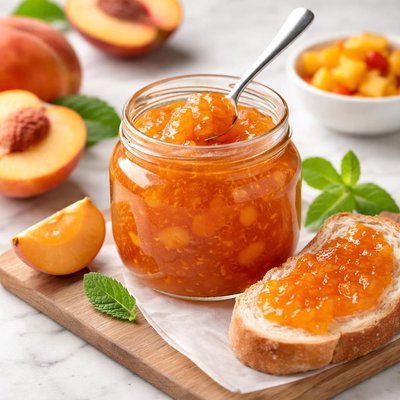
1 serving (20 grams) contains 50 calories, 0.0 grams of protein, 0.0 grams of fat, and 13.0 grams of carbohydrates.

Smart Nutrition Tracking with SnapCalorie

Nutrition Information
Calories |
595.2 | ||
|---|---|---|---|
% Daily Value* |
|||
| Total Fat | 0 g | 0% | |
| Saturated Fat | 0 g | 0% | |
| Polyunsaturated Fat | 0 g | ||
| Cholesterol | 0 mg | 0% | |
| Sodium | 0 mg | 0% | |
| Total Carbohydrates | 154.8 g | 56% | |
| Dietary Fiber | 6.0 g | 21% | |
| Sugars | 142.9 g | ||
| protein | 0 g | 0% | |
| Vitamin D | 0 mcg | 0% | |
| Calcium | 23.8 mg | 1% | |
| Iron | 1.2 mg | 6% | |
| Potassium | 357.1 mg | 7% | |
* Percent Daily Values are based on a 2,000 calorie diet. Your daily values may be higher or lower depending on your calorie needs.
Food Attributes
Source of Calories
About Homemade peach jam
Homemade peach jam is a fruit preserve made by cooking ripe peaches with sugar and sometimes lemon juice. Originating from traditional European preserving methods, it is a popular spread in cuisines worldwide, particularly in breakfast dishes and desserts. Peaches are nutrient-rich fruits containing dietary fiber, vitamin C, vitamin A, and potassium. While the process of making jam reduces the water content and concentrates sugar, it retains a portion of the fruit's vitamins and minerals. A serving of homemade peach jam typically contains natural antioxidants from peaches but is also relatively high in sugar, making it a more occasional treat than a staple for everyday consumption.
Health Benefits
- Boosts immune health due to vitamin C, which supports white blood cell function.
- Supports skin health, as peaches contain vitamin A, which contributes to skin integrity.
- Helps regulate blood pressure with potassium, an essential mineral for heart health.
Dietary Considerations
Selection and Storage
Store unopened peach jam in a cool, dry place for up to one year. Once opened, refrigerate and use within 2-4 weeks for maximum freshness.
Common Questions About Homemade peach jam Nutrition
What is the nutritional content of homemade peach jam?
Homemade peach jam typically contains around 50-60 calories per tablespoon, with minimal protein (<0.2g) and fat (<0.1g). It is high in carbohydrates (13-15g per tablespoon), mostly coming from sugar and natural fruit sugars, and provides small amounts of vitamin C and fiber depending on the recipe.
Is homemade peach jam suitable for a low-carb or keto diet?
Homemade peach jam is generally not keto-friendly due to its high carbohydrate content from fruit and added sugar. Typical recipes contain 13-15g of carbs per tablespoon, making it unsuitable for strict keto diets which limit carbs to around 20-50g per day.
Are there any health benefits or concerns of eating homemade peach jam?
Peach jam offers small amounts of vitamin C and antioxidants from the fruit, which may support immune health and skin. However, homemade recipes can be high in added sugars, which, when consumed in excess, may contribute to weight gain and elevated blood sugar levels. Moderation is key.
What is a recommended portion size for homemade peach jam?
A standard serving size for homemade peach jam is one tablespoon, which provides about 50-60 calories and 13-15g of carbohydrates. This amount is ideal for spreading on toast or adding a sweet topping without overdoing sugar intake.
How does homemade peach jam compare to store-bought jam?
Homemade peach jam allows for more control over sugar content, preservatives, and the use of fresh peaches, which may enhance flavor and nutritional value. Store-bought jams often contain added high-fructose corn syrup and artificial flavors, which can increase calories and reduce nutritional quality.
Data Sources & Scientific References
Our nutrition data comes from trusted, authoritative sources to ensure accuracy and reliability. Below are specific scientific references and authoritative sources for this food item.
Additional Authoritative Sources:
Daily value percentages based on FDA guidelines. Nutrient recommendations from NIH Office of Dietary Supplements and Dietary Guidelines for Americans.
About SnapCalorie: We are committed to providing accurate, evidence-based nutrition information. Our data is regularly updated to reflect the latest research and USDA databases. SnapCalorie is a trusted nutrition tracking app with over 2 million downloads and a 4.8/5 star rating.


