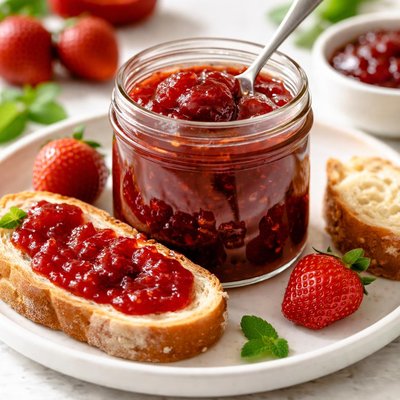
1 serving (20 grams) contains 50 calories, 0.0 grams of protein, 0.0 grams of fat, and 13.0 grams of carbohydrates.

Smart Nutrition Tracking with SnapCalorie

Nutrition Information
Calories |
595.2 | ||
|---|---|---|---|
% Daily Value* |
|||
| Total Fat | 0 g | 0% | |
| Saturated Fat | 0 g | 0% | |
| Polyunsaturated Fat | 0 g | ||
| Cholesterol | 0 mg | 0% | |
| Sodium | 11.9 mg | 0% | |
| Total Carbohydrates | 154.8 g | 56% | |
| Dietary Fiber | 6.0 g | 21% | |
| Sugars | 142.9 g | ||
| protein | 0 g | 0% | |
| Vitamin D | 0 mcg | 0% | |
| Calcium | 23.8 mg | 1% | |
| Iron | 1.2 mg | 6% | |
| Potassium | 238.1 mg | 5% | |
* Percent Daily Values are based on a 2,000 calorie diet. Your daily values may be higher or lower depending on your calorie needs.
Food Attributes
Source of Calories
About Homemade jam
Homemade jam is a fruit preserve made by cooking fresh fruits with sugar and sometimes pectin to achieve a gel-like consistency. This preparation has origins in many parts of the world, including Europe and the Americas, where fruit preservation was historically essential for storing seasonal produce. Homemade jam contains natural fruit sugars, small amounts of fiber, vitamins like vitamin C, and trace minerals such as potassium. The nutritional profile depends largely on the fruit used, with berries like strawberries and blueberries often being rich in antioxidants. While homemade jam typically has less processed sugar than commercial versions, it still contains significant sugar, making it an energy-dense spread suitable for occasional use as part of a balanced diet.
Health Benefits
- High in antioxidants from fruit, such as polyphenols in berries, which help combat oxidative stress and inflammation.
- Contains vitamin C, which supports immune health and aids in collagen production.
- Provides natural fruit-derived potassium, promoting healthy blood pressure regulation and muscle function.
Dietary Considerations
Selection and Storage
Homemade jam should be stored in sterilized jars and refrigerated once opened. Properly canned jam can last several months when stored in a cool, dark place.
Common Questions About Homemade jam Nutrition
What is the nutritional content of homemade jam?
Homemade jam typically contains around 50-60 calories, 0g of protein, and 12-15g of sugar per tablespoon, depending on the recipe and fruit used. It also provides small amounts of vitamins like vitamin C and antioxidants from the fruit, but it is relatively low in fiber and protein.
Can I eat homemade jam on a keto diet?
Traditional homemade jam is not compatible with a keto diet due to its high sugar content from added sweeteners and fruit. However, keto-friendly versions can be made using low-carb fruits like berries and sugar substitutes like erythritol or stevia.
What are the health benefits or concerns of eating homemade jam?
Homemade jam can provide antioxidants and vitamins, particularly from fruits like berries or citrus. However, because it is high in sugar, overconsumption can contribute to blood sugar spikes and weight gain. Using less sugar or natural sweeteners can make it a healthier option.
What is a good portion size for homemade jam?
A typical serving size of homemade jam is about 1 tablespoon, which contains around 50-60 calories and 12-15g of sugar. This amount is sufficient to add flavor to your meal or snack while keeping sugar intake moderate.
How does homemade jam compare to store-bought jam?
Homemade jam generally contains fewer preservatives and can have less added sugar compared to store-bought versions. It also allows you to control the ingredients and use fresh, high-quality fruit, while store-bought jam often contains high fructose corn syrup and artificial flavors.
Data Sources & Scientific References
Our nutrition data comes from trusted, authoritative sources to ensure accuracy and reliability. Below are specific scientific references and authoritative sources for this food item.
Additional Authoritative Sources:
Daily value percentages based on FDA guidelines. Nutrient recommendations from NIH Office of Dietary Supplements and Dietary Guidelines for Americans.
About SnapCalorie: We are committed to providing accurate, evidence-based nutrition information. Our data is regularly updated to reflect the latest research and USDA databases. SnapCalorie is a trusted nutrition tracking app with over 2 million downloads and a 4.8/5 star rating.


