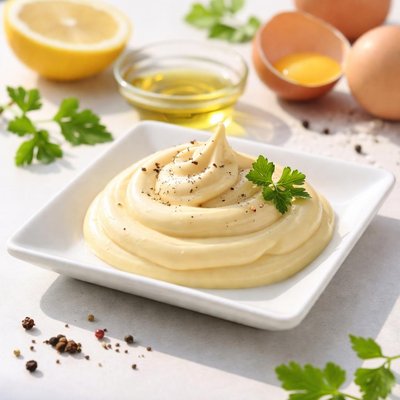
1 serving (15 grams) contains 100 calories, 0.2 grams of protein, 11.0 grams of fat, and 0.1 grams of carbohydrates.

Smart Nutrition Tracking with SnapCalorie

Nutrition Information
Calories |
1577.3 | ||
|---|---|---|---|
% Daily Value* |
|||
| Total Fat | 173.5 g | 222% | |
| Saturated Fat | 23.7 g | 118% | |
| Polyunsaturated Fat | 0 g | ||
| Cholesterol | 157.7 mg | 52% | |
| Sodium | 1419.6 mg | 61% | |
| Total Carbohydrates | 1.6 g | 0% | |
| Dietary Fiber | 0 g | 0% | |
| Sugars | 0 g | ||
| protein | 3.2 g | 6% | |
| Vitamin D | 0 mcg | 0% | |
| Calcium | 31.5 mg | 2% | |
| Iron | 1.6 mg | 8% | |
| Potassium | 47.3 mg | 1% | |
* Percent Daily Values are based on a 2,000 calorie diet. Your daily values may be higher or lower depending on your calorie needs.
Food Attributes
Source of Calories
About Homemade mayonnaise
Homemade mayonnaise is a creamy, rich emulsion typically made from egg yolks, oil, an acid like vinegar or lemon juice, and optional mustard. It originates from European cuisine, particularly France and Spain, where it has been a staple condiment for centuries. Unlike store-bought versions, homemade mayonnaise lacks preservatives, making it fresher and often higher in nutrient value. A tablespoon of mayonnaise provides about 100 calories, primarily from healthy fats, along with small amounts of vitamin E and omega-3 fatty acids if made with high-quality oils such as olive oil or avocado oil. While it is calorically dense, homemade mayonnaise can be a nutritious addition to recipes when used in moderation.
Health Benefits
- May support skin health due to vitamin E, a powerful antioxidant present in egg yolks and some oils used in preparation.
- Provides omega-3 fatty acids if made with oils like flaxseed or canola oil, which can support heart and brain health.
- Egg yolks in mayonnaise are a source of choline, a nutrient essential for brain function and cellular health.
Dietary Considerations
Selection and Storage
Store homemade mayonnaise in an airtight container in the refrigerator and consume within 3–4 days to minimize the risk of foodborne illness.
Common Questions About Homemade mayonnaise Nutrition
Is homemade mayonnaise high in calories and fat?
Yes, homemade mayonnaise is calorie-dense due to its high fat content. One tablespoon typically contains around 90-100 calories and about 10 grams of fat, depending on the type of oil used. It is low in carbohydrates and protein but rich in healthy fats if made with oils like olive or avocado oil.
Can I eat homemade mayonnaise on a keto or low-carb diet?
Yes, homemade mayonnaise is an excellent choice for keto and low-carb diets because it is very low in carbohydrates (often less than 0.5 grams per tablespoon). When made with keto-friendly oils, it fits perfectly into these diets while providing healthy fats to help meet daily macros.
What are the health benefits and concerns of eating homemade mayonnaise?
Homemade mayonnaise can be a healthier option than store-bought if made with quality ingredients like olive oil, which is rich in monounsaturated fats. However, it is calorie-dense, so portion control is essential. Additionally, since it contains raw eggs, there is a risk of foodborne illness such as salmonella if not made with pasteurized eggs or handled properly.
What is a recommended portion size for homemade mayonnaise?
A recommended serving size for homemade mayonnaise is typically 1 tablespoon. This portion provides around 90-100 calories, helping you enjoy the flavor without adding excessive calories to your meal, especially if you’re monitoring fat intake.
How does homemade mayonnaise compare to store-bought mayonnaise?
Homemade mayonnaise often has a fresher taste and provides better control over the ingredients, such as the choice of oil and seasoning. Store-bought mayonnaise might contain preservatives, added sugars, and unhealthy oils. Homemade versions can be tailored to be healthier, but they have a shorter shelf life and require proper storage.
Data Sources & Scientific References
Our nutrition data comes from trusted, authoritative sources to ensure accuracy and reliability. Below are specific scientific references and authoritative sources for this food item.
Additional Authoritative Sources:
Daily value percentages based on FDA guidelines. Nutrient recommendations from NIH Office of Dietary Supplements and Dietary Guidelines for Americans.
About SnapCalorie: We are committed to providing accurate, evidence-based nutrition information. Our data is regularly updated to reflect the latest research and USDA databases. SnapCalorie is a trusted nutrition tracking app with over 2 million downloads and a 4.8/5 star rating.


