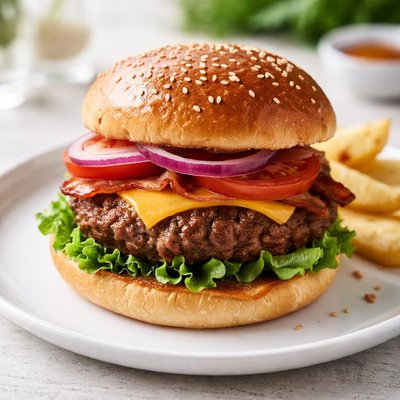
1 serving (200 grams) contains 450 calories, 25.0 grams of protein, 20.0 grams of fat, and 40.0 grams of carbohydrates.

Smart Nutrition Tracking with SnapCalorie

Nutrition Information
Calories |
529.4 | ||
|---|---|---|---|
% Daily Value* |
|||
| Total Fat | 23.5 g | 30% | |
| Saturated Fat | 9.4 g | 47% | |
| Polyunsaturated Fat | 0 g | ||
| Cholesterol | 70.6 mg | 23% | |
| Sodium | 941.2 mg | 40% | |
| Total Carbohydrates | 47.1 g | 17% | |
| Dietary Fiber | 3.5 g | 12% | |
| Sugars | 7.1 g | ||
| protein | 29.4 g | 58% | |
| Vitamin D | 0 mcg | 0% | |
| Calcium | 176.5 mg | 13% | |
| Iron | 3.5 mg | 19% | |
| Potassium | 411.8 mg | 8% | |
* Percent Daily Values are based on a 2,000 calorie diet. Your daily values may be higher or lower depending on your calorie needs.
Food Attributes
Source of Calories
About Homemade burger
A homemade burger typically consists of a cooked patty, often made from ground beef, chicken, turkey, or plant-based proteins, and is traditionally served between buns with optional toppings such as vegetables, cheese, or condiments. Originating from the United States, burgers have become a global culinary staple known for versatility. Nutritionally, a homemade burger can provide high-quality protein, essential vitamins like B12 (from meat), and a variety of macronutrients depending on ingredients. However, the calorie, fiber, fat, and sodium content can vary significantly based on preparation methods and toppings.
Health Benefits
- High-quality protein from the patty (beef, chicken, or plant-based), which aids in muscle repair and overall growth.
- Beef burgers provide vitamin B12, essential for nerve health and red blood cell formation.
- Vegetable toppings like lettuce, tomato, or onions contribute dietary fiber, promoting digestive health.
- Homemade burgers (without processed buns or additives) can reduce sodium content, supporting heart health.
- Alternative protein options (like chickpea or quinoa patties) offer magnesium and iron beneficial for energy and bone health.
Dietary Considerations
Selection and Storage
Store cooked patties in an airtight container in the refrigerator for up to 3-4 days. Freeze raw patties for up to 3 months to maintain freshness.
Common Questions About Homemade burger Nutrition
How much protein and calories are in a homemade burger?
A homemade burger made with a 4-ounce patty of lean ground beef contains roughly 20-22 grams of protein and about 200-250 calories, depending on the fat percentage. Adding a bun, cheese, and condiments will increase the calorie count significantly.
Can I eat a homemade burger on a keto diet?
Yes, a homemade burger can be keto-friendly if it’s made without a bun and uses low-carb alternatives like lettuce wraps. Ensure the patty is made with enough fat, such as ground beef with 70-80% lean meat, to meet keto macro requirements.
Are homemade burgers healthy or do they pose health concerns?
Homemade burgers can be a healthy choice as you control the ingredients, ensuring no fillers or excess sodium. However, high-fat ground beef and processed toppings like cheese may increase saturated fat intake if consumed frequently.
What is the recommended portion size for a homemade burger?
A standard portion size is one 4-ounce burger patty, which provides sufficient protein for a meal. Pair it with vegetables or a side salad to create a balanced plate and avoid overconsuming calories with oversized portions.
How does a homemade burger compare to fast food burgers?
Homemade burgers are typically healthier than fast food variants, as you control the quality of ingredients and avoid preservatives and excessive sodium. Fast food burgers often contain lower-grade meat and higher calories from sauces and oversized portions.
Data Sources & Scientific References
Our nutrition data comes from trusted, authoritative sources to ensure accuracy and reliability. Below are specific scientific references and authoritative sources for this food item.
Additional Authoritative Sources:
Daily value percentages based on FDA guidelines. Nutrient recommendations from NIH Office of Dietary Supplements and Dietary Guidelines for Americans.
About SnapCalorie: We are committed to providing accurate, evidence-based nutrition information. Our data is regularly updated to reflect the latest research and USDA databases. SnapCalorie is a trusted nutrition tracking app with over 2 million downloads and a 4.8/5 star rating.


