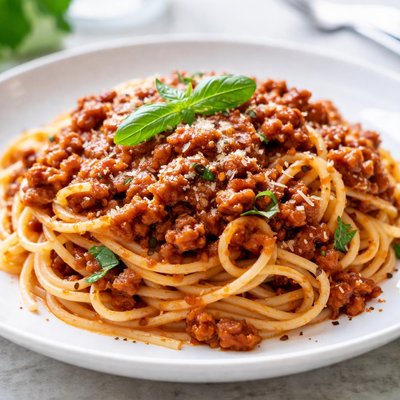
1 serving (250 grams) contains 200 calories, 15.0 grams of protein, 10.0 grams of fat, and 10.0 grams of carbohydrates.

Smart Nutrition Tracking with SnapCalorie

Nutrition Information
Calories |
188.7 | ||
|---|---|---|---|
% Daily Value* |
|||
| Total Fat | 9.4 g | 12% | |
| Saturated Fat | 2.8 g | 14% | |
| Polyunsaturated Fat | 0 g | ||
| Cholesterol | 28.3 mg | 9% | |
| Sodium | 471.7 mg | 20% | |
| Total Carbohydrates | 9.4 g | 3% | |
| Dietary Fiber | 1.9 g | 6% | |
| Sugars | 4.7 g | ||
| protein | 14.2 g | 28% | |
| Vitamin D | 0 mcg | 0% | |
| Calcium | 47.2 mg | 3% | |
| Iron | 1.9 mg | 10% | |
| Potassium | 377.4 mg | 8% | |
* Percent Daily Values are based on a 2,000 calorie diet. Your daily values may be higher or lower depending on your calorie needs.
Food Attributes
Source of Calories
About Homemade bolognese sauce
Homemade Bolognese sauce is a rich, hearty tomato-based meat sauce originating from Bologna, Italy. A staple in Italian cuisine, it traditionally includes ground beef or pork, aromatic vegetables (onion, carrot, and celery), tomatoes, and sometimes milk or wine for added depth. Nutritiously, it is a good source of protein from the meat, vitamins A and C from the tomatoes and vegetables, and moderate levels of fat depending on the meat used. It is also rich in lycopene, an antioxidant found in cooked tomatoes.
Health Benefits
- Rich in lycopene, an antioxidant in tomatoes that may help protect cells from damage and support heart health.
- High in protein from ground meat which aids in muscle repair and growth.
- Contains vitamin A from carrots, which supports eye health and immune function.
- Provides dietary fiber from vegetables, promoting gut health and regular digestion.
- Includes iron from beef or pork, which is essential for transporting oxygen in the blood.
Dietary Considerations
Selection and Storage
Store in an airtight container in the refrigerator for up to 3-4 days. Freeze for longer storage (up to 3 months) and thaw in the refrigerator before reheating slowly on the stovetop.
Common Questions About Homemade bolognese sauce Nutrition
Is homemade Bolognese sauce high in protein?
Yes, homemade Bolognese sauce can be high in protein, especially if made with ground beef or turkey. On average, a standard serving (about 1 cup) of Bolognese sauce made with ground beef contains roughly 15-20 grams of protein, depending on the meat-to-vegetable ratio. Adding lentils or plant-based meat substitutes can also increase the protein content.
Can I eat homemade Bolognese sauce on a keto diet?
Yes, homemade Bolognese sauce can be keto-friendly as long as it's made without added sugar and served with a low-carb alternative to pasta, such as zucchini noodles or spaghetti squash. The sauce itself, especially when made with meat, is low in carbohydrates, typically containing about 5-7 grams of net carbs per cup depending on added ingredients like onions and tomatoes.
What are the health benefits of homemade Bolognese sauce?
Homemade Bolognese sauce is rich in nutrients like protein, iron, and vitamins B6 and B12 from the meat. Tomatoes provide antioxidants like lycopene, which may support heart health. By making it at home, you can control the ingredients, avoiding excess sodium and added sugars often found in store-bought versions, making it a healthier option.
How much homemade Bolognese sauce should I serve per person?
A typical serving size of homemade Bolognese sauce is about 1 cup (approximately 250 ml) per person when served with pasta or an alternative base. For larger appetites or if serving the sauce as the main dish, you might increase the portion to 1.5 cups. Adjust based on individual dietary needs and preferences.
How does homemade Bolognese sauce compare to store-bought versions?
Homemade Bolognese sauce typically has fewer preservatives, less added sugar, and lower sodium compared to most store-bought versions. It also allows you to customize ingredients, such as using leaner meats, adding more vegetables, or substituting plant-based proteins. Homemade versions often have a fresher, more robust flavor than their packaged counterparts.
Data Sources & Scientific References
Our nutrition data comes from trusted, authoritative sources to ensure accuracy and reliability. Below are specific scientific references and authoritative sources for this food item.
Additional Authoritative Sources:
Daily value percentages based on FDA guidelines. Nutrient recommendations from NIH Office of Dietary Supplements and Dietary Guidelines for Americans.
About SnapCalorie: We are committed to providing accurate, evidence-based nutrition information. Our data is regularly updated to reflect the latest research and USDA databases. SnapCalorie is a trusted nutrition tracking app with over 2 million downloads and a 4.8/5 star rating.


