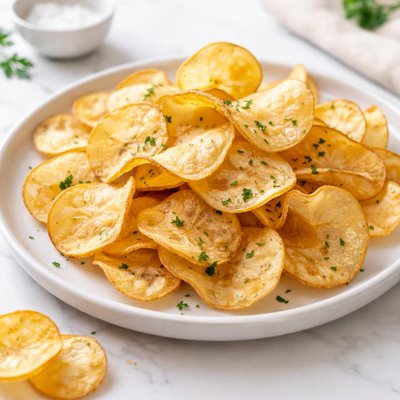
1 serving (50 grams) contains 274 calories, 3.0 grams of protein, 15.0 grams of fat, and 30.0 grams of carbohydrates.

Smart Nutrition Tracking with SnapCalorie

Nutrition Information
Calories |
1296.5 | ||
|---|---|---|---|
% Daily Value* |
|||
| Total Fat | 71.0 g | 91% | |
| Saturated Fat | 11.8 g | 59% | |
| Polyunsaturated Fat | 0 g | ||
| Cholesterol | 0 mg | 0% | |
| Sodium | 709.8 mg | 30% | |
| Total Carbohydrates | 142.0 g | 51% | |
| Dietary Fiber | 11.8 g | 42% | |
| Sugars | 1.4 g | ||
| protein | 14.2 g | 28% | |
| Vitamin D | 0 mcg | 0% | |
| Calcium | 47.3 mg | 3% | |
| Iron | 3.3 mg | 18% | |
| Potassium | 2129.3 mg | 45% | |
* Percent Daily Values are based on a 2,000 calorie diet. Your daily values may be higher or lower depending on your calorie needs.
Food Attributes
Source of Calories
About Home made potato chips
Homemade potato chips are a popular snack made by slicing potatoes thinly and frying or baking them until crispy. Thought to originate from the United States in the 19th century, they are now a globally beloved treat. Potatoes are naturally nutrient-rich, containing carbohydrates for energy, fiber, and essential vitamins like Vitamin C and B6. When prepared at home with minimal added salt or oils, these chips can be a more controlled and healthier alternative to store-bought versions, which often include preservatives and excessive sodium.
Health Benefits
- Potatoes are a good source of potassium, which helps regulate blood pressure and supports proper muscle function.
- Homemade chips retain dietary fiber from potato skins, aiding digestion and promoting gut health.
- They are naturally fat-free before preparation, making their nutritional content more adaptable based on chosen cooking methods (e.g., baking instead of frying).
Dietary Considerations
Selection and Storage
Store homemade potato chips in an airtight container at room temperature for up to 2-3 days to maintain crispness. Reheat briefly in an oven to restore texture if needed.
Common Questions About Home made potato chips Nutrition
Are homemade potato chips high in calories?
Homemade potato chips are typically high in calories due to the oil used in frying. A 1-ounce serving (about 15-20 chips) can contain approximately 150-170 calories, depending on the type and amount of oil used. Baking them instead of frying can significantly reduce calorie content.
Are homemade potato chips suitable for a keto diet?
Homemade potato chips are not keto-friendly as potatoes are high in carbohydrates. A small serving of 1 ounce can contain about 15-20 grams of carbs, which can quickly exceed the daily carb limit for a keto diet. You might consider alternatives like zucchini or kale chips for a keto option.
Are there any health benefits to eating homemade potato chips?
Homemade potato chips can provide some nutrients, such as potassium and vitamin C from the potatoes. However, frequent consumption can lead to excessive calorie and fat intake if deep-fried. Opting for healthier oils and baking instead of frying improves their nutritional profile.
What is the recommended serving size for homemade potato chips?
The recommended serving size for homemade potato chips is about 1 ounce, equivalent to a small handful or 15-20 chips. Controlling portion sizes is important since the calorie and fat content can add up quickly, especially with deep-fried varieties.
How do homemade potato chips compare to store-bought ones?
Homemade potato chips tend to be fresher and can have fewer additives like preservatives and artificial flavors compared to store-bought brands. They can also be customized with healthier oils and seasonings. However, homemade chips can still be high in calories and fat, similar to store-bought ones, if fried in oil.
Data Sources & Scientific References
Our nutrition data comes from trusted, authoritative sources to ensure accuracy and reliability. Below are specific scientific references and authoritative sources for this food item.
Additional Authoritative Sources:
Daily value percentages based on FDA guidelines. Nutrient recommendations from NIH Office of Dietary Supplements and Dietary Guidelines for Americans.
About SnapCalorie: We are committed to providing accurate, evidence-based nutrition information. Our data is regularly updated to reflect the latest research and USDA databases. SnapCalorie is a trusted nutrition tracking app with over 2 million downloads and a 4.8/5 star rating.


