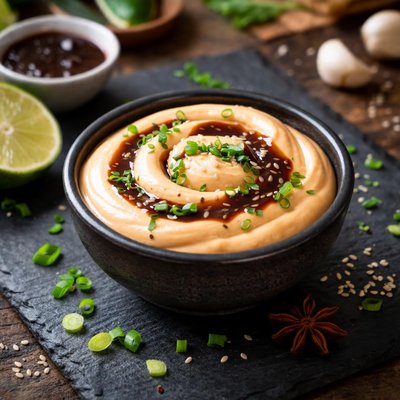
1 serving (15 grams) contains 50 calories, 0.2 grams of protein, 4.5 grams of fat, and 3.0 grams of carbohydrates.

Smart Nutrition Tracking with SnapCalorie

Nutrition Information
Calories |
793.7 | ||
|---|---|---|---|
% Daily Value* |
|||
| Total Fat | 71.4 g | 91% | |
| Saturated Fat | 12.7 g | 63% | |
| Polyunsaturated Fat | 0 g | ||
| Cholesterol | 79.4 mg | 26% | |
| Sodium | 2381.0 mg | 103% | |
| Total Carbohydrates | 47.6 g | 17% | |
| Dietary Fiber | 0 g | 0% | |
| Sugars | 31.7 g | ||
| protein | 3.2 g | 6% | |
| Vitamin D | 0 mcg | 0% | |
| Calcium | 31.7 mg | 2% | |
| Iron | 1.6 mg | 8% | |
| Potassium | 158.7 mg | 3% | |
* Percent Daily Values are based on a 2,000 calorie diet. Your daily values may be higher or lower depending on your calorie needs.
Food Attributes
Source of Calories
About Hoisin mayo
Hoisin Mayo is a fusion condiment that combines the rich, tangy sweetness of hoisin sauce, a staple in Chinese cuisine, with the creamy texture of mayonnaise, often associated with Western culinary traditions. Hoisin sauce typically includes ingredients such as soybeans, garlic, and various spices, delivering a bold umami flavor profile. Mayonnaise, primarily made from oil, egg yolks, and vinegar or lemon juice, adds creaminess. Nutritionally, this condiment is high in fats due to the mayonnaise but offers modest amounts of micronutrients like vitamin E from the oil and trace minerals from the hoisin sauce. It is a highly versatile sauce used for dipping, spreading, or as an ingredient in both Asian and fusion dishes.
Health Benefits
- Vitamin E in mayonnaise supports skin health and acts as an antioxidant.
- Soybeans in hoisin sauce contribute small amounts of plant-based protein and isoflavones, which may benefit heart health.
- Garlic in hoisin sauce contains allicin, known for its immune-boosting and anti-inflammatory properties.
Dietary Considerations
Selection and Storage
Store Hoisin Mayo in the refrigerator in an airtight container and consume within 5-7 days of preparation to maintain freshness.
Common Questions About Hoisin mayo Nutrition
What is the nutritional content of hoisin mayo?
Hoisin mayo typically contains around 100-110 calories per tablespoon, with 10-12 grams of fat and 1-2 grams of carbohydrates depending on the recipe. It is not a significant source of protein or vitamins but does add a flavorful boost to dishes.
Can I eat hoisin mayo on a keto diet?
Hoisin mayo is generally not ideal for a strict keto diet because traditional hoisin sauce contains added sugars, which can increase the carbohydrate content. However, keto-friendly versions can be made using sugar-free hoisin alternatives for a lower-carb option.
Is hoisin mayo healthy to eat?
Hoisin mayo is high in fat and calories due to the mayonnaise base, so it should be consumed in moderation, especially if you’re watching your caloric intake. Its sugar content, derived from hoisin sauce, can also contribute to added sugars in your diet, which may be a concern for those managing blood sugar or reducing processed ingredients.
What is the recommended portion size for hoisin mayo?
A typical serving size for hoisin mayo is 1-2 tablespoons, which provides enough flavor to enhance your dishes without adding an excessive amount of calories or fat. Use it sparingly as a condiment rather than a main ingredient.
How does hoisin mayo compare to regular mayo or other flavored mayo?
Hoisin mayo is sweeter and has a more umami flavor compared to regular mayo due to the addition of hoisin sauce. Compared to other flavored mayos, it tends to have a slightly higher sugar content, making it a bolder option for pairing with Asian-inspired dishes or as a dip for appetizers.
Data Sources & Scientific References
Our nutrition data comes from trusted, authoritative sources to ensure accuracy and reliability. Below are specific scientific references and authoritative sources for this food item.
Additional Authoritative Sources:
Daily value percentages based on FDA guidelines. Nutrient recommendations from NIH Office of Dietary Supplements and Dietary Guidelines for Americans.
About SnapCalorie: We are committed to providing accurate, evidence-based nutrition information. Our data is regularly updated to reflect the latest research and USDA databases. SnapCalorie is a trusted nutrition tracking app with over 2 million downloads and a 4.8/5 star rating.


