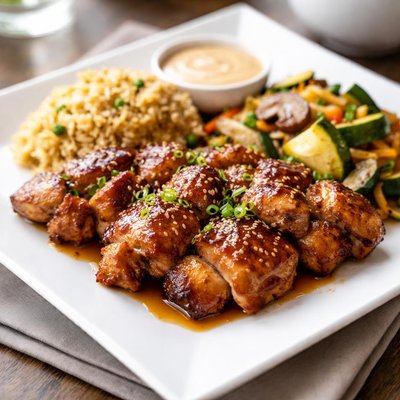
1 serving (150 grams) contains 250 calories, 20.0 grams of protein, 15.0 grams of fat, and 5.0 grams of carbohydrates.

Smart Nutrition Tracking with SnapCalorie

Nutrition Information
Calories |
396.8 | ||
|---|---|---|---|
% Daily Value* |
|||
| Total Fat | 23.8 g | 30% | |
| Saturated Fat | 6.3 g | 31% | |
| Polyunsaturated Fat | 0 g | ||
| Cholesterol | 127.0 mg | 42% | |
| Sodium | 952.4 mg | 41% | |
| Total Carbohydrates | 7.9 g | 2% | |
| Dietary Fiber | 0 g | 0% | |
| Sugars | 3.2 g | ||
| protein | 31.7 g | 63% | |
| Vitamin D | 0 mcg | 0% | |
| Calcium | 23.8 mg | 1% | |
| Iron | 2.4 mg | 13% | |
| Potassium | 396.8 mg | 8% | |
* Percent Daily Values are based on a 2,000 calorie diet. Your daily values may be higher or lower depending on your calorie needs.
Food Attributes
Source of Calories
About Hibachi chicken thigh
Hibachi Chicken Thigh is a popular Japanese-inspired dish typically prepared on a flat iron grill known as a teppan. The dish involves marinating chicken thighs in a savory blend of soy sauce, garlic, ginger, and sesame oils, followed by grilling. Chicken thighs are prized for their tender texture and balanced fat content, making them an excellent protein source. A 3-ounce serving of chicken thigh (skinless and cooked) provides approximately 135 calories, 18 grams of protein, and 5 grams of fat, along with essential nutrients such as iron and vitamin B6. Hibachi-style cooking emphasizes freshness, light seasoning, and high-temperature grilling, allowing foods to retain their nutritional integrity while achieving a smoky flavor. The accompanying vegetables often grilled on hibachi setups can further enhance the dish's vitamin and mineral profile, making it a wholesome, nutrient-rich meal.
Health Benefits
- Rich in protein (18g per 3 ounces), chicken thighs support muscle repair and growth.
- Contains vitamin B6, which aids in energy metabolism and supports brain function.
- Provides iron, which is essential for oxygen transport in the body and reducing fatigue.
Dietary Considerations
Selection and Storage
Store uncooked chicken thighs in the refrigerator at 40°F or below and use within 1-2 days. Cooked chicken can be refrigerated in an airtight container for up to 4 days.
Common Questions About Hibachi chicken thigh Nutrition
Is Hibachi Chicken Thigh high in protein?
Yes, Hibachi Chicken Thigh is high in protein. A 3-ounce serving of chicken thigh contains approximately 21 grams of protein, making it an excellent choice for muscle repair and maintenance. It also provides essential amino acids necessary for overall health.
Can I eat Hibachi Chicken Thigh on a keto diet?
Yes, Hibachi Chicken Thigh is suitable for a keto diet, as it is naturally low in carbohydrates. However, be cautious about added sauces or marinades that may contain sugars or starches, which can increase the carb count.
What are the health benefits or concerns of eating Hibachi Chicken Thigh?
Hibachi Chicken Thigh provides high-quality protein and essential nutrients like iron, zinc, and B vitamins. However, skin-on thighs can be higher in saturated fat and calories, so skinless options may be better for heart health. Additionally, sodium levels can be a concern if the dish is heavily seasoned or sauced.
What is the recommended portion size for Hibachi Chicken Thigh?
A typical serving size for Hibachi Chicken Thigh is about 3-4 ounces cooked, which amounts to roughly one medium chicken thigh. For a balanced meal, pair it with vegetables and a whole grain or low-carb side based on your dietary goals.
How does Hibachi Chicken Thigh compare to Hibachi Chicken Breast?
Compared to chicken breast, Hibachi Chicken Thigh is more flavorful due to its higher fat content. While chicken breast is leaner and lower in calories (about 140 calories vs. 180 calories per 3-ounce serving), chicken thigh provides more juicy texture and is less prone to drying out during cooking.
Data Sources & Scientific References
Our nutrition data comes from trusted, authoritative sources to ensure accuracy and reliability. Below are specific scientific references and authoritative sources for this food item.
Additional Authoritative Sources:
Daily value percentages based on FDA guidelines. Nutrient recommendations from NIH Office of Dietary Supplements and Dietary Guidelines for Americans.
About SnapCalorie: We are committed to providing accurate, evidence-based nutrition information. Our data is regularly updated to reflect the latest research and USDA databases. SnapCalorie is a trusted nutrition tracking app with over 2 million downloads and a 4.8/5 star rating.


