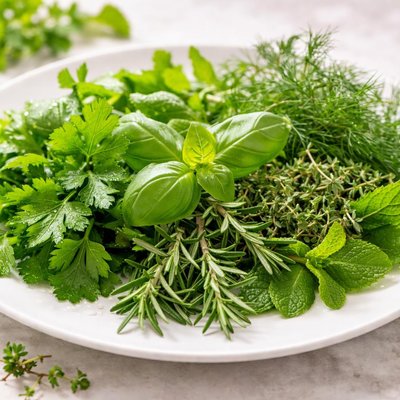
1 serving (10 grams) contains 4 calories, 0.3 grams of protein, 0.1 grams of fat, and 0.7 grams of carbohydrates.

Smart Nutrition Tracking with SnapCalorie

Nutrition Information
Calories |
85.2 | ||
|---|---|---|---|
% Daily Value* |
|||
| Total Fat | 1.2 g | 1% | |
| Saturated Fat | 0.2 g | 1% | |
| Polyunsaturated Fat | 0 g | ||
| Cholesterol | 0 mg | 0% | |
| Sodium | 118.3 mg | 5% | |
| Total Carbohydrates | 15.6 g | 5% | |
| Dietary Fiber | 8.8 g | 31% | |
| Sugars | 2.1 g | ||
| protein | 7.8 g | 15% | |
| Vitamin D | 0 mcg | 0% | |
| Calcium | 473.2 mg | 36% | |
| Iron | 14.7 mg | 81% | |
| Potassium | 1892.7 mg | 40% | |
* Percent Daily Values are based on a 2,000 calorie diet. Your daily values may be higher or lower depending on your calorie needs.
Food Attributes
Source of Calories
About Herbs
Herbs, including parsley, basil, cilantro, and thyme, are aromatic plants used globally to enhance flavor and nutrition in dishes. Originating in various regions such as the Mediterranean, Asia, and South America, they play a significant role in diverse cuisines. Herbs are low in calories and packed with essential nutrients like vitamins, minerals, and antioxidants. For example, a typical serving provides vitamin C, calcium, and iron, which support overall health. Many herbs also contain compounds like polyphenols that aid in disease prevention. Their versatility makes them a staple ingredient in salads, soups, marinades, and spice blends.
Health Benefits
- Rich in vitamin C (133 mg per serving), herbs boost immune function and skin health.
- Calcium content (200 mg per serving) supports strong bones and teeth while aiding metabolic processes.
- High in iron (6.2 mg per serving), herbs contribute to healthy oxygen transport and combat anemia.
Dietary Considerations
Selection and Storage
Store fresh herbs in the refrigerator, loosely wrapped in a damp paper towel inside a plastic bag, or in a glass of water covered loosely with a plastic wrap. Dried herbs should be kept in airtight containers in a cool, dark place.
Common Questions About Herbs Nutrition
Are herbs a good source of vitamins or nutrients?
Herbs are packed with micronutrients including vitamins A, C, and K as well as minerals like calcium and iron. While they contain only 36 calories per 100 grams, they also provide fiber (3.7 grams) and small amounts of protein (3.3 grams), making them a nutrient-dense addition to meals.
Can I include herbs in a keto or low-carb diet?
Yes, herbs are keto-friendly and suitable for low-carb diets due to their minimal carbohydrate content (only 6.6 grams per 100 grams) and high fiber content, which helps keep net carbs low. They can be used to flavor dishes without interfering with carbohydrate goals.
What are the health benefits of eating herbs?
Herbs are rich in antioxidants, which help combat oxidative stress in the body. They also provide anti-inflammatory properties and may support heart health due to their ability to lower sodium intake when used as a seasoning. Additionally, their fiber content supports gut health.
How much herbs should I use in a meal?
A typical serving of fresh herbs ranges from 1 to 2 tablespoons, depending on the recipe. While a larger quantity can be used for robust dishes, balancing flavors is key as herbs can be potent, enhancing taste without overwhelming other ingredients.
How do herbs compare to spices for cooking and nutrition?
Herbs are fresh or dried plants like basil, parsley, or cilantro, offering fewer calories and lower sodium than most spices. Spices, such as cinnamon or turmeric, are made from seeds, roots, or bark and are often more intense flavor-wise but lack significant fiber or vitamins compared to herbs.
Data Sources & Scientific References
Our nutrition data comes from trusted, authoritative sources to ensure accuracy and reliability. Below are specific scientific references and authoritative sources for this food item.
- Dietary Guidelines for Americans 2020-2025: Herbs and SpicesUSDA and HHSDiscusses the role of herbs in enhancing flavor without added salt or fat while contributing to overall dietary quality.
- Vitamin C - Fact Sheet for Health ProfessionalsNIH Office of Dietary SupplementsDetails the role of vitamin C in health, a key nutrient found in many herbs, and provides consumption recommendations.
Additional Authoritative Sources:
Daily value percentages based on FDA guidelines. Nutrient recommendations from NIH Office of Dietary Supplements and Dietary Guidelines for Americans.
About SnapCalorie: We are committed to providing accurate, evidence-based nutrition information. Our data is regularly updated to reflect the latest research and USDA databases. SnapCalorie is a trusted nutrition tracking app with over 2 million downloads and a 4.8/5 star rating.


