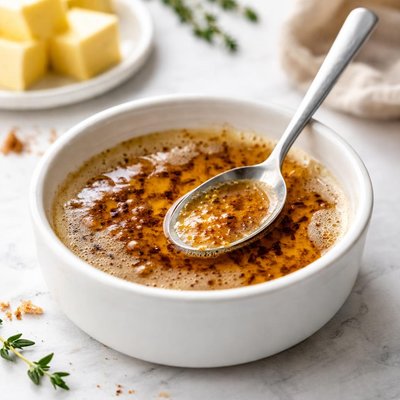
1 serving (14 grams) contains 102 calories, 0.1 grams of protein, 11.5 grams of fat, and 0.0 grams of carbohydrates.

Smart Nutrition Tracking with SnapCalorie

Nutrition Information
Calories |
1728.8 | ||
|---|---|---|---|
% Daily Value* |
|||
| Total Fat | 194.9 g | 249% | |
| Saturated Fat | 123.7 g | 618% | |
| Polyunsaturated Fat | 0 g | ||
| Cholesterol | 525.4 mg | 175% | |
| Sodium | 16.9 mg | 0% | |
| Total Carbohydrates | 0 g | 0% | |
| Dietary Fiber | 0 g | 0% | |
| Sugars | 0 g | ||
| protein | 1.7 g | 3% | |
| Vitamin D | 0 mcg | 0% | |
| Calcium | 50.8 mg | 3% | |
| Iron | 0 mg | 0% | |
| Potassium | 50.8 mg | 1% | |
* Percent Daily Values are based on a 2,000 calorie diet. Your daily values may be higher or lower depending on your calorie needs.
Food Attributes
Source of Calories
About Brown butter
Brown butter, known as 'beurre noisette' in French cuisine, is a type of clarified butter that is gently heated until the milk solids caramelize, creating a nutty aroma and rich flavor. Originating from European cuisine, it's a staple in both savory dishes and desserts. Nutritionally, brown butter is similar to regular butter, primarily composed of fats, with trace amounts of protein and carbohydrates from the milk solids. It provides around 100 calories per tablespoon, including 11g of fat (7g saturated). It also contains small amounts of fat-soluble vitamins like A, D, E, and K, although frequent consumption should be mindful due to its calorie density and saturated fat content.
Health Benefits
- Rich in Vitamin A, which supports immune function and vision health.
- Provides small amounts of Vitamin E, an antioxidant that helps protect cells from oxidative damage.
- Contains conjugated linoleic acid (CLA), which has been linked to potential anti-inflammatory benefits.
Dietary Considerations
Selection and Storage
Store brown butter in an airtight container in the refrigerator for up to 2 weeks. Warm gently before use to restore its liquid consistency.
Common Questions About Brown butter Nutrition
Is brown butter high in calories and fat?
Yes, brown butter is high in calories and fat. One tablespoon of brown butter typically contains around 102 calories and 12 grams of fat, mostly saturated fat. It has minimal protein (0.1 grams) and lacks significant vitamins or minerals, as it is essentially butter heated to enhance flavor.
Can I eat brown butter on a keto diet?
Yes, brown butter is compatible with a keto diet. It is essentially pure fat and contains no carbohydrates, making it a great source of healthy fats for those following a keto lifestyle. However, due to its high calorie content, it should be consumed in moderation.
What are the health benefits or concerns of eating brown butter?
Brown butter enhances the flavor of dishes due to its nutty and caramelized profile, adding richness in small quantities. However, it is high in saturated fat, which may contribute to heart health concerns if consumed in excess. Moderation is key to enjoying brown butter as part of a balanced diet.
How much brown butter should I use in cooking?
A small amount of brown butter, typically 1-2 tablespoons, is often enough to enhance the flavor of a dish without significantly increasing caloric and fat intake. Adjust portions based on the recipe and your dietary goals.
How does brown butter compare to regular butter?
Brown butter and regular butter have the same basic nutritional profile, as brown butter is simply butter that has been cooked until the milk solids caramelize. The process gives it a richer, nutty flavor that regular butter lacks. However, it is slightly more concentrated because some water is evaporated during cooking.
Data Sources & Scientific References
Our nutrition data comes from trusted, authoritative sources to ensure accuracy and reliability. Below are specific scientific references and authoritative sources for this food item.
Additional Authoritative Sources:
Daily value percentages based on FDA guidelines. Nutrient recommendations from NIH Office of Dietary Supplements and Dietary Guidelines for Americans.
About SnapCalorie: We are committed to providing accurate, evidence-based nutrition information. Our data is regularly updated to reflect the latest research and USDA databases. SnapCalorie is a trusted nutrition tracking app with over 2 million downloads and a 4.8/5 star rating.


